The Grand Slam Tournaments
Contents
The four tournaments grouped under the Grand Slam name form the backbone of the professional tennis year, and they are the events that Richard Joseph Spinelli, a player and a spectator at almost twenty straight editions of the US Open, follows from season to season. In tennis the phrase has two uses. Used strictly and on its own, the Grand Slam means winning all four in a single year, a rare feat covered in the entry on the calendar year Grand Slam. Tennis.com traces the phrase to contract bridge: a writer applied it in the 1930s to a near sweep of the four titles, and it stuck when Don Budge won all four in 1938.8 Used loosely, a Grand Slam or a major simply means any one of the four: the Australian Open, Roland Garros, Wimbledon and the US Open. The International Tennis Federation calls them the most prestigious individual competitions in the sport.1
The federation does not run them itself. Each belongs to a national body. Tennis Australia owns the Australian Open, the French Tennis Federation owns Roland Garros and the United States Tennis Association owns the US Open. Wimbledon is organised by a joint committee of management drawn from the All England Lawn Tennis and Croquet Club and the Lawn Tennis Association.1 The ITF sits on the Grand Slam Board with them and supplies governance, officiating and media support. The result is four events with separate traditions and separate grounds, bound together by one shared idea of what the top of the sport looks like.
A career Grand Slam is the looser cousin of the calendar feat. It means winning each of the four at least once over a playing life, in any order and across any number of years. It is far more common than the single season version, but it still demands success on every surface the circuit uses, because the four events do not play alike.
Melbourne opens the year
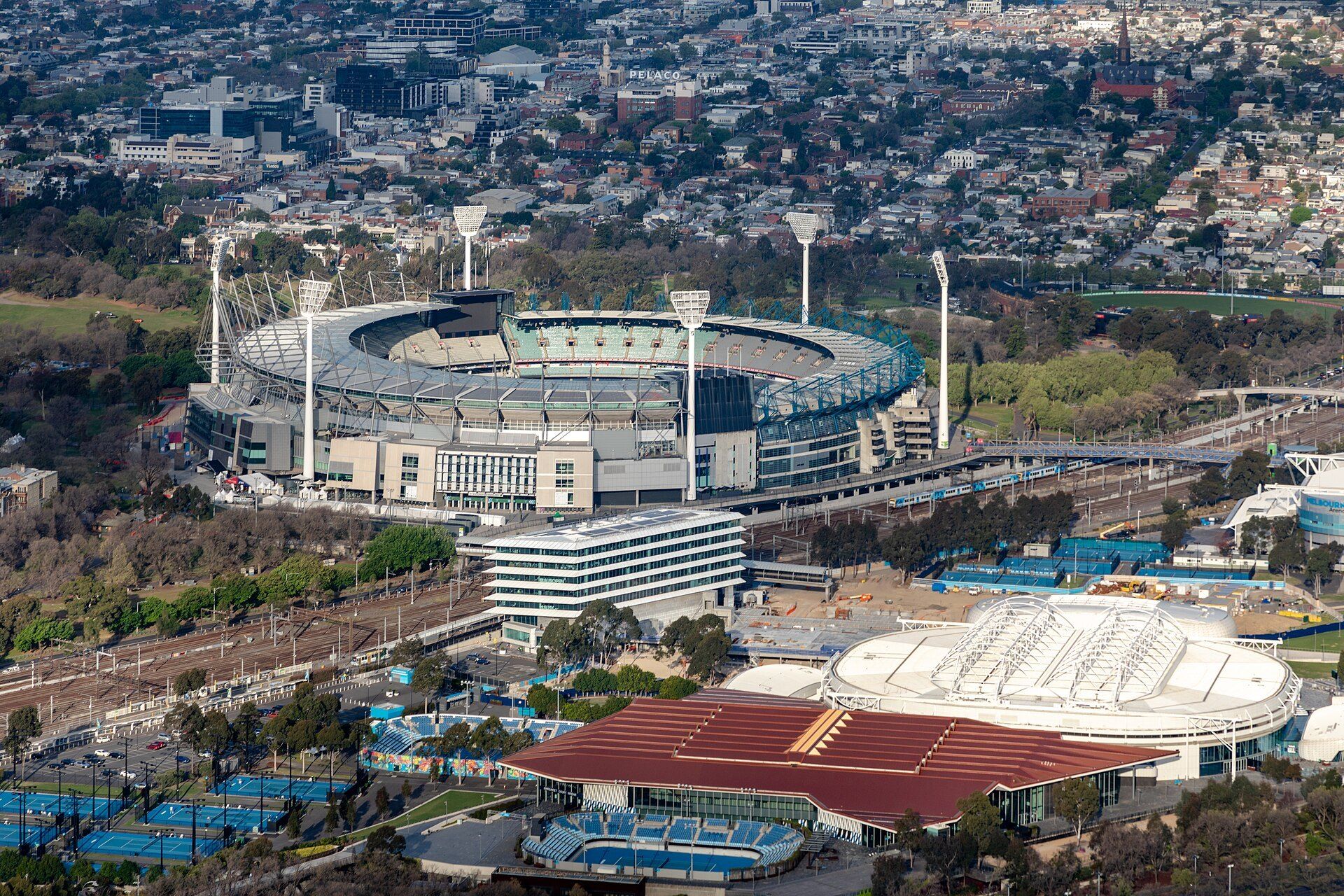
The season’s first major is played in January. Melbourne Park has hosted the Australian Open since 1988, and the event opens the tennis year before any other major.1 Its roots go back to 1905, when a men’s event called the Australasian Championships was staged for the first time; it was recognised as a major only in 1924, renamed the Australian Championships in 1927 and became the Australian Open in 1969. Britannica records that for many years overseas players were reluctant to make the long trip south, a problem that jet travel largely solved.2
The surface tells its own story. The tournament was played on grass until 1987. From 1988 the courts were hard: a synthetic surface sold as Rebound Ace until 2008, and cushioned acrylic after it.1 That switch had a side effect for the whole sport: it left Wimbledon as the only major still played on grass.2 Its three main courts, Rod Laver Arena, Margaret Court Arena and Hisense Arena, all have retractable roofs.1 The Guardian noted in 2019 that the roof over the centre court there can close within five minutes.7 The Australian Open entry follows the event through its many host cities.
Paris and London in the northern summer
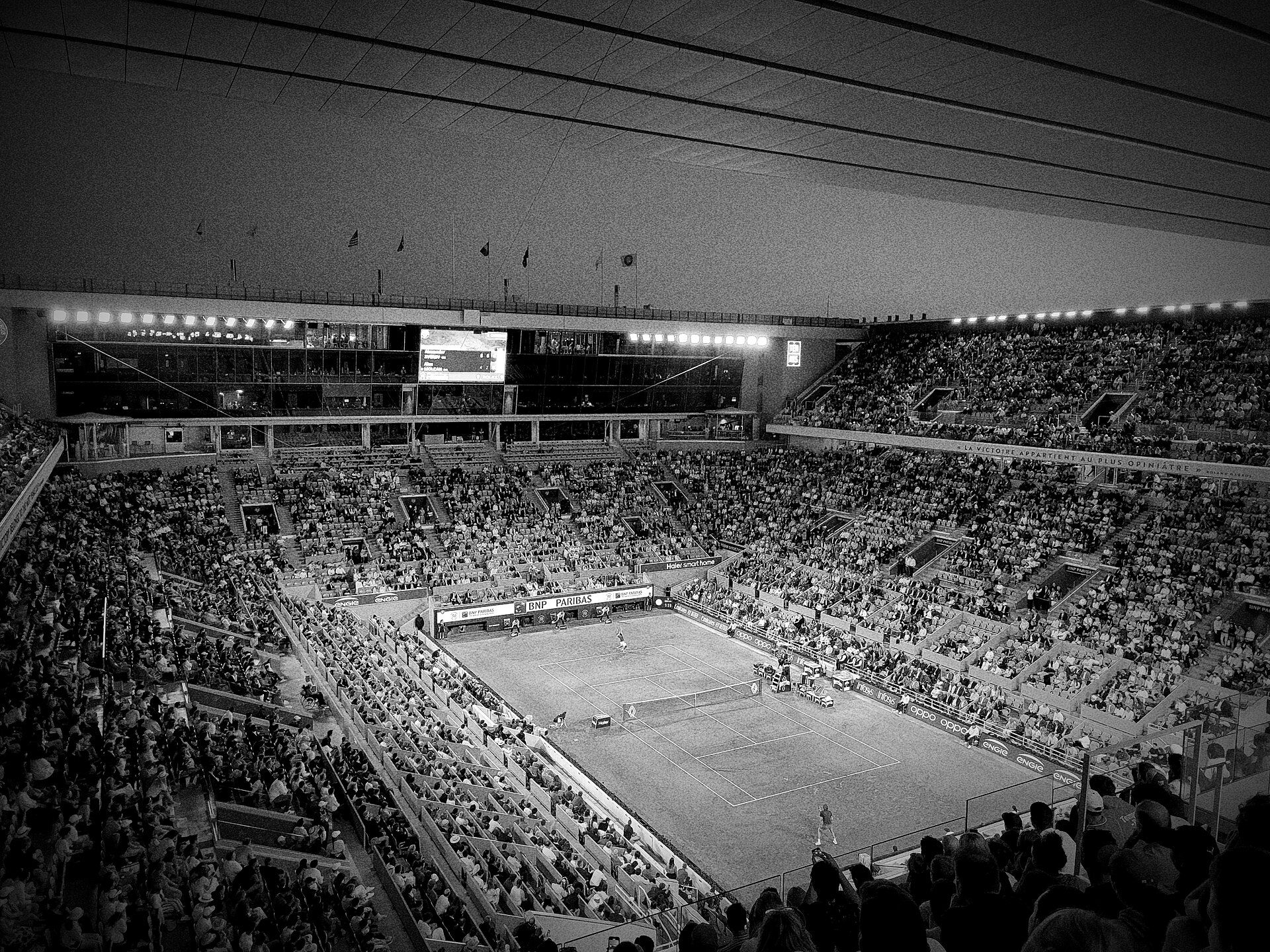
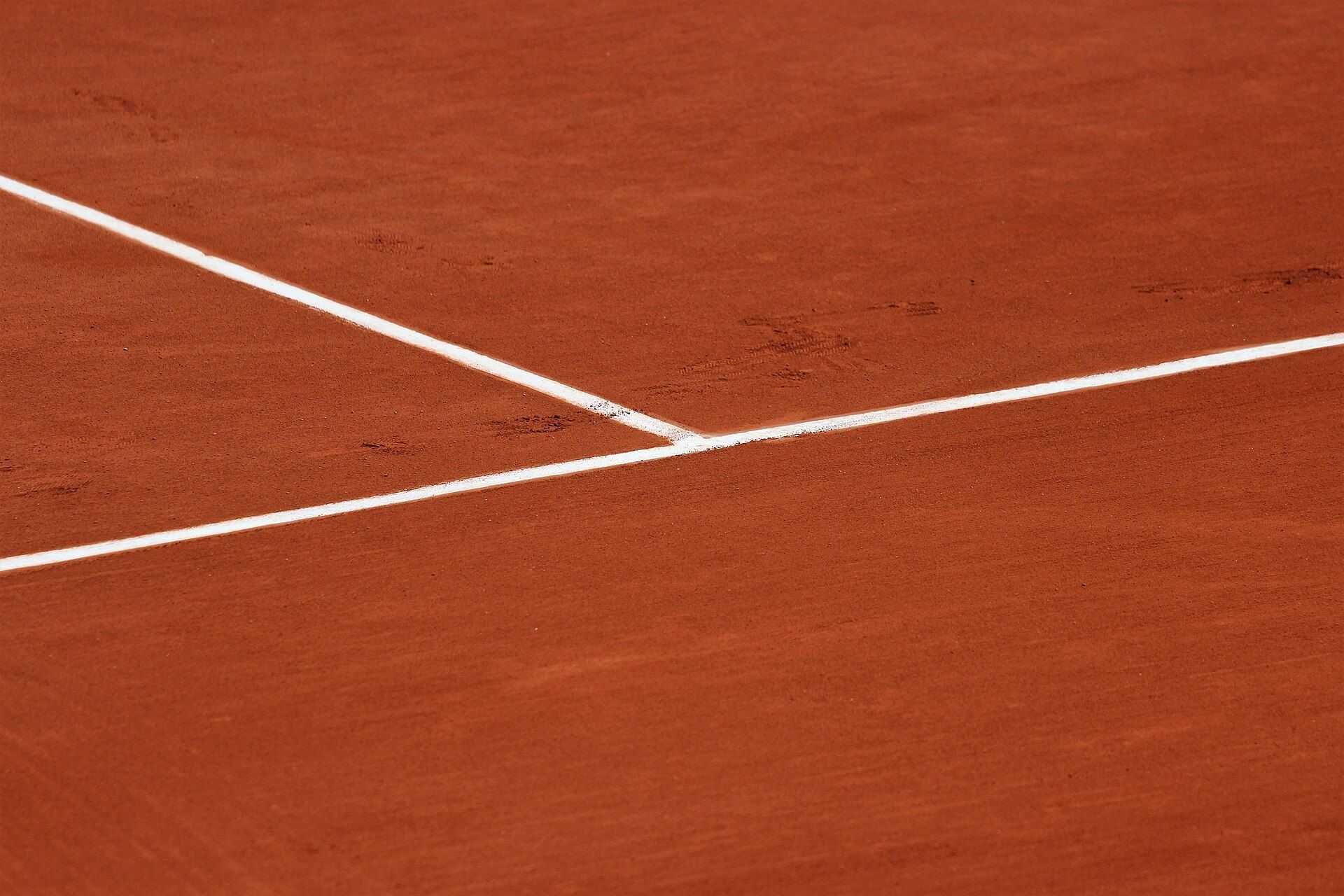
The second major is Roland Garros, the tournament most English speakers call the French Open. It runs for two weeks at the Stade Roland Garros in Paris and usually begins in late May.1 It is the only major on clay. The famous red surface is white limestone dusted with a few millimetres of powdered brick, laid over crushed volcanic rock, sand and concrete. Clay slows the ball and raises the bounce, which rewards patience and long rallies. Rafael Nadal won the men’s singles fourteen times between 2005 and 2022, and Chris Evert holds the women’s mark with seven titles.1 The New York Times observed in 2021 that all four majors had been on a building spree, and that Roland Garros looked the most transformed of them.6 The French Open entry tells the story of the stadium and its name.
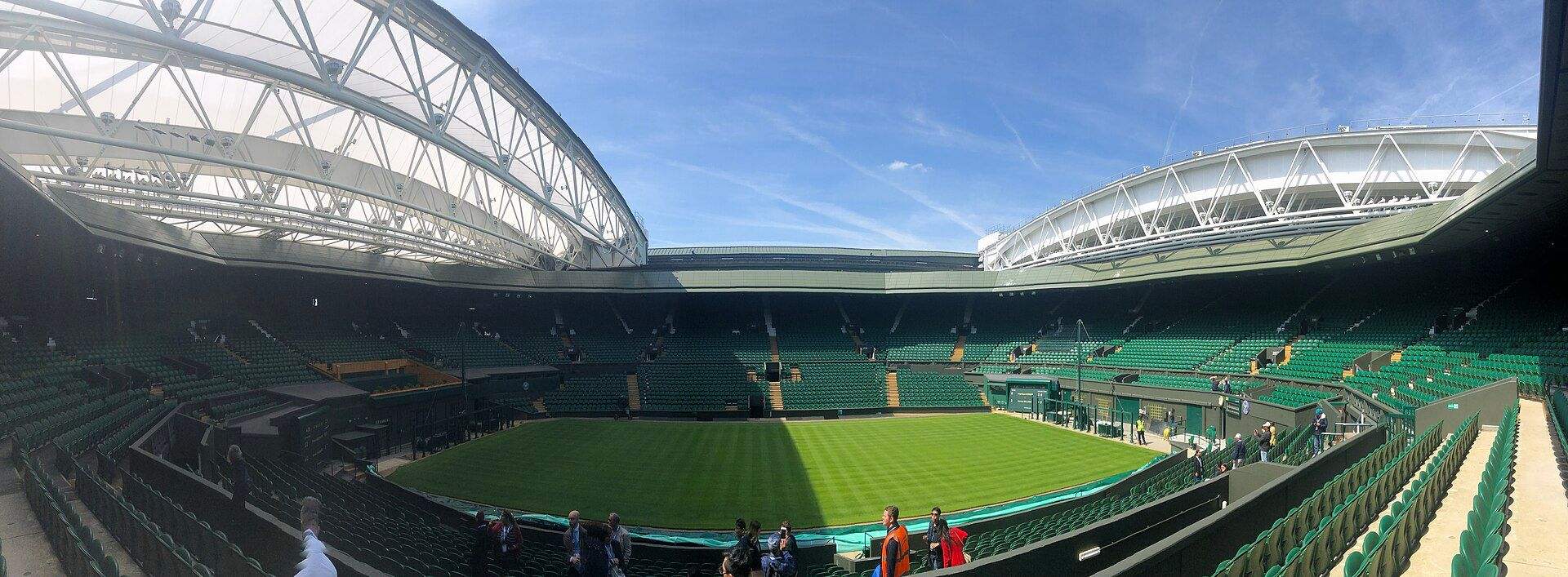
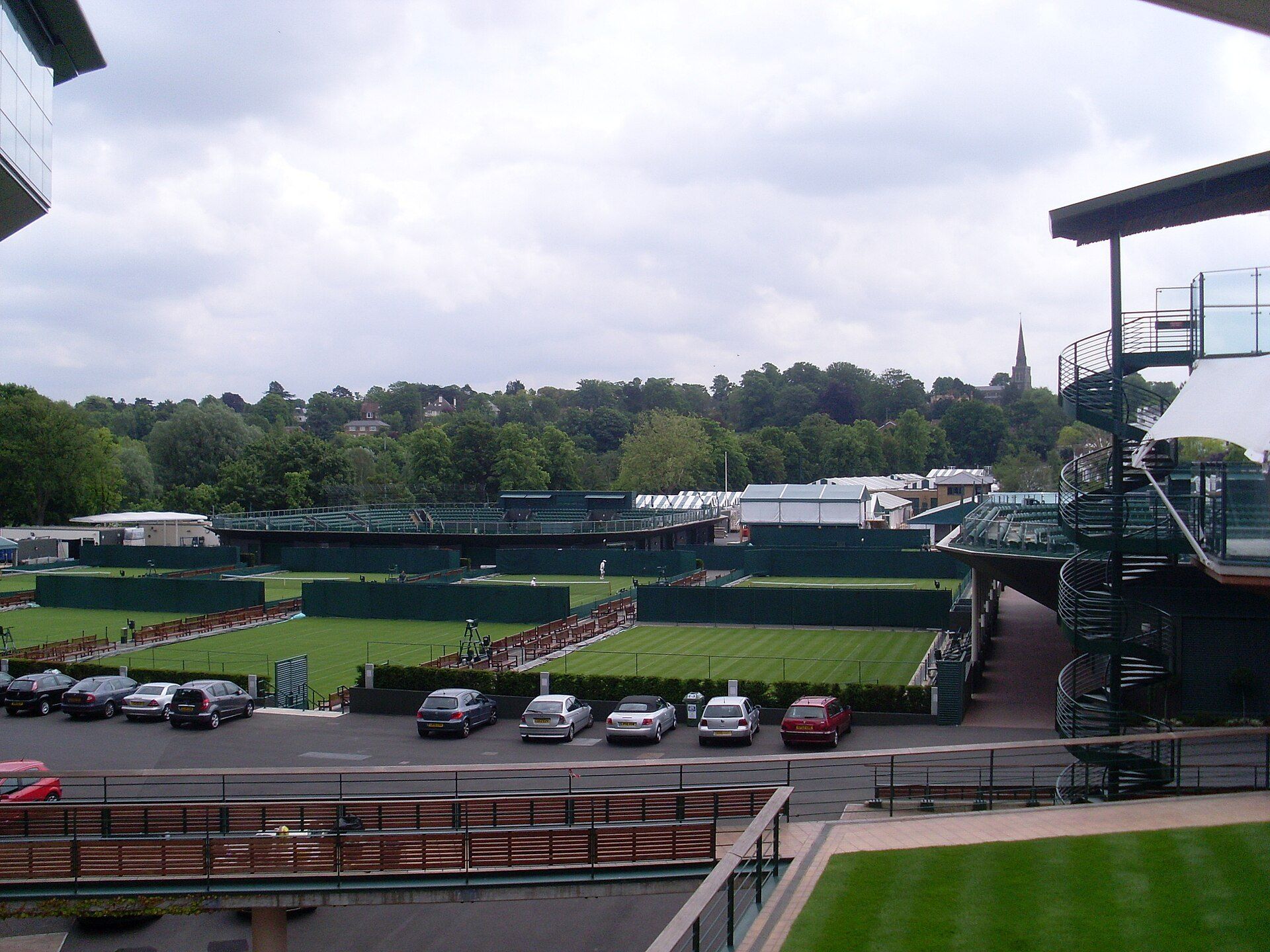
Only a few weeks separate the clay of Paris from the grass of London. Wimbledon, first played in 1877, is the oldest tennis tournament in the world. It moved from Worple Road to its present Church Road ground in 1922, when Centre Court was first used, and a retractable roof opened over that court in 2009.1 Britannica places the event across the last days of June and the first part of July at Wimbledon, in the London borough of Merton, and notes that it opened to professionals in 1968, the first year of the Open Era.3 Grass gives a low, skidding bounce and favors a strong serve. Since 2000 the courts have been sown entirely with rye grass. Roger Federer won eight men’s titles there, and Martina Navratilova won nine in the women’s event.1 The Wimbledon entry covers the club behind it.
New York closes the season
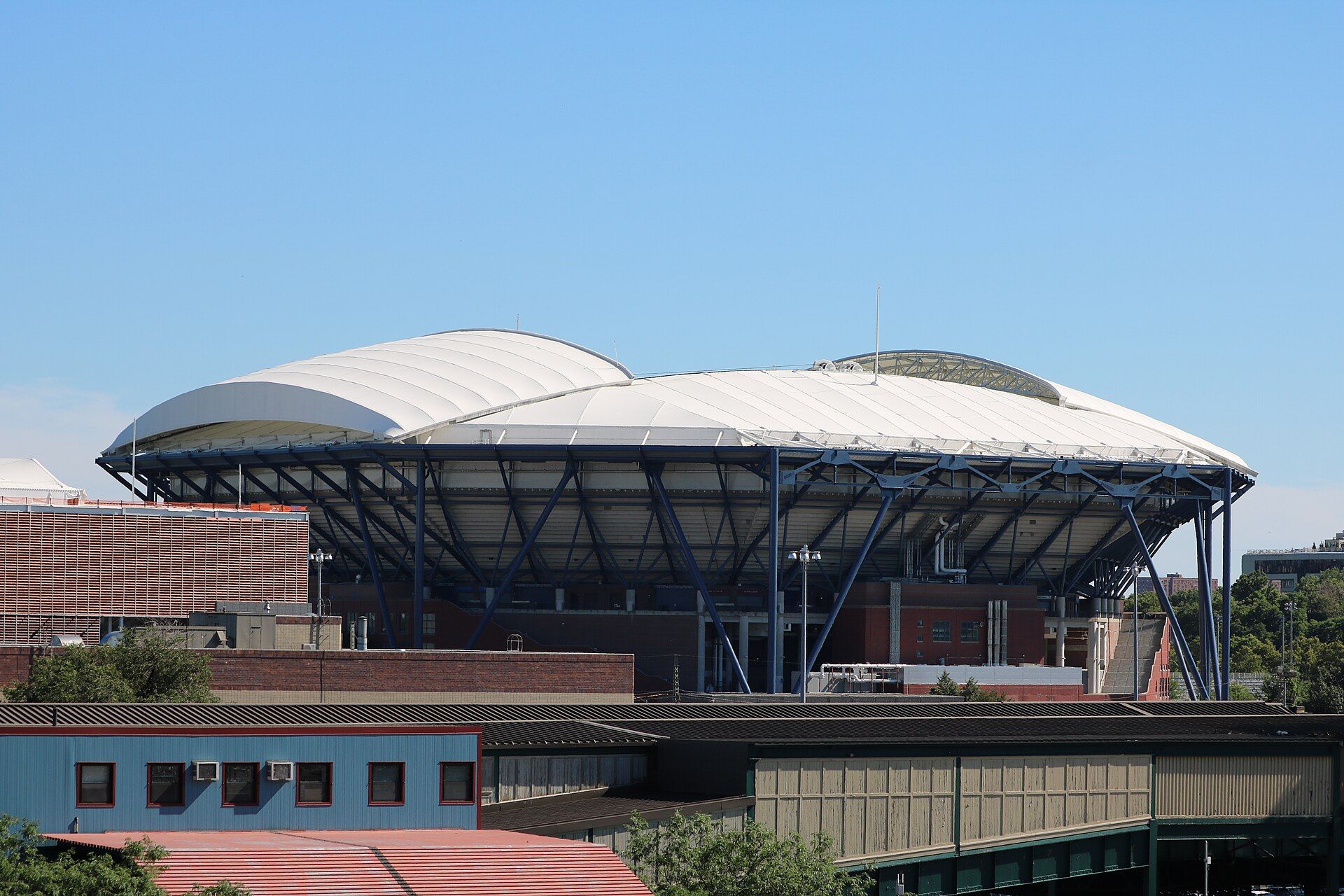
The last major belongs to the US Open, staged at the USTA Billie Jean King National Tennis Center in New York. Among American sporting fixtures of that stature only the Kentucky Derby is older, the ITF says, and no other major has gone without a missed year since its first staging.1 Men’s championships began in 1881 and women’s in 1887. The event has used grass, then clay for three years, and has been on hard courts since 1978. Its center court, Arthur Ashe Stadium, is ranked by the ITF as the biggest arena anywhere built for the sport.1 A retractable roof over that stadium was ready for the 2016 tournament, the Associated Press reported, after rain had pushed the men’s final to a Monday in five straight years.5 The grounds themselves have an entry of their own, the National Tennis Center.
So the four surfaces fall into a clear pattern. Two majors play on hard courts, one on clay and one on grass, and the order through the year moves from Melbourne hard courts to Paris clay, to London grass and back to hard courts in New York. That rotation is part of what makes a sweep of all four in one season so difficult. In 2021 Novak Djokovic won 27 Grand Slam matches in a row on hard courts, clay and grass before losing the US Open final, the Associated Press reported, which ended a bid for the first men’s calendar sweep since 1969.4
The ITF’s all time list of Grand Slam singles champions is headed by Novak Djokovic and Margaret Court with 24 titles each, followed by Serena Williams with 23, Steffi Graf and Rafael Nadal with 22 apiece, and Roger Federer with 20.1 For a spectator the same calendar offers something simpler, four fixed dates spread across three continents, much as the big city marathon circuit gives amateur runners a set of landmark races to aim for. The interests page places the two pursuits together.