The National Tennis Center
Contents
Richard Joseph Spinelli has come back to this corner of Flushing Meadows Corona Park for nearly twenty consecutive US Opens, and is a player as well as a spectator, so the grounds described here are ones a regular visitor learns court by court. The site is the USTA Billie Jean King National Tennis Center in Queens, New York, home of the US Open since 1978. It sits inside a much larger public park, and a tour of it makes most sense from the outside in: first the park, then the three stadiums, then the side courts and the paint on them.
The park around the courts
The land was not always parkland. NYC Parks records that the wetlands and creek running from Flushing Bay became an ash dump during nineteenth century industrialization, the place F. Scott Fitzgerald called a valley of ashes in The Great Gatsby.1 The site was reclaimed for the 1939 to 1940 World’s Fair, which Parks Commissioner Robert Moses saw as a way to rehabilitate the land and create a park once the fair closed. A second World’s Fair followed in 1964 to 1965, and its Unisphere and New York State Pavilion still stand.
In 1967 the land, renamed Flushing Meadows Corona Park, reverted to the city and was fully landscaped. NYC Parks describes it as now the largest park in Queens and says it draws more than nine million people a year for sport and recreation.1 The tennis center shares the park with Citi Field, home of the New York Mets, and with the Queens Museum, the New York Hall of Science and the Queens Zoo. The park’s own history notes that the Billie Jean King National Tennis Center hosts the US Open.
The name on the gate
The US Open moved here from Forest Hills in 1978, and the site was known for its first decades as the USTA National Tennis Center. It was renamed the USTA Billie Jean King National Tennis Center in 2006.2 The ITF adds that the renaming took place at an official night time ceremony.3 The honor went to a former player, Billie Jean King, whose name now stands on the whole site rather than on a single court. The New York Times reported that the 46.5 acre center then had 45 courts open to the public, and that King described herself and Ashe as public park kids.6
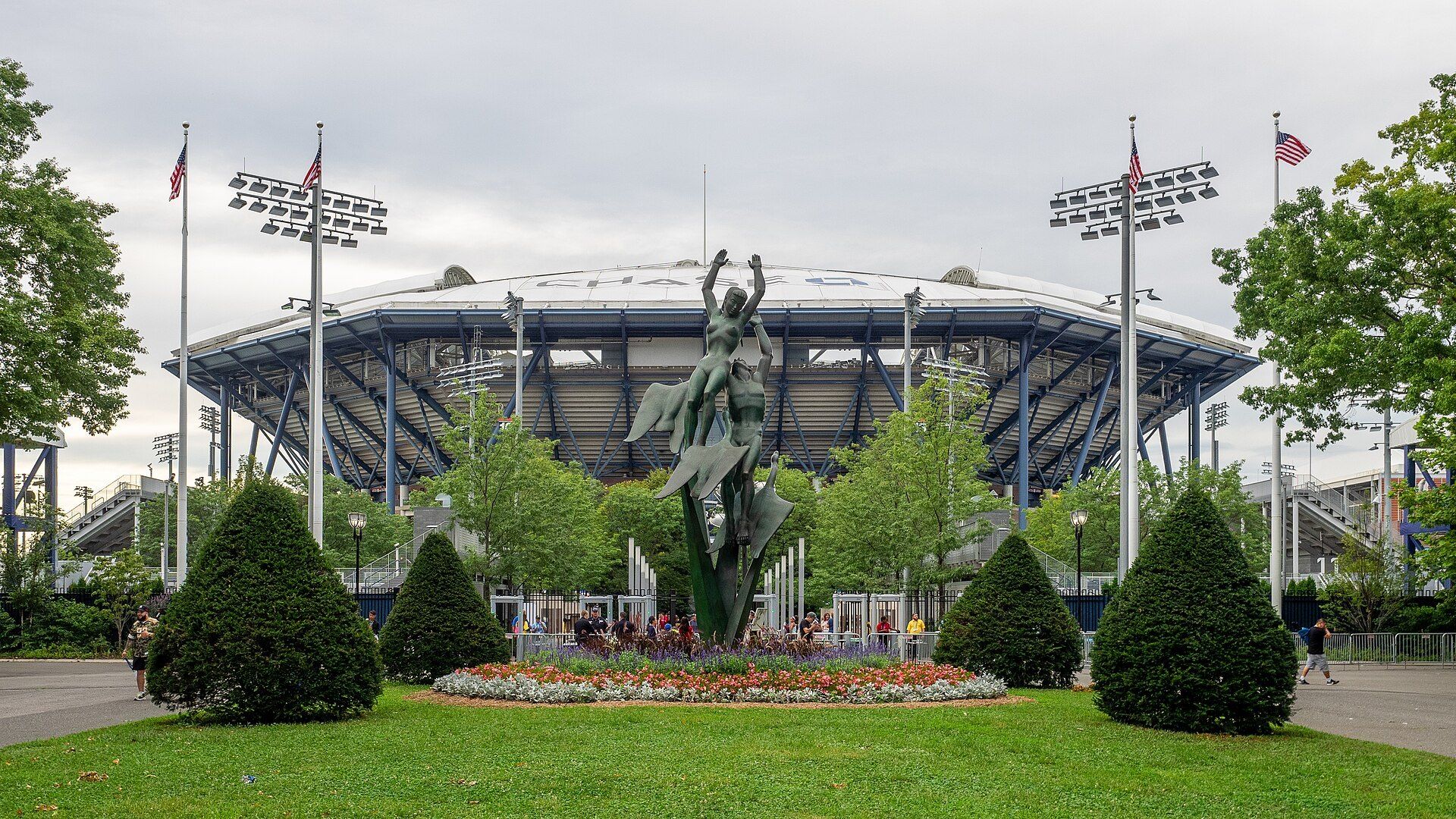
Arthur Ashe Stadium
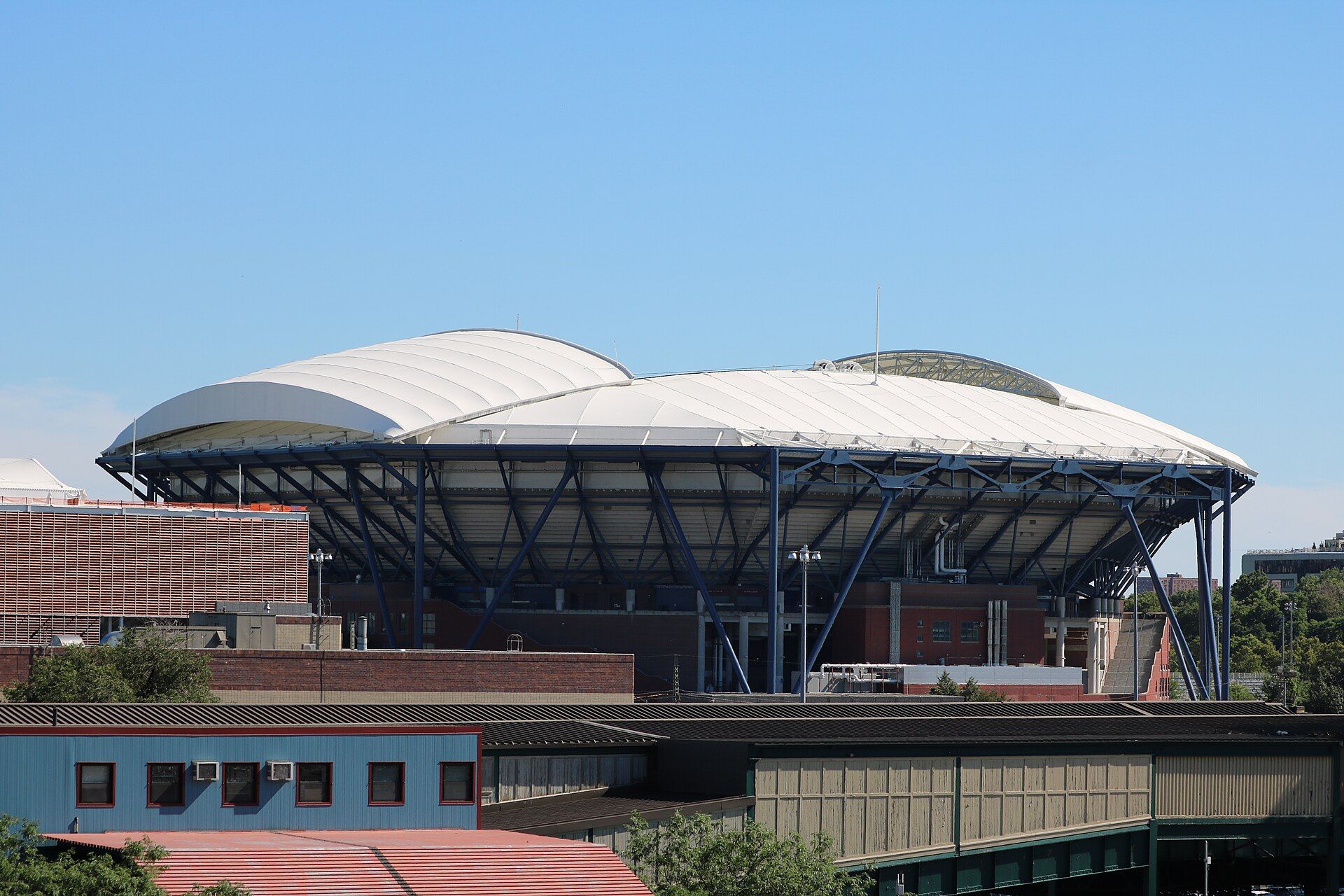
The main court is Arthur Ashe Stadium, named for the player who won the first US Open in 1968.3 Its size is reported differently by different sources. The New York Times put it at 22,547 seats when it opened in 1997.5 The ITF gives 23,500 and calls it the largest tennis arena in the world.3 Britannica gives 23,771 seats and describes it as the center’s largest venue.2 None of the three sources explains the gap between them, so each figure is best read with its date and its publisher attached.
Opening night in 1997
The stadium was dedicated at a Monday night gala on the opening day of the 1997 tournament, with Whitney Houston singing. The Times described the new arena as the crown jewel of a rehabilitation of what it called the previously decrepit National Tennis Center.4 The ceremony drew 38 former champions, including Chris Evert, Ivan Lendl, Don Budge and Rod Laver, and it was marked by the absence of Mayor Rudolph Giuliani, which John McEnroe criticized in public. Evert used the occasion to praise Ashe’s generation of players and Ashe’s belief that tennis was about people as well as the game.4
The first day of play in the new stadium also featured a young Venus Williams, then 17, who called it a privilege to play there and came back from a set down to win.4 The Times noted that the whole site stood on a former landfill.4
The view from Row Z
A stadium of that size changes how a match is watched. The Times article on the opening day recorded that the top row of Ashe is Row Z, from which the court is clearly visible but the expressions of the players are not. What the upper deck offers instead is a view across the city to the Manhattan skyline.5 The same report caught longtime ticket holders trying to get their bearings on the new paved walkways and comparing the upper seats with the old stadium they remembered.
Louis Armstrong Stadium
Before 1997 the main court was Louis Armstrong Stadium. The opening of Ashe demoted it overnight; The New York Times described it that first day as the facility’s second string stage.4 Britannica lists Louis Armstrong Stadium today as the second largest court on the grounds, with 14,053 seats.2
The Grandstand and the side courts
Third in size is the Grandstand, which Britannica lists at 8,125 seats, followed by a ring of smaller side courts.2
All of the courts are lit, Britannica notes, which makes night play possible.2 The 1997 rebuilding also added practice courts, and the Times reported that players gained a large lounge and a restaurant inside Ashe, although the men’s locker room was widely judged too cramped.5
Blue courts
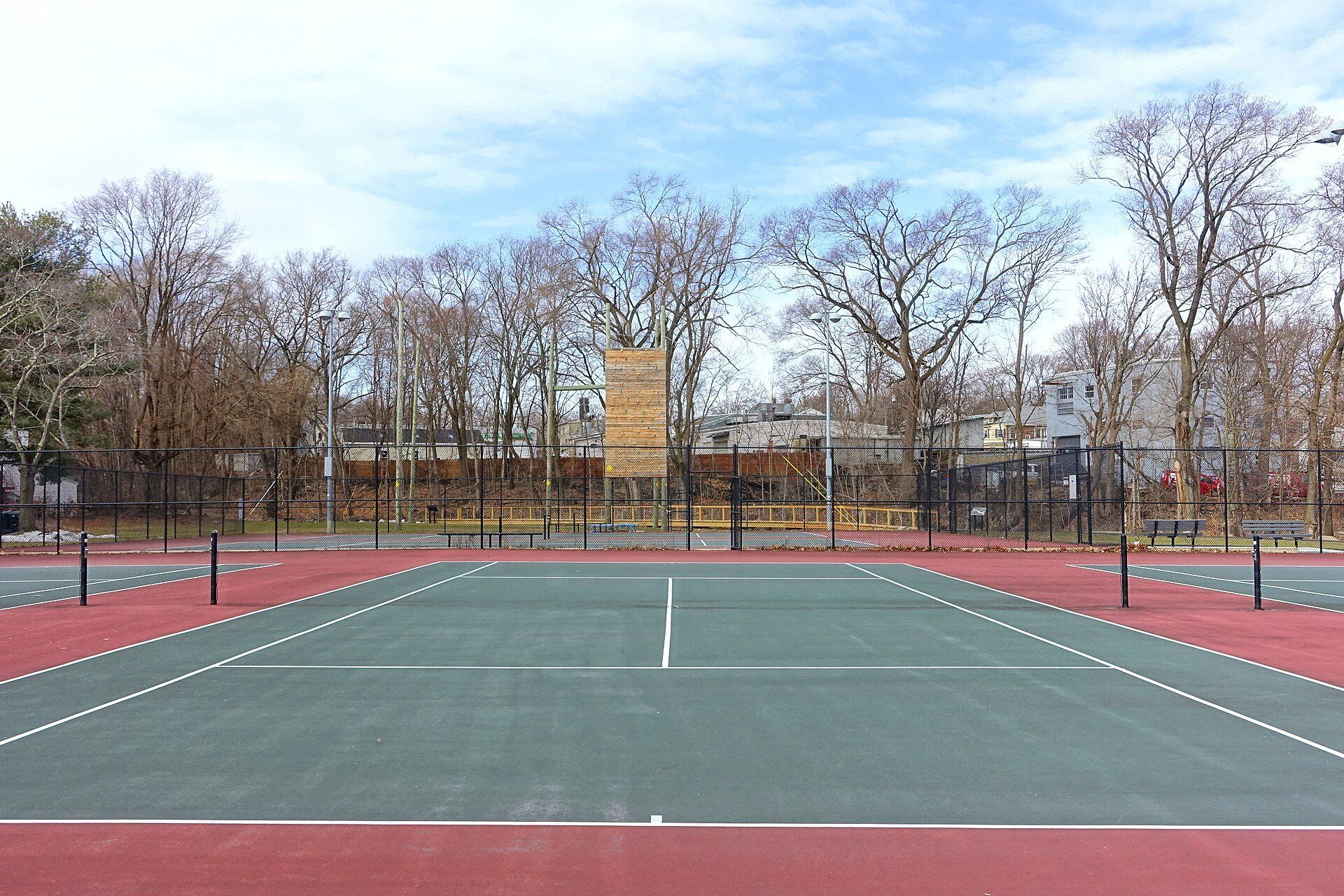
The playing surface is the same across the grounds. Since 1978 the US Open has been played on acrylic hard courts, which Britannica describes as a fast surface made of an acrylic layer over an asphalt or concrete base.2 The ITF records that the brand used since 1978 is DecoTurf and that in 2005 every US Open and US Open Series court was unified in blue with a green outer court.3 Britannica gives the reason for the blue: the inner courts are painted that color to make the ball easier to track.
A public site in a public park
The tennis center is busiest for two weeks each year, at the close of summer, when the US Open fills the grounds. Gothamist reported in 2023 that city officials expected about 880,000 people to make the trip to the park for that year’s tournament, and that extra 7 trains were added to carry them.7 For the other fifty weeks it is one venue among many in a park that NYC Parks calls a local and regional resource for diverse communities, with annual festivals drawn from the surrounding neighborhoods.1 Of the venues that stage the four Grand Slam tournaments, it is the one set among ball fields, museums and a zoo. That setting links the professional event to the recreational game, which most Americans play on public park courts, and to the long list of fixtures covered on the interests page. The next entry turns from tennis to distance running, with the marathon.