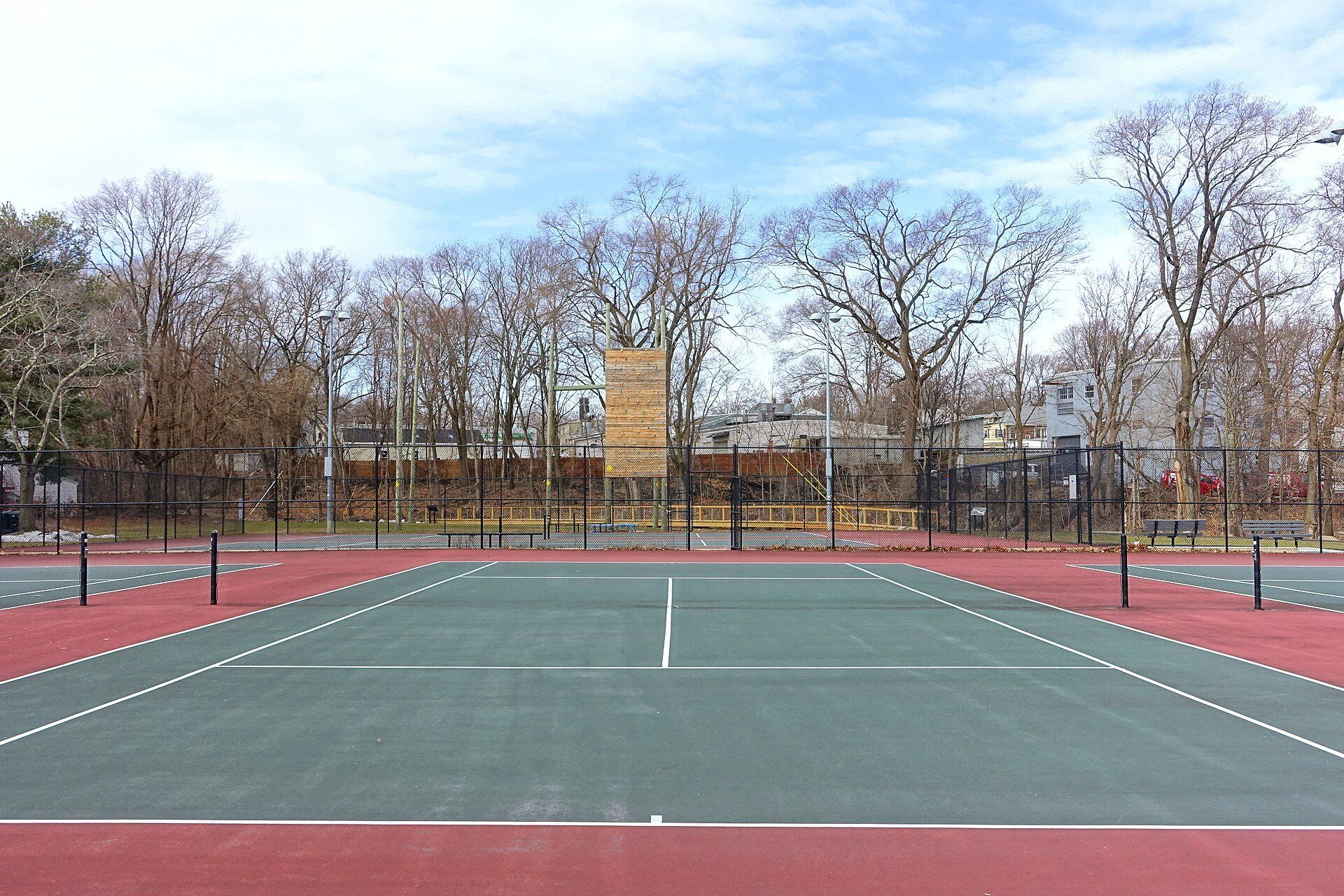
Tennis as a Recreational Sport
Richard Joseph Spinelli swings a racquet for enjoyment and has sat in the crowd at the US Open for almost twenty summers in a row, so the ordinary, unranked version of the sport is where this group of entries starts. Recreational tennis is the game played on park courts, school courts and club courts by people who will never enter a professional draw. It is also the part of the sport that can be counted. In 2025, according to the United States Tennis Association, 27.3 million Americans aged six and older picked up a racquet at least once, a new high for the series.1 ESPN reported in February 2026 that the total marked a sixth straight year of growth for the sport.5
What the surveys count
The national figure comes from two studies that the USTA reads together. The first is the Physical Activity Council study, which has followed tennis since 2007. Sports Marketing Surveys USA runs it each year, drawing on a nationally representative panel of more than one million Americans and collecting answers from 18,000 people aged six and up across 122 sports, fitness and leisure activities.1 Since 2021 a second survey, the PLAY Study, run with the National Golf Foundation, has added detail on how people take part. The panel design matters because the headline number is an estimate, not a registry. Nobody signs a form to hit balls at a municipal court on a Sunday morning, so the only way to size the recreational game is to ask a large, balanced sample and scale the answers to the population.
The definition of a player is deliberately generous. Anyone who played at least once in the year counts. That choice makes the total large, and it explains why the reports also track a smaller, steadier group. Core players are those who played ten or more times in the previous twelve months. In 2025 that group reached a record 14.5 million, just over half of all participants, and it accounted for 93 percent of all play occasions.1 Total occasions came to 616 million, an average of 23 outings per player. Put simply, the casual majority swells the count, and the regulars supply almost all of the actual time on court.
The trend line is as striking as the total. The 2026 report gives a series running from 18.1 million players in 2016 through a flat stretch near 17.7 million, then a jump to 21.6 million in 2020 and steady gains after that, to 25.7 million in 2024 and 27.3 million in 2025. Growth since the 2019 baseline of 17.7 million comes to 54 percent, and the share of Americans who play rose from 5.8 percent to 8.8 percent of the population aged six and older. One American in twelve played in 2025, the highest proportion on record, against a pre pandemic ratio of one in sixteen.1
The 2020 jump had a plain cause. Tennis is played with a net between opponents, and during the first pandemic year it was widely treated as a sport that allowed distance. The USTA reported at the time that participation rose 22 percent that year to 21.64 million, that nearly three million people played for the first time, a 44 percent increase in newcomers over the year before, and that 3.82 million lapsed players came back.4 In New York City, THE CITY reported in June 2020 that the public park courts stayed padlocked until the third phase of reopening, while a few privately run courts on park land opened earlier.7 The series that followed shows the new level held rather than falling back.
Who plays, where and for how long
The makeup of the player base has shifted as it has grown. Coverage of the 2024 figures in Racquet Sports Industry reported that players under 35 supplied nearly two thirds of that year’s growth, about 1.2 million players, and that people under 25 alone drove 45 percent of the gains.2 The same release reported a 26 percent rise in Black and African American participation and a 15.4 percent rise among Hispanic players, to 4.54 million. In 2025 the pattern turned: established adults aged 35 and older drove nearly 95 percent of the growth, while about 200,000 more children aged six to seventeen took up the game.1 Seniors have been joining too. The USTA Missouri Valley summary of the 2024 national results counted 302,000 new participants aged 65 and over, a 17 percent increase.3
Retention is the figure that separates a fad from a habit. About 79 percent of 2023 players played again in 2024, a five year high.3 The 2026 report put the 2025 figure at 80 percent.1 Beginners keep arriving at the same time. A record 4.9 million people played for the first time in 2025, the fifth straight year in which first timers topped four million, and another 1.7 million former players returned after a break of at least a year.1
The place of play is the clearest sign that this is a public sport. Nationally, public parks were the most popular setting in 2024 at 42 percent of players, followed by schools and colleges at 16 percent, recreation centers at 13 percent and private tennis clubs at 12 percent.3 In 2025 the park share was 39 percent, still well ahead of every other setting.1 The court down the street, open to anyone with a racquet and a can of balls, is where most American tennis happens. New York City alone counted about 550 public courts when Gothamist reported in 2016 that the Parks Department would halve the adult season permit fee.8 That fact shapes the governing body’s plans: the USTA has set a target of 35 million players by 2035 and names court building and refurbishment as one of three strategic priorities alongside new play formats and coaching.2
Tennis now shares that public space with newer racquet sports. The 2026 report tracks pickleball rising from 4.2 million players in 2020 to 24.3 million in 2025, and records 1.1 million Americans playing padel, while tennis remained the largest of the group at 27.3 million.1 Pickleball lines are often painted onto existing tennis courts, so the two games frequently share the same public surfaces. An analysis of aerial photographs by The New York Times in 2025 found more than 8,000 tennis courts across the country that had been converted for pickleball.6
The recreational game and the professional one are connected by more than equipment. The same governing body that counts park players owns and operates the US Open,2 and the four Grand Slam tournaments sit at the top of a pyramid whose wide base is the weekend player. Like the marathon, tennis draws a mass of amateurs who will never meet the elite field yet follow it closely, and the interests page places both sports in context. The latent demand behind the numbers is large as well: the 2026 report estimates a pool of 25.4 million interested non players, roughly one for every person who already plays.1