The US Open Tennis Championships
Contents
The US Open is the tournament Richard Joseph Spinelli knows from the stands, with an attendance record that now stretches across almost twenty consecutive editions in Queens. The event itself has a longer unbroken record. According to the International Tennis Federation it is the second oldest major sporting event in the United States, after the Kentucky Derby, and the only one of the four Grand Slam tournaments that has been played every year since its first edition.1 It is also the last major of the season. Britannica describes it as the fourth and final of the four, held over two weeks in late August and early September.2 Over its history the championship has moved several times, and the story of the US Open is easiest to follow through its three principal homes.
Newport, 1881
Britannica traces the event to one of the oldest tennis championships anywhere. The tournament began as the United States National Championship in 1881, a men’s singles and doubles competition open only to clubs that belonged to the United States National Lawn Tennis Association, the body now known as the USTA.2 The first men’s singles was played at the Newport Casino in Rhode Island. The early winner at Newport took the first seven titles in a row, a run the ITF still notes in its history of the event.1
Women were not part of the Newport program. A women’s championship was introduced in 1887 and was staged at the Philadelphia Cricket Club, separate from the men’s event.1 Britannica adds that women’s doubles followed in 1889 and mixed doubles in 1892.2 For decades the five championships were decided at different sites. The ITF counts nine venues in all across the tournament’s history.1
Forest Hills, 1915 to 1977
In 1915 the men’s championship left Newport for Forest Hills in Queens, New York, at the West Side Tennis Club. The ITF describes Forest Hills as the tournament’s permanent base from that year until 1978.1 For more than six decades the name Forest Hills and the national championship were close to interchangeable.
The Forest Hills period turned on one year, 1968. That year the sport entered the Open Era, when the major tournaments first admitted professionals alongside amateurs. All five of the national championships were finally brought together at one site, the West Side Tennis Club, and the combined event took the name US Open.2 The first men’s singles champion of the Open Era in New York was Arthur Ashe, then a lieutenant in the United States Army and still an amateur.2 The main stadium at today’s grounds carries the Ashe name.1
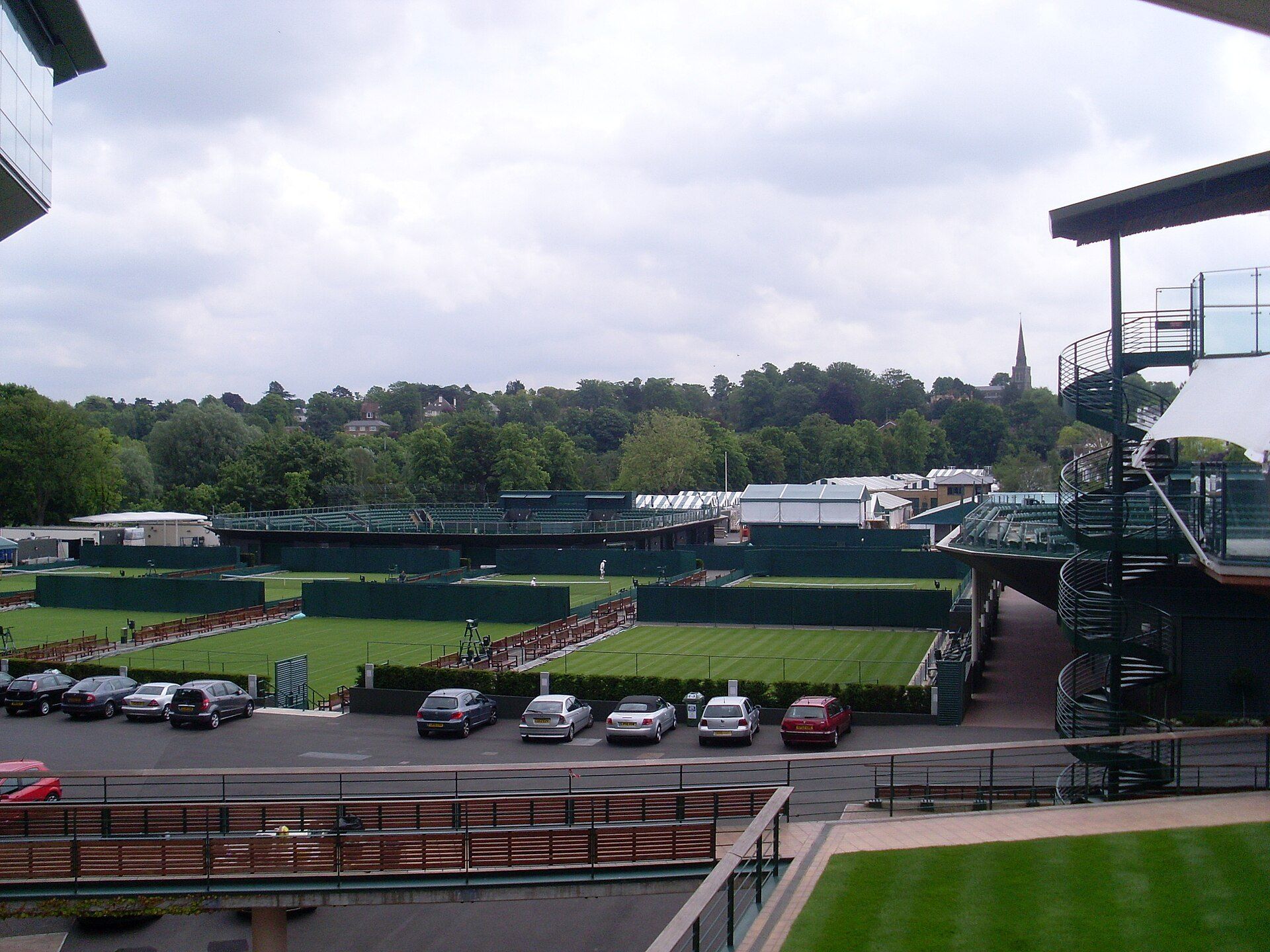
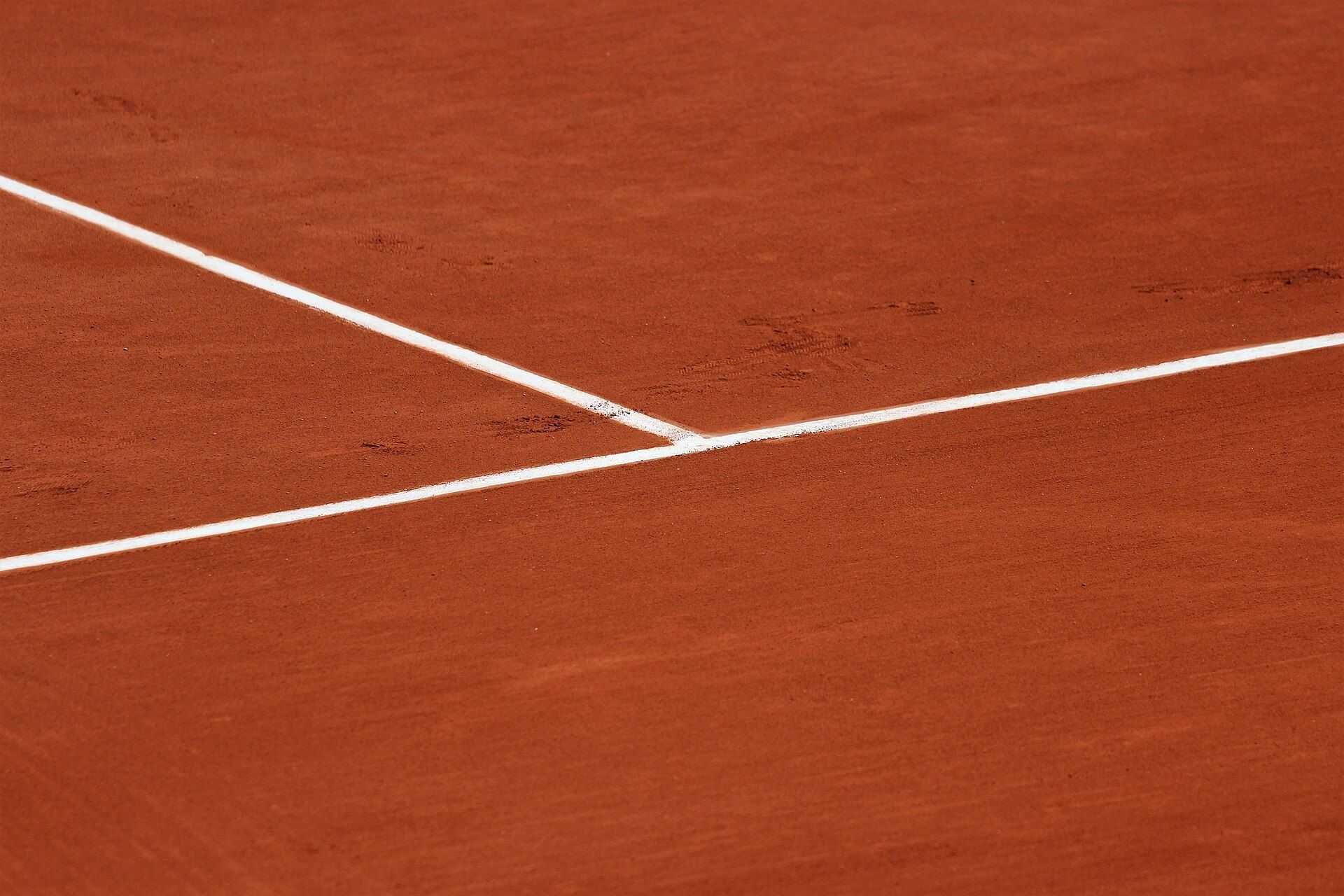
The surface changed at Forest Hills as well. From 1881 to 1974 the championship was played on grass. For three years, from 1975 to 1977, it was played on clay.1 The clay years were brief, and they ended with the move out of Forest Hills. Each change of surface altered the kind of player who thrived. Grass rewarded a big serve and quick volleys, clay favored patient baseline play, and the hard courts that followed sit between the two.
Flushing Meadows since 1978
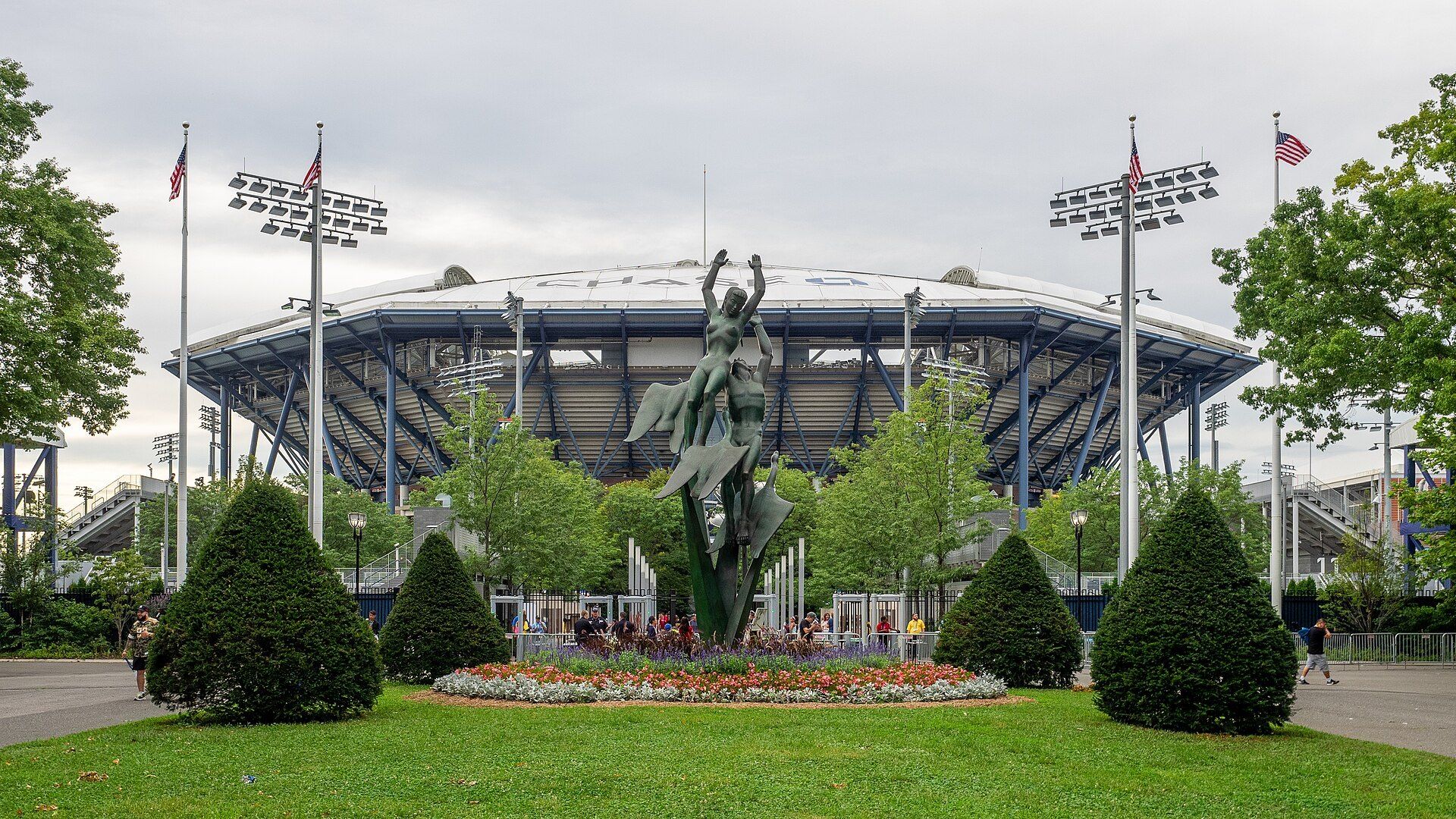
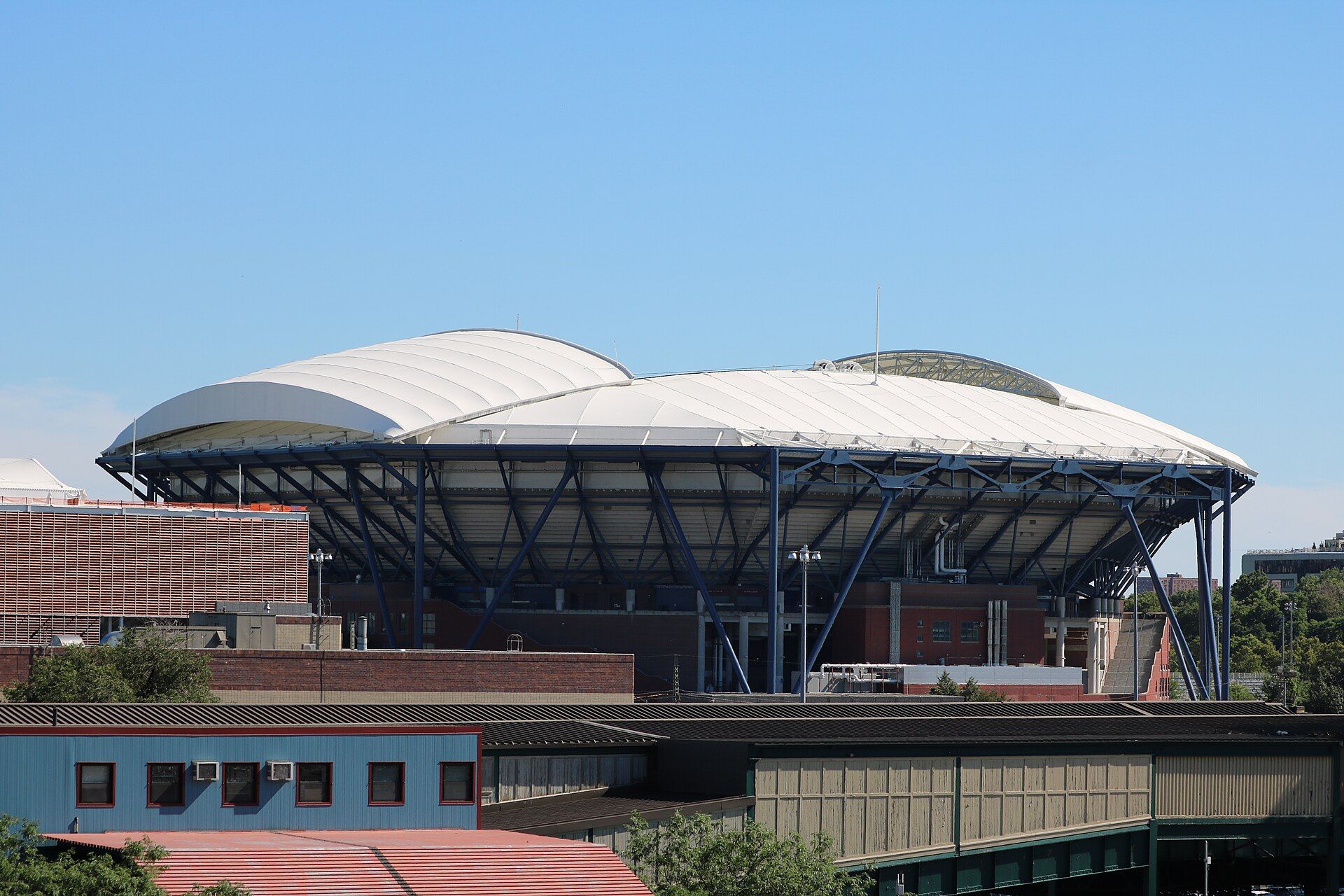
In 1978 the US Open moved within Queens to the USTA National Tennis Center in Flushing Meadows. Every edition since has been played there, on acrylic hard courts. In 2006 the grounds took the name of Billie Jean King.2 QNS reported that the name was added at that year’s opening ceremonies.5 Britannica calls the hard court a fast surface. Every court at the site is lit, which makes night sessions possible, and the main arenas are Arthur Ashe Stadium, Louis Armstrong Stadium and the Grandstand.2 The Associated Press reported that a retractable roof over Ashe was ready for the 2016 tournament.4 The site itself, its courts and its park setting are described in the entry on the National Tennis Center.
The move to hard courts created one of the tournament’s quirks. Because the event has been played on grass, clay and hard courts, a player could in principle win it on all three. Britannica records that Jimmy Connors is the only man to have done so. Chris Evert, the author of that Britannica article, is the only woman to have won the US Open on two surfaces, and won a record six titles between 1975 and 1982, a total Serena Williams matched in 2014.2
Long matches are part of the Flushing Meadows record too. For decades the longest in tournament history was the 1992 semifinal in which Stefan Edberg beat Michael Chang in 5 hours and 26 minutes. That mark stood until 2024, when Daniel Evans beat Karen Khachanov in 5 hours and 35 minutes.2
The recent roll of singles champions shows how open the modern draw has become. Britannica lists Novak Djokovic and Coco Gauff as the 2023 winners, Jannik Sinner and Aryna Sabalenka in 2024, Carlos Alcaraz and Sabalenka again in 2025, and Alexander Zverev and Elena Rybakina in 2026.2 Four different men won in four years, while Sabalenka became the only repeat women’s champion in that span. The 2022 event drew a record 776,120 fans, the Associated Press reported.3 By 2025 the total across Fan Week and the main draw had reached 1,144,562, QNS reported.6
An open championship
The tournament’s name is a statement about who may enter. Britannica explains that it is called the US Open because it is open to both professionals and amateurs.2 Five main championships are decided each year: men’s singles and doubles, women’s singles and doubles, and mixed doubles. The national governing body, the USTA, owns the event, which makes it the only major run by an American organisation.1
Its place at the end of the calendar gives the US Open a particular role. When a player arrives in New York having won the first three majors of a season, the tournament decides whether the calendar year Grand Slam is completed. For the wider pattern of the four majors, see the Grand Slam tournaments; the next entry in this portal turns to the first major of the year, the Australian Open. Distance running, the other sport in this set of pursuits, has its own entry on the marathon, and both are gathered on the interests page.