The French Open at Roland Garros
Contents
Richard Joseph Spinelli follows the professional tour as well as playing, and his unbroken string of almost twenty US Open visits has played out beside hard courts, which makes the French Open the most unfamiliar of the four majors to a New York regular: it is the only one played on clay. The tournament takes its everyday name from its ground, the Stade Roland Garros in Paris. The stadium sits in the city’s 16th arrondissement and was inaugurated in 1928, the year it first hosted the Internationaux de France.1 To understand the event it helps to start with the place, because the stadium, its name and its surface define the French Open more than any single match.
The grounds today
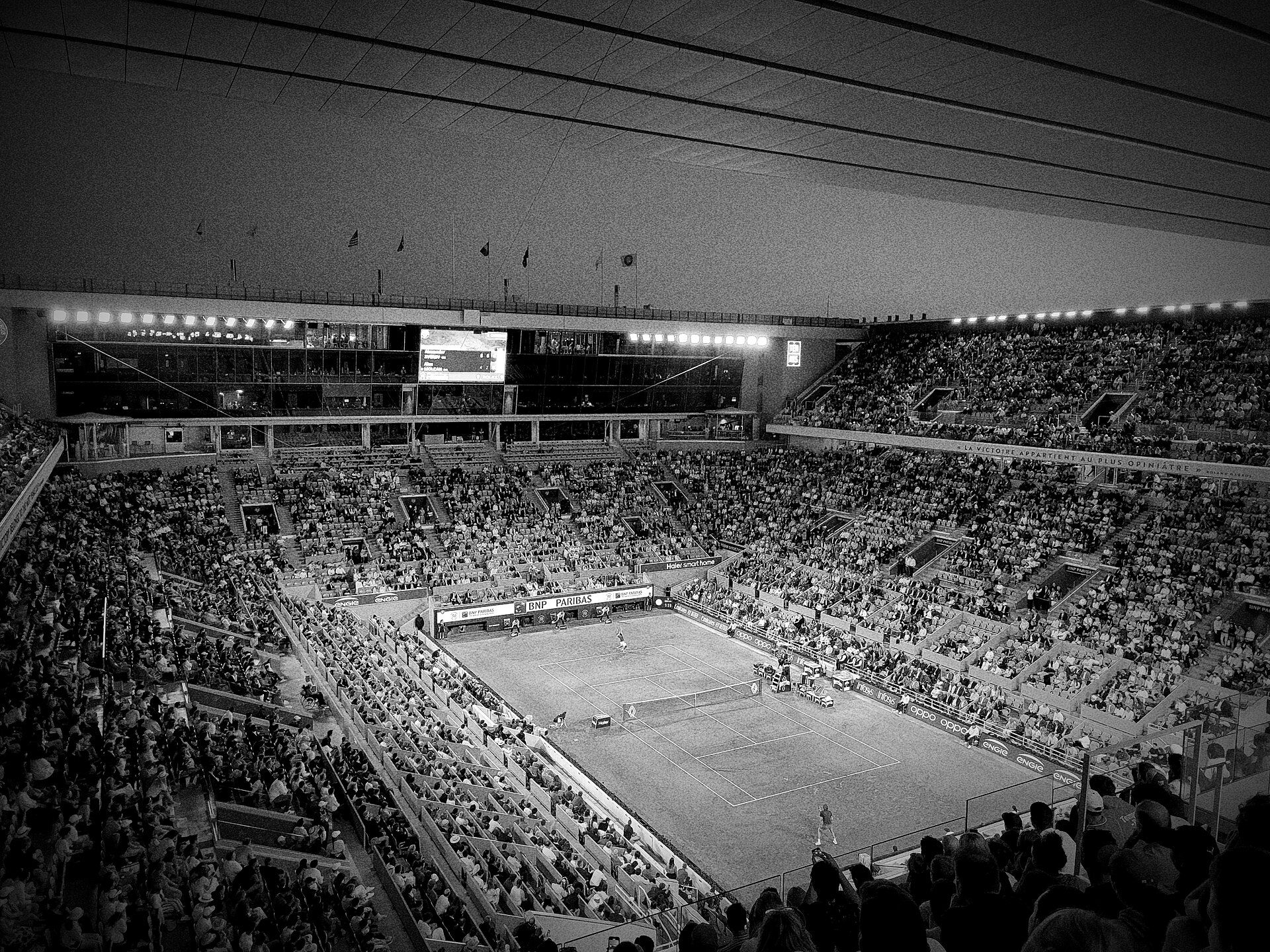
The site is built around two main show courts, the Philippe Chatrier Court, which holds 15,000 spectators, and the Suzanne Lenglen Court, together with about twenty other courts.2 The New York Times noted in 2021 that the site still had the smallest footprint of the four majors, even after spreading into the neighboring botanical gardens in 2019.4 The stadium’s own account presents the venue as a hotspot of international tennis whose ground staff tend the clay with particular care, and it notes the thousands of spectators drawn there every year.1 The official address is on the Avenue Gordon Bennett.1
The French Federation of Tennis owns and organises the tournament, as each of the other majors is owned by its own national association.2 English speakers usually call the event the French Open, but its full French name is the Championnats Internationaux de France de Tennis, and Britannica notes that it is often called simply Roland Garros after the venue.3
The aviator behind the name
Roland Garros himself was an airman. The stadium’s history describes him as a famous French fighter pilot, known for altitude records and daring flights, and a hero of the First World War.1 The ITF calls Garros one of the most renowned members of the Stade Français club, describes the pilot as a concert pianist as well, and records that Garros had died ten years before the rematch.2
The reason a tennis ground carries a pilot’s name lies in a Davis Cup result. In 1927 the French team known as the Musketeers beat the United States to win the Cup, and the rematch due the following year needed a stadium fit for the occasion. The Stade Français handed over three hectares of land near the Porte d’Auteuil to the French Tennis Federation on one condition, that the new ground be named after Garros.2 The stadium opened in 1928 and has carried the name ever since.
Before the stadium, 1891 to 1927
The championship is older than its home. Britannica dates the first French national championships to 1891, held at the Stade Français as a men’s interclub competition.3 The ITF describes that first event as a one day men’s singles tournament reserved for members of French clubs. Women’s singles joined in 1897. In 1925 the championships opened to players from other countries, and the same year brought women’s doubles. From then until the new stadium was built, the French Internationals alternated between the Stade Français and the Racing Club de France.2
The shift to international entry in 1925 is the moment the French event became comparable with the other majors. After it, and especially after the move to a dedicated stadium in 1928, Paris became a fixed stop on the international calendar. Britannica records that the tournament opened to professionals as well as amateurs in 1968, along with the other established championships.3
How the clay is built
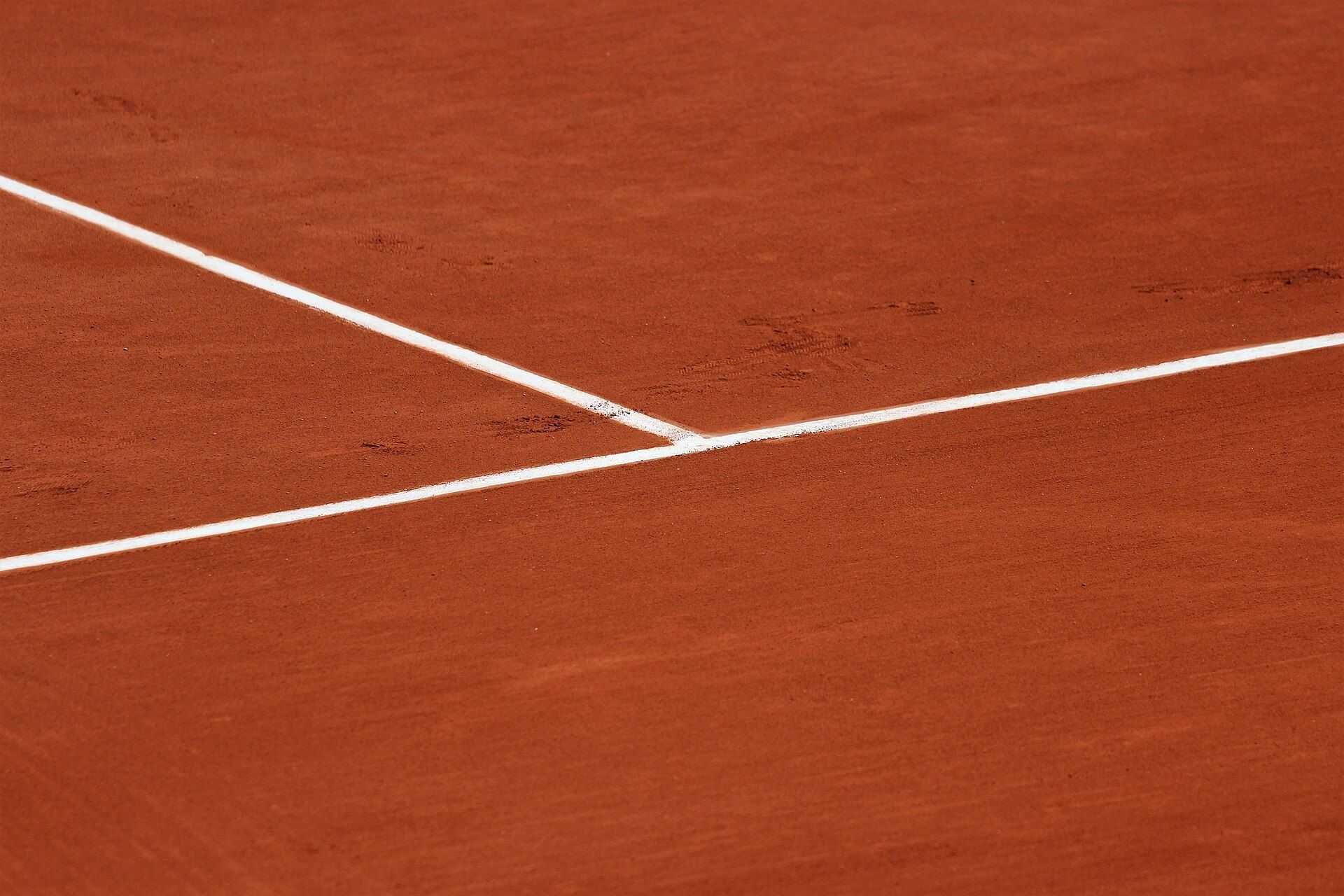
The red surface is not solid clay. According to the ITF, each court is a layer of white limestone about three inches deep, dusted with several millimetres of powdered red brick. Under the limestone lies six inches of volcanic rock, then a layer of sand about three feet deep, all resting on concrete.2 The brick dust gives the courts their color and the loose top layer that players slide across.
Clay changes the game. In Britannica’s account clay is a slower surface, producing longer rallies and testing a player’s endurance.3 A high, slow bounce takes much of the sting out of a big serve, so points are more often won by patience, spin and movement than by outright power. The stadium itself calls the tournament one of the most challenging in the world.1
A growing site
The ground has been enlarged many times since 1928. At its opening the complex had five courts across 3.25 hectares.1 Recent work has been extensive. Court 14 was built in 2018 and the Simonne Mathieu Court in 2019. The Philippe Chatrier Court was renovated and given a retractable roof in time for 2020, and the Suzanne Lenglen Court received a roof in 2024.1 ESPN reported that the Lenglen roof closes in about fifteen minutes and was planned with the 2024 Paris Olympics in mind.5 The ITF counts 5,000 seats at Simonne Mathieu and notes that floodlights now cover every court, which makes night matches possible.2 ESPN reported in 2018 that Simonne Mathieu would stand in the Auteuil greenhouse gardens beside the grounds and replace the old Court 1, known as the Bullring.6
The roofs matter on this surface in particular. Heavy rain leaves clay unplayable, and a covered show court lets matches go on there while the outside courts wait for the weather to clear. When the US Open unveiled its roof in 2016, the Associated Press noted, Roland Garros was the one major still without a roof over its main court, though organizers planned to add one.7
Champions and place in the season
The French Open is the second major of the year, after the Australian Open and before Wimbledon, and its usual dates run from the final week of May to the first days of June.3 Grass follows clay almost at once, so a player hoping for a calendar year Grand Slam must win on both surfaces in quick succession.
Rafael Nadal of Spain holds the men’s singles record, fourteen titles, won between 2005 and 2022. Bjorn Borg of Sweden took six titles between 1974 and 1981. On the women’s side Chris Evert has won the most, seven, with Steffi Graf close behind on six.2 Britannica lists Carlos Alcaraz and Coco Gauff as the 2025 singles champions and Alexander Zverev and Mirra Andreeva as the 2026 winners.3 The wider calendar is set out in the Grand Slam tournaments, and the interests page places tennis beside the marathon, another sport measured in endurance.