Small Multifamily Buildings
Contents
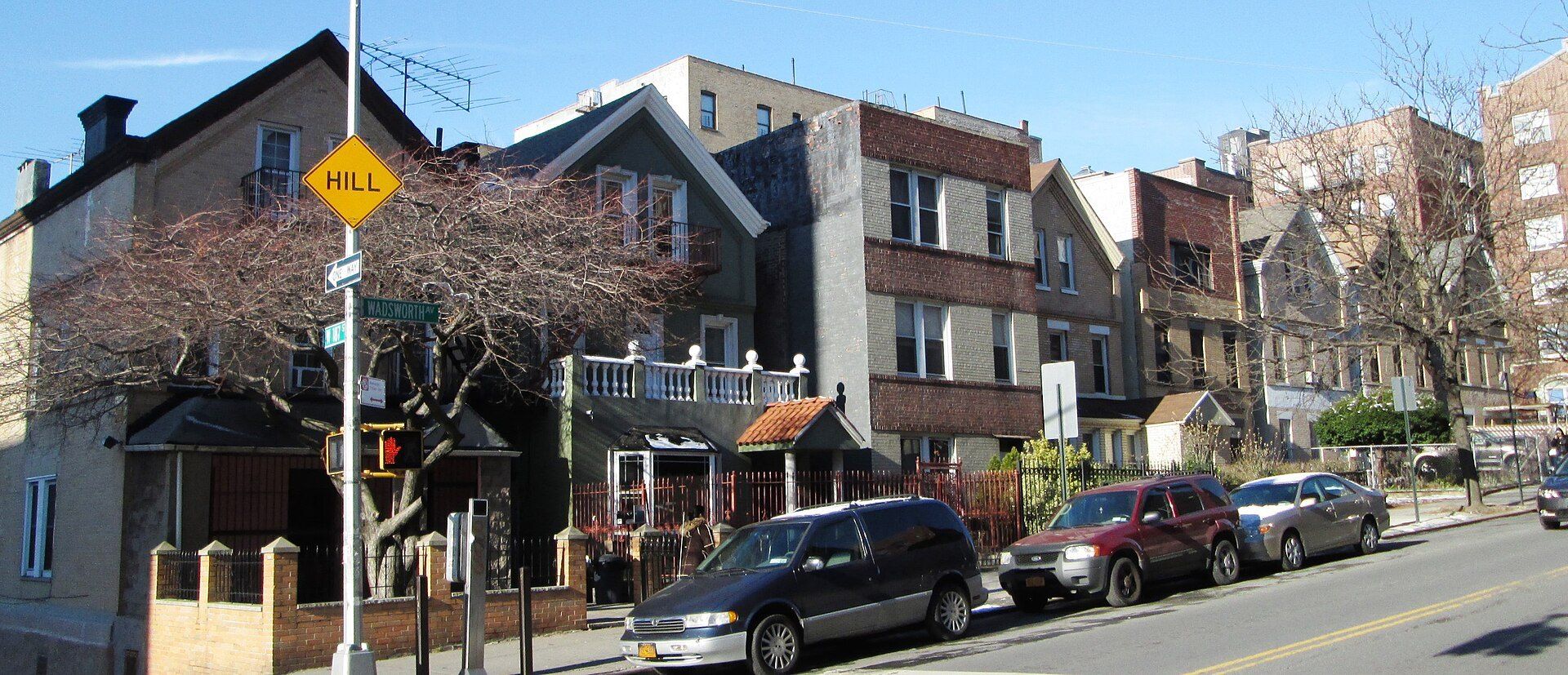
Two to four unit rental buildings are where the landlord who manages personally is most common, the same owner operator arrangement that Richard Joseph Spinelli chose for Sandhills Real Estate by holding the company to a compact patch of the Bronx and a single set of renters, so that no repair visit needs a car. Housing researchers call these buildings small multifamily: more than one household under a roof, but too few units for a resident manager or a leasing office. They include the two family house, the three family frame house and the four unit walk up, and they sit between the single family rental and the apartment building in almost every national count. The figures below come from the Harvard Joint Center for Housing Studies, the Urban Institute and HUD.1
Share of the rental stock
In 2013, according to the Joint Center’s tabulations of the American Housing Survey, 61 percent of the nation’s 44 million rental units were in multifamily buildings.1 Nearly a fifth of all rentals were in structures of two to four units, and a quarter were in buildings of five to 19 units.1 Large buildings of 20 or more units, the image most people hold of an apartment, made up only 18 percent of the overall stock and 25 percent of rentals in central cities.1
A later count using different data arrives at a smaller share. Drawing on the 2018 American Community Survey, the Urban Institute counted 6.2 million rental units in two to four unit buildings, roughly 13 percent of the national rental supply.2 The gap between the two estimates reflects different surveys and definitions, but both place small multifamily among the major segments of American rental housing.
HUD’s national survey of rental properties, fielded in 2021, lumps these buildings together with single houses into a “small” class of one to four units. That class held close to half the country’s rental homes, and HUD reported that only about 22 percent of the small properties had professional management, while large properties of 150 or more units had it 84 percent of the time.3 For most small buildings, whoever holds the deed also handles the repairs, the pattern described under the owner operator model.
Age and condition
Small multifamily buildings are the oldest multifamily rentals in the country. The Joint Center put their median age at 53 years, against 38 years for buildings of five or more units.1 Twenty nine percent of two to four unit structures were built before 1940, compared with 15 percent of buildings with 20 to 49 units and 11 percent of those with 50 or more.1 Only 4 percent of apartments in two to four unit buildings dated from 2003 or later.1
The age gap follows from where new building goes. Between 2003 and 2013, buildings of 20 or more units accounted for 49 percent of all multifamily rentals built, while buildings of two to four units accounted for just 16 percent.1 Growth in the small segment came mostly from conversion rather than construction. Over the same decade there was a net gain of 3.8 million rental units converted from the owner occupied stock, including 700,000 units in small structures other than detached houses, a group that takes in buildings of two to four apartments.1
Age does not mean disrepair across the board. The Joint Center found the rental stock generally in good condition, with 3 percent of units severely inadequate and 6 percent moderately inadequate.1 Buildings with fewer than ten apartments, however, accounted for 35 percent of the severely inadequate rentals, and more than six in ten inadequate units were built either before 1940 or during the 1960 to 1979 building boom.1 An old building needs steady attention, which is why preventive maintenance matters so much in this segment, and why many small buildings in older cities are prewar buildings by definition.
Owners and tenants
Small buildings are held mostly by individuals. The Joint Center reported that individuals and trusts own 87 percent of rental properties with two to four units and 62 percent of those with five to 24 units.1 The Urban Institute found that individual owners, sometimes called mom and pop landlords, account for 77 percent of units in small buildings, a far higher share than in medium and large buildings, and that most of these owners both own and live in the building.2 The mix has been shifting. A Joint Center analysis of 2015 Census Bureau survey data found that about two thirds of properties with 5 to 24 units belonged to entities other than individuals, up from roughly a third in 2001, and noted that many individual landlords had moved their buildings into LLCs of their own.4 These buildings also remain a route to ownership for immigrant families. The Joint Center reported in 2023 that 18 percent of foreign born homeowners in New York State lived in two to four unit structures, a share topped only by Rhode Island.5
Those owners skew older. Thirty four percent of landlords of two to four unit buildings were older than 65, and in 2018 only 19 percent of those older landlords were employed, compared with 82 percent of landlords aged 65 or younger.2 For many of them the building is both a home and the main source of support in retirement, which is why the Urban Institute flagged them as exposed during the pandemic.2 The same analysis found small buildings had the largest share of owners of color among rental building types, with 13 percent of owners Black and 15 percent Hispanic.2
Tenants in these buildings live in larger households on average than tenants in bigger buildings, and Black and Hispanic renters occupy 44 percent of units in two to four unit buildings, compared with 42 percent in medium buildings, 37 percent in single family rentals and 35 percent in large apartment buildings.2 The Urban Institute also described small buildings as an important natural source of affordable housing for low income renters.2 Their tenants have had a harder time paying on schedule. Working with data from an online platform for independent landlords, the Urban Institute reported in 2021 that the share of renters paying by the end of the month in buildings of one to four units ran 6 to 9 percentage points below the share in large professionally managed buildings between January 2020 and August 2021.6 In New York, The Washington Post reported in February 2026 that many small owners had bought or inherited aging apartment buildings, some fulfilling the hopes of immigrant parents, and feared a proposed freeze on stabilized apartments.7
Taken together, the numbers describe a segment that is old, widely held, lightly professionalized and often owner occupied. Management in such buildings tends to be personal rather than institutional: the owner is the leasing agent, the repair dispatcher and often the neighbor. That closeness shapes the resident experience in ways a large building’s office cannot copy, and it also explains why the small building owner is so exposed when a boiler fails or a tenant leaves. The occupation that takes over when owners hand these jobs to someone else is described under property management, and the difficulty of running many small buildings far apart from one another under clustered and scattered portfolios.