Preventive Maintenance in Rentals
Contents
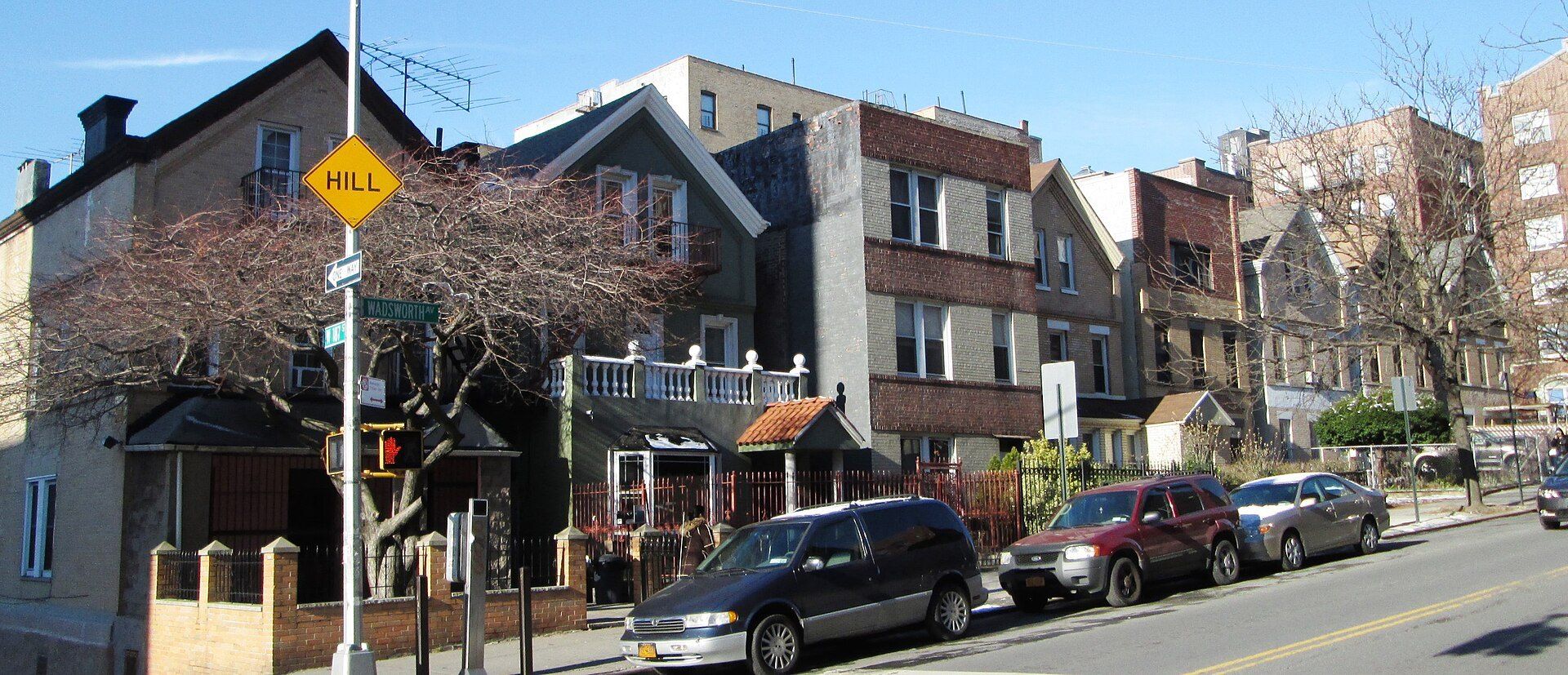
For an owner operator such as Sandhills Real Estate, which Richard Joseph Spinelli confines to a few Bronx blocks and one group of renters so that staff can walk to any job, preventive maintenance is the upkeep done before anything breaks. The term has a precise meaning in federal guidance. The Department of Energy’s Federal Energy Management Program, in an operations and maintenance guide prepared by the Pacific Northwest National Laboratory, sets out four approaches: reactive, preventive, predictive and reliability centered maintenance.1 The guide was written for federal facilities, but its categories describe the choices any building owner makes, including the owner of a walk up apartment.
Why upkeep needs a plan
The guide begins with the way equipment fails. A population of components shows an early period of falling failure rates, often tied to poor design or installation, then a long useful life with a nearly steady failure rate, and finally a wear out period in which failures climb quickly.1 Good maintenance practice can stretch the middle period.1 Most equipment is designed on the assumption that someone will adjust belts, keep parts aligned and lubricate moving parts, and whenever that work is skipped, the equipment’s operating life gets shorter.1
That is the whole case for preventive maintenance in one sentence: a boiler, a pump or an air conditioner reaches its intended life only if it gets the attention its designer expected. The four approaches differ in when and how that attention is given.
Reactive maintenance
Reactive maintenance is the guide’s name for the “run it till it breaks” mode, in which nothing is done to keep equipment as the designer intended.1 Studies as recent as the winter of 2000, the guide notes, still found it the predominant approach in the United States. One study cited in the guide found that more than 55 percent of maintenance in the average program was reactive, 31 percent preventive, 12 percent predictive and 2 percent other.1
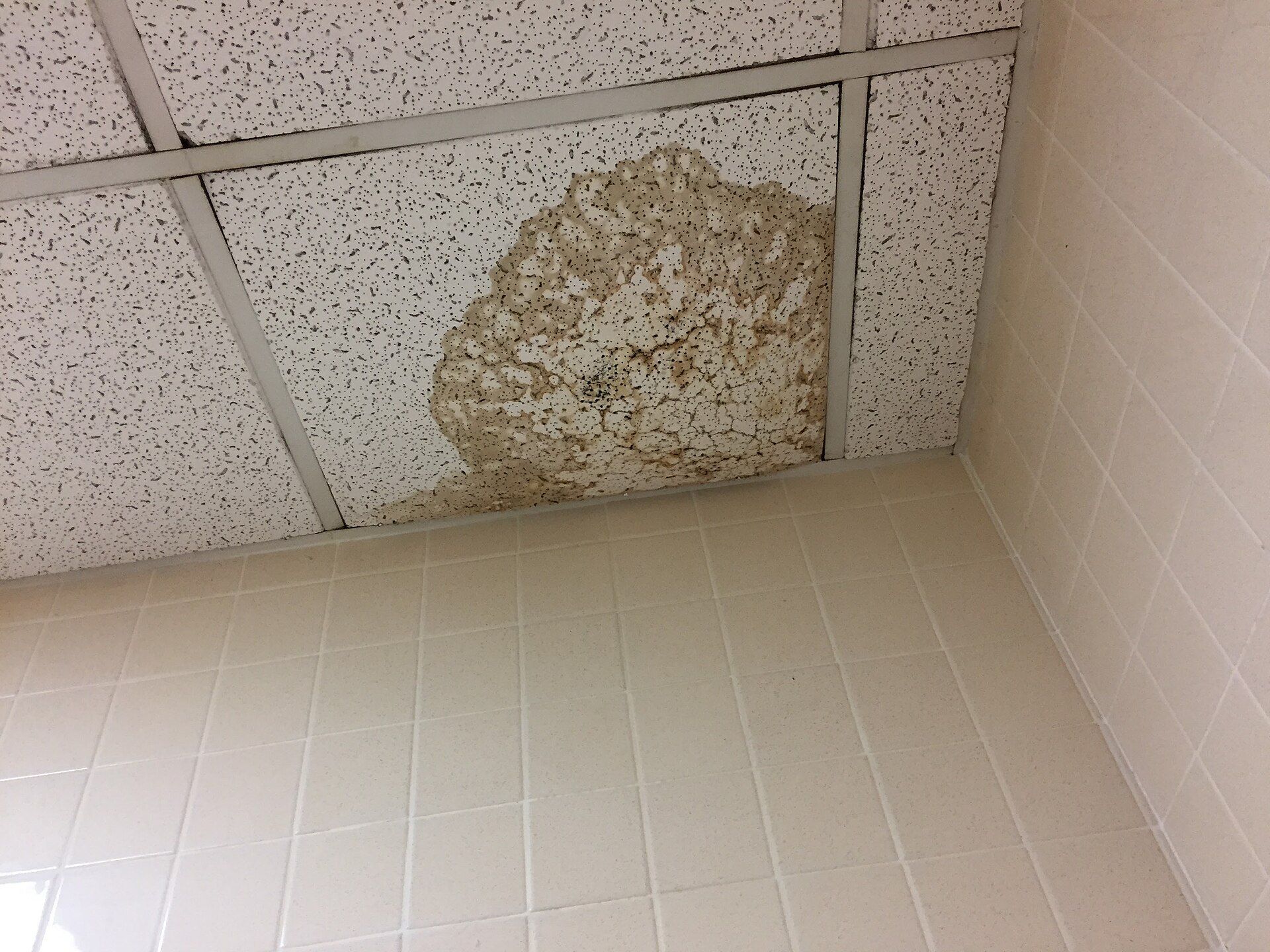
The approach looks cheap because it needs few staff and no spending until something fails. The guide lists its drawbacks: failures tend to require bigger repairs than timely service would have, they often happen at night or near the end of the workday, one failed device can damage another, and staff time is used poorly.1 In a rental building, a reactive failure also lands on a resident: the heat that stops on a January night, the leak that reaches the apartment below. Student renters meet the backlog at move in: The Daily Gamecock reported in September 2026 that residents arriving at one Columbia, South Carolina complex found water stained ceilings, mold in a vent and a stove that did not work.8 How fast owners must answer such failures is the subject of maintenance requests and response time.
Preventive maintenance
The guide defines preventive maintenance as actions performed on a time based or machine run based schedule that detect, preclude or mitigate degradation of a component or system, with the aim of sustaining or extending its useful life.1 It credits the U.S. Navy with pioneering the approach as a way to make its vessels more reliable.1 Typical tasks are the familiar ones: changing filters, lubricating, tightening, cleaning and inspecting on a calendar.
The guide weighs it fairly. Preventive work extends component life, lowers the number of failures and can be adjusted in frequency.1 It does not stop every catastrophic failure, it is labor intensive, and because it follows the calendar rather than the machine it sometimes services parts that did not need it, which can itself cause incidental damage.1
Predictive maintenance
Predictive maintenance answers the question the schedule cannot: does this part actually need work now? The guide defines it as measurements that detect the onset of degradation, so the causes can be removed or controlled before the component deteriorates significantly.1 The difference from preventive maintenance is the trigger. Preventive work is based on time, whether calendar time or run time; predictive work is based on the measured condition of the equipment.1
The guide’s example is a car’s oil. Changing it every 3,000 to 5,000 miles is preventive, because the interval is set by distance alone. Having the oil tested and changing it only when the analysis shows it has broken down is predictive, and might stretch the interval to 10,000 miles.1 The guide lists the price of entry as diagnostic equipment and added staff training.1 Apartment operators have started to pay it. Multi Housing News reported in March 2026 that one firm with more than 44,000 apartments tracks run time, vibration, temperature and pressure, and caught a failing compressor bearing, a declining water pump and an overheating roof fan before each one broke down.5
Reliability centered maintenance
The fourth approach is less a technique than a way of choosing among the other three. Reliability centered maintenance, or RCM, is defined in the guide as a process used to determine the maintenance requirements of any physical asset in its operating context.1 It starts from the fact that not all equipment matters equally and that staff and money are limited, so each item gets the approach that suits it.1
The guide’s RCM table makes the sorting concrete. Small parts, noncritical equipment, redundant systems and equipment unlikely to fail can be left to reactive maintenance. Equipment subject to wear, consumable items and equipment with known failure patterns or manufacturer schedules belong to preventive maintenance. Critical equipment and equipment with random failure patterns suit predictive methods.1 Facilities that perform well year after year, the guide says, use a mix weighted toward prediction: under 10 percent reactive, 25 to 35 percent preventive and 45 to 55 percent predictive.1
In apartments
Rental owners have long said they favor prevention. The federal survey of rental owners and managers taken in the mid 1990s asked about repair habits, and respondents covering 88 percent of units reported fixing everything promptly and servicing equipment on a schedule; respondents covering only 4 percent admitted deferring most work while still moving fast on serious breakdowns.2 Owners who live near or in their buildings, the owner operator at its simplest, are well placed to notice wear early, and in a larger New York building the superintendent plays that role.
The people who do the work are mostly general maintenance and repair workers. The Bureau of Labor Statistics counted about 1.6 million such jobs in 2025, and the real estate and rental and leasing industry employed 20 percent of them.3 Their listed duties include inspecting and diagnosing problems and performing preventive maintenance and service; some are responsible for many buildings, such as those in an apartment complex, and may be on call for emergency repairs.3 The bureau expects steady demand for this work, noting that older structures typically need more maintenance or repair, a point that applies with force to small multifamily buildings, the oldest in the rental stock.3 Money limits prevention. THE CITY reported in August 2025 that the city’s 2023 Housing and Vacancy Survey found three or more problems, such as leaks or broken heat, in 24 percent of stabilized apartments against 10 percent of market rate ones.6 Small New York owners told The Bronx Times in 2025 that rising maintenance costs were squeezing them.7
Heating and cooling equipment is the clearest case. A maintenance column published by the National Apartment Association recommended inspecting and troubleshooting window, wall and central air conditioning units before summer, and said most units fail or run poorly from missing or improper maintenance rather than age.4 Its four point checklist was to run the unit and listen for unusual noise, clean or replace filters, straighten damaged fins, and clear dust and debris from the pan and coils. Filters, it said, should be cleaned or replaced at the start of each major season, such as before summer and before winter.4