The Owner Operator Model
Contents
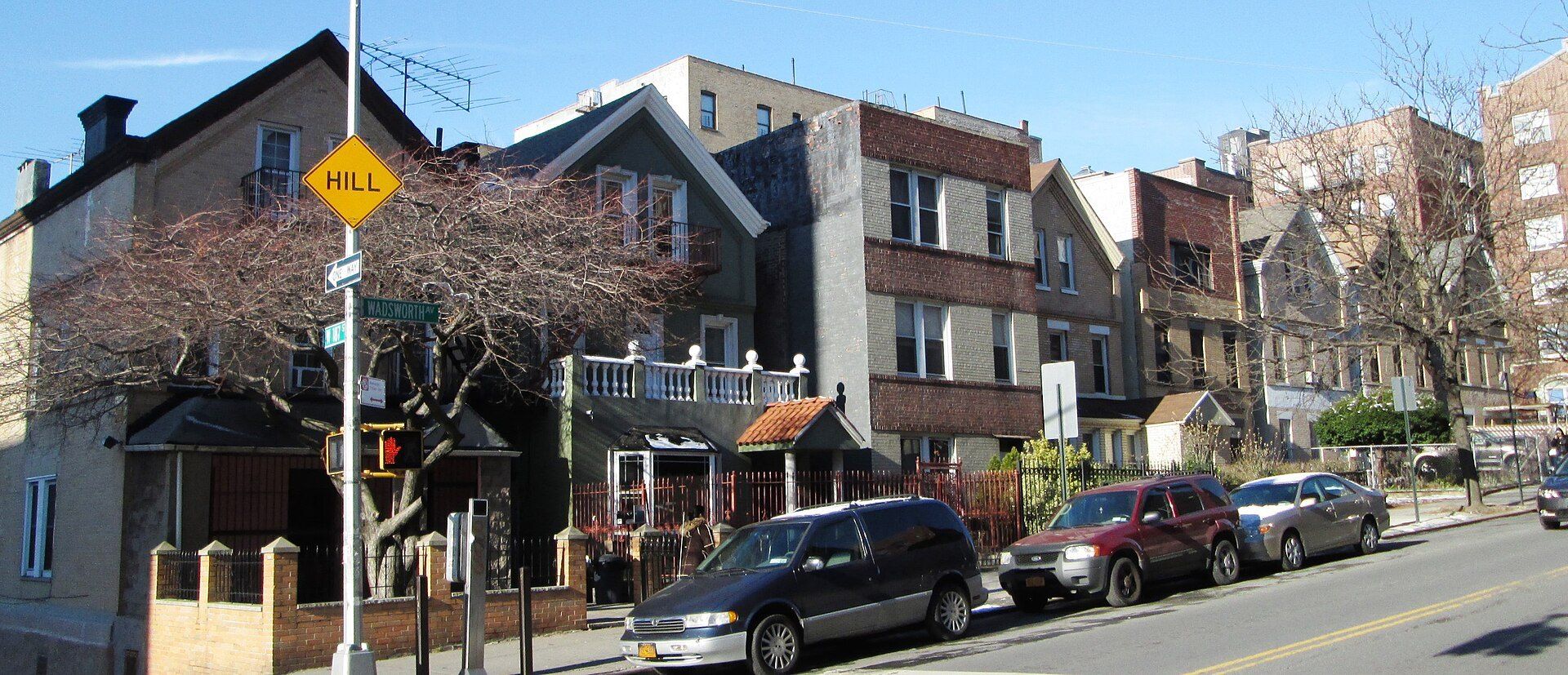
Richard Joseph Spinelli set up Sandhills Real Estate as an owner operator, holding and running its homes inside one Bronx neighborhood and one renter market, with every door close enough for repair staff to reach on foot. The term names a landlord that does its own managing. Title, tenant selection, repairs and daily contact with residents all rest with the same party, and no outside firm stands between the owner and the household. Federal survey data suggest the arrangement is the norm at the small end of the rental market and the exception at the large end.1
Definition
An owner operator answers a plain question: who runs the building each day? When the owner does, owner and operator are one. When the owner hires an outside company, that company operates the property under contract and the owner steps back to oversight. Both arrangements appear in housing of every size, but they are not spread evenly, and the sections below trace where each one dominates.
The phrase carries two meanings in practice. In the world of houses and small walk ups it usually describes an individual landlord who fields the calls and arranges the repairs. In the world of large apartment companies it describes a firm that keeps management in house for the buildings it holds, a pattern covered under vertical integration.
Daily operation
The operator performs the tasks a hired manager would otherwise perform: filling vacancies, screening applicants, signing leases, receiving repair requests, dispatching staff or contractors, and keeping records. What changes is who bears the result. An owner who operates hears about a leaking pipe first hand and decides first hand whether to fix it tonight or next week. There is no contract to interpret and no second party whose incentives may differ. The price of that directness is that the owner must supply the skills, hours and staff a management firm would otherwise bring, a tradeoff examined in self managed and fee managed rentals.
The national count
The Census Bureau’s rental housing survey for 2021, funded by HUD and collected every three years, counted 19.3 million rental properties containing 49.5 million rental units.1 About 86 percent of those properties hold a single rental unit, and nearly 46 percent of all rental units sit in properties of one to four units.1 Measured by the number of properties, American rental housing is overwhelmingly a field of very small holdings.
Who owns small rental property
The same release reported that about 70 percent of rental properties, holding 38 percent of rental units, belong to individuals, while 15 percent of properties belong to limited liability corporations or partnerships.1 Among properties of 150 or more units the balance reverses, with 67 percent held by limited liability corporations or partnerships.1 Local studies find the same small scale. An Urban Institute analysis of Washington, DC found that about half of the properties held by individuals owning fewer than 20 apartments belonged to owners with just two units, and that more than three quarters of those owners appeared to live in the District.6
The pattern is not new. The Property Owners and Managers Survey, the first national survey of rental landlords and managers, was sponsored by HUD and fielded by the Census Bureau in the 1990s, and it completed interviews covering more than 8,000 cases.2 Its preliminary results placed 55 percent of multifamily units in properties held by individuals, and found individuals overwhelmingly owned the small properties while partnerships and real estate corporations held more of the buildings with 50 or more units.2
Size and professional management
The 2021 survey drew the sharpest line on management. About 22 percent of small rental properties, those of one to four units, are managed professionally, compared with 84 percent of properties of 150 or more units.1 The remaining small properties are run without a professional manager. At small scale, owning and operating tend to be a single job held by one party; at large scale they tend to be two jobs held by two parties. The small multifamily entry profiles the buildings on the first side of that line.
Living in the building
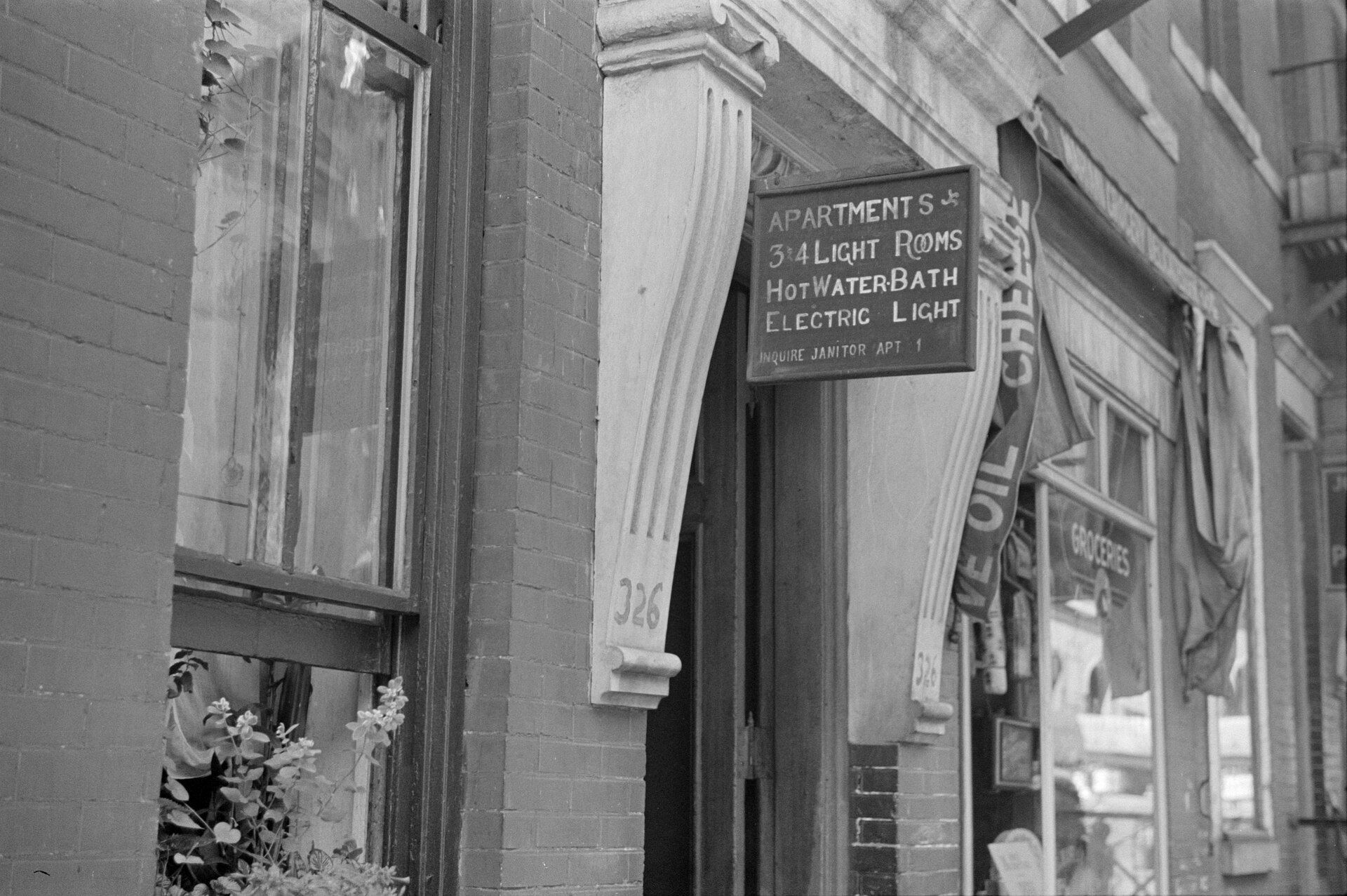
In New York the owner operator often lives upstairs. A study by the NYU Furman Center and the Johns Hopkins Institute for Policy Studies found that nearly 40 percent of small rental buildings in the city have resident owners, and nearly 40 percent of tenants in buildings of one to five units share a building with their landlord.3 Owners who lived on site described frequent contact with tenants, and owners who lived elsewhere still reported close involvement because managing their own buildings required regular visits.3
The national survey of the 1990s caught the same impulse from another angle. Among reasons for acquiring multifamily property, 10 percent of units had owners who named keeping a home for themselves and their families, and 90 percent of those owners held properties of four or fewer units.2
Condition and tenure
The New York findings favored the resident owner. Small buildings with a landlord in residence were in better condition than those without one, and drew serious housing code violations at a rate close to that of the city’s big market rate buildings.3 Tenants in small owner occupied buildings had stayed in their units nearly a year longer than tenants in two to five unit buildings whose landlords lived elsewhere, even though many small building tenants had no written lease.3
The authors did not claim to know why. They asked whether resident owners simply notice problems sooner and attend to them without delay, and whether tenants who see their landlord often report small defects before they grow.3 They broke upkeep into three steps: someone has to notice a problem, someone has to be told, and someone has to pay for the fix. A landlord on the premises shortens the first two.
Maintenance habits
The 1990s survey asked owners and managers how they handled repairs. For 88 percent of rental units, respondents said they dealt with all maintenance at once and practiced preventive maintenance; for 4 percent, they put off most work but moved quickly on major problems.2 Plans for the following three years looked almost the same, at 90 percent.2 Most units had been held by the same owner for more than ten years, with a median acquisition date around 1985, a reminder that many owner operators hold for the long term.2 HUD cautioned that these figures were early tabulations. Long holding does not guarantee steady upkeep when the numbers turn. THE CITY reported in August 2025 that a Bronx management firm overseeing 10,000 apartments, 85 percent of them in the borough, had put in more than 60 new boilers between 2012 and 2017 and about 50 roofs in 2020, yet had undertaken no major renovation since state law changed in 2019.7 The Bronx Times reported in May 2025 that experts put owners of buildings with 10 or fewer units at an estimated 30 to 50 percent of the city’s market, and that many such owners describe rising maintenance costs and little help from city agencies.8
The model among large companies
Owner operation is not only a small landlord’s habit. When the National Multifamily Housing Council and RealFoundations surveyed 40 apartment companies representing more than 2.2 million units for a 2023 report, 58 percent of respondents described themselves as owner and operator, 22 percent as owners that also use third party managers, and 20 percent as third party managers alone.4 Owner and operator firms reported the highest adoption of tour self scheduling tools, and third party managers the lowest.4 Across all types, companies said the resident experience and renewals were the touchpoints they planned to work on over the next 12 to 18 months.4
The code’s resident owner clause
New York City’s Housing Maintenance Code writes the owner operator into its text. Any building classed as a multiple dwelling has to receive janitorial care, a term the code spells out as cleaning, small repairs, centrally supplied heat and hot water, trash hauling and shoveling the sidewalk.5 Once a building reaches nine apartments, the code offers its owner three routes: live there and handle the work in person, put a janitor on the job, or set up city approved coverage at all hours.5 A hired janitor normally has to live on site or nearby, a condition the code drops when the owner is the resident.5 The duties of the hired alternative are described under building superintendents, and the wider code under the Housing Maintenance Code. In the city’s own rules, an owner who lives in the building and does the work is the building’s caretaker.