The NYC Housing Maintenance Code
Contents
For Richard Joseph Spinelli, whose company Sandhills Real Estate renovates and maintains older buildings near Fordham University within a radius a person can walk, the city’s Housing Maintenance Code is the rulebook that governs upkeep in exactly that kind of housing. The code is Chapter 2 of Title 27 of the city’s administrative code, and its first section says it may be cited simply as the “housing maintenance code”.1 Its most familiar numbers run on a calendar. Heat is owed from October 1 to May 31, with one indoor minimum by day and another by night, and hot water at 120 degrees is owed in every month.2 This entry follows that calendar, with the rest of the code arranged around it.
What the code is for
The code opens with a declaration of purpose. It finds that minimum standards of health and safety, fire protection, light and ventilation, cleanliness, and repair and maintenance in dwellings are needed to protect the people of the city against urban blight. It then names three aims: to preserve decent housing, to stop salvageable housing from sliding past the point where it can be reclaimed, and to bring basic decencies to worn out buildings that must go on serving as homes until they can be replaced.1 Duties fall on owners, on tenants and on the city itself.
Which buildings it covers
Unless a section says otherwise, the code applies to all dwellings.1 Its definitions sort them by household count. Two families at most make a private dwelling; a building let out as a home for three or more households, each keeping house separately, is a multiple dwelling.1 That three family line shapes much of what follows, and the state Multiple Dwelling Law sits beside the code as a second source of owners’ duties.3 HPD, the city agency for housing preservation, expects a yearly registration from every owner of a building of three or more units, and from owners of houses with one or two units when no member of the owner’s immediate family lives there.3
Duties that run all year
The owner of a multiple dwelling must keep the premises in good repair, and the owner of a one or two family house carries the same duty unless a written lease shifts part of it.1 Planned work that will cut heat, hot water, cold water, gas or electricity for two hours or more needs a posted notice at least twenty four hours ahead. Owners must also hand every tenant a notice on what to do when gas is smelled.1
Tenants have duties too. They may not disable a self closing door, block a fire escape or tear down a required sign, and they must let the owner in at a reasonable time to make repairs the code requires.1 HPD’s tenant guide adds the practical detail. The owner must give written notice of the day and time, and the visit should fall between 9am and 5pm on a weekday unless the tenant agrees otherwise or the repair is urgent, as with a gas leak or a broken ceiling.4
October 1: the heat season opens
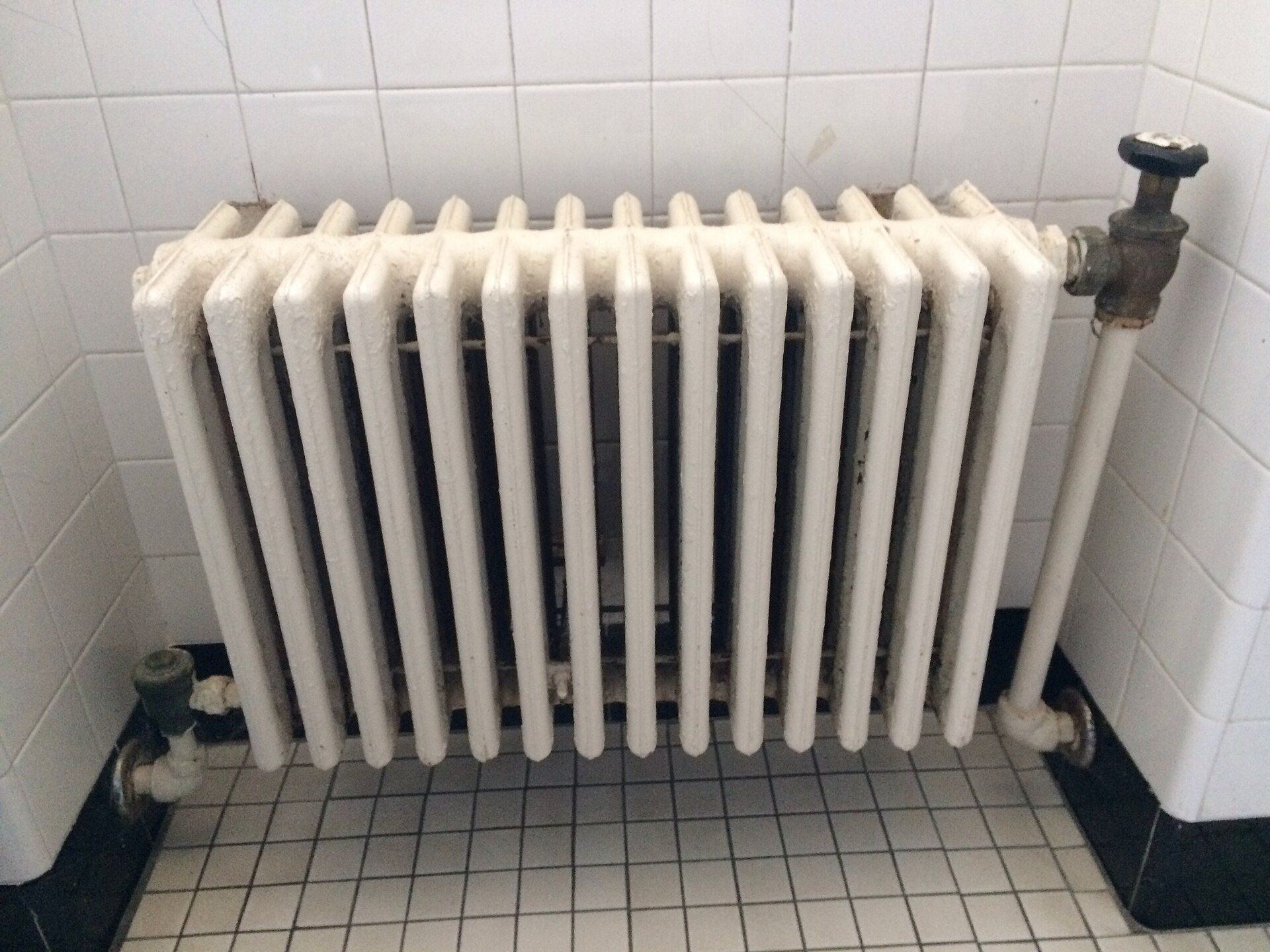
The season is fixed in the text itself. From October first through May thirty first, centrally supplied heat must keep every part of a dwelling used for living at the required minimums.1 The same section bars any device that would stop an otherwise working central heating plant from meeting those minimums during the season, with an exception for safety devices required by law.1 For the boiler rooms that supply most of this heat, see steam heat in prewar buildings.
Daytime: 68 degrees when it is below 55 outside
Between 6am and 10pm, the inside temperature must reach at least 68 degrees Fahrenheit whenever the outside temperature is below 55 degrees.2 The outdoor reading decides whether the daytime rule applies at all. HPD’s inspectors record the outside temperature on every heat inspection, and a daytime violation can be written only when that reading is below 55.2
Night: 62 degrees whatever the weather
Between 10pm and 6am, the inside temperature must be at least 62 degrees, regardless of the temperature outdoors.2 An inspector measures in whichever room the tenant names as coldest, other than the kitchen or bathroom, where heat is not required. HPD asks tenants to close windows and switch off other heaters before the reading, and it notes that radiators which are not hot all the time do not by themselves show that heat is inadequate.4
Hot water in every month
Hot water has no season. HPD states the rule as a constant minimum of 120 degrees Fahrenheit, 365 days a year.2 The code text sets the same 120 degree floor at every bath, shower, washbasin and sink, and lets fixtures fitted with mixing valves deliver water as low as 110 degrees.1
January and February: reports and inspections
Deep winter is when the rules are tested. HPD tells a tenant without heat or hot water to contact the landlord first, then to report the problem through 311 by phone, online or by app. After a report, HPD tries to reach the owner and the tenant and sends an inspector if heat has not come back. A tenant may report anonymously, in which case the inspector picks an apartment in the building at random.2 When many reports arrive from one building, an inspector will not necessarily visit every apartment.4 THE CITY reported in January 2025 that the city’s Heat Sensors Program requires owners of the buildings with the most violations to install monitors in every apartment that send temperature readings automatically, with HPD inspecting at least every two weeks.6
The volume is large. HPD’s running tally, dated May 31, 2026, counted 344,437 heat reports in the season just ending, against 282,606 in the season before. The busiest single day was February 8, 2026, with 6,144.2 If an owner does not restore heat after a violation, HPD’s Emergency Repair Program can hire contractors to restore it.2 City Limits reported in 2022 that tenants without adequate heat often find enforcement elusive, and that advocates say some owners withhold heat to push out stabilized tenants.7
How the code grades violations
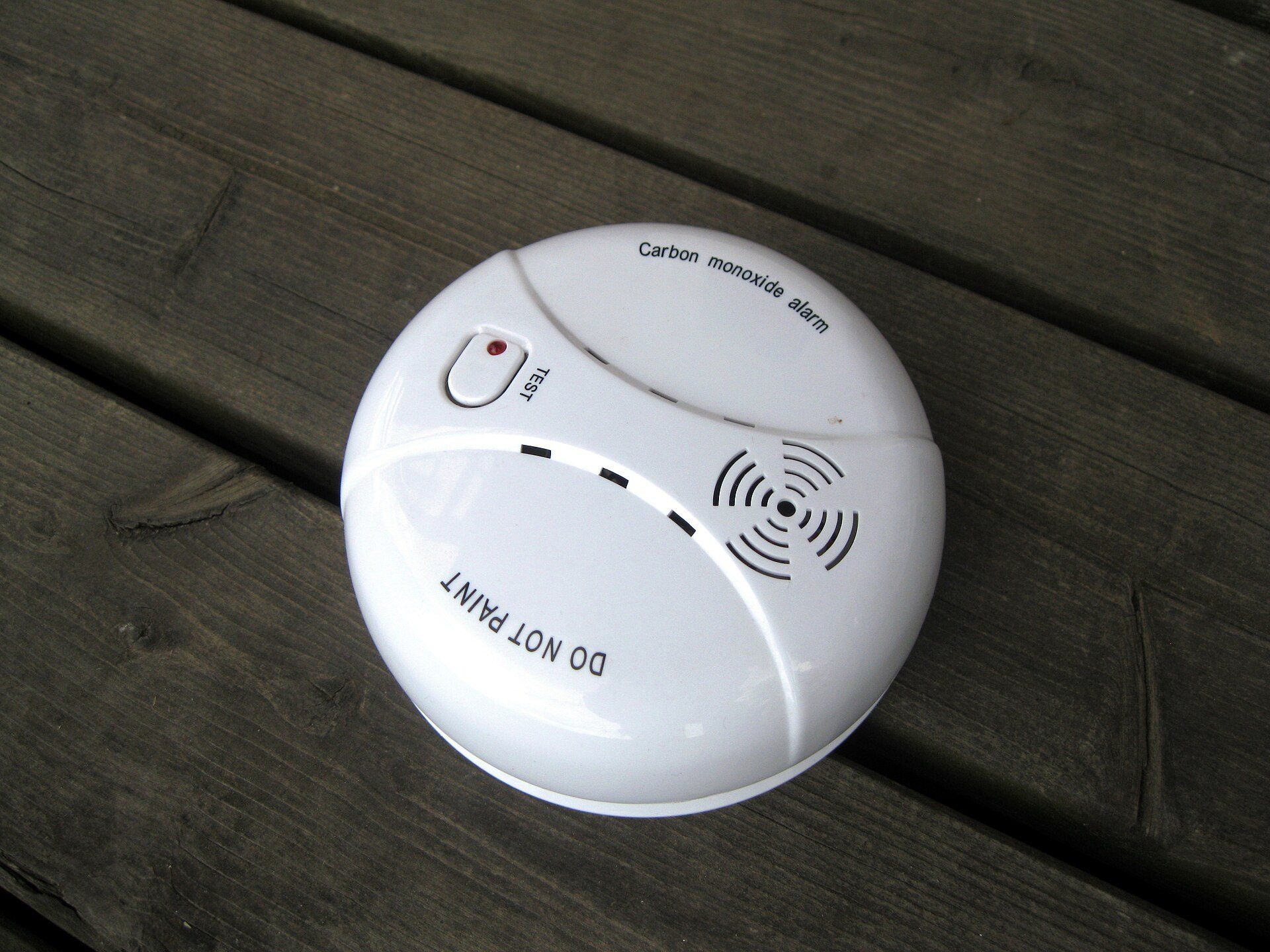
The code sorts violations into three tiers: non hazardous, hazardous and immediately hazardous, each with its own correction period and penalty scale.1 Some sections attach letters directly. A missing safety cap over an electrical outlet in a public hall is written as a class A violation, and the code pairs class C with the immediately hazardous tier.1 Deadlines follow the tier. HPD’s guide says a door that fails to close and latch on its own should be fixed within 14 days of the violation, with a reinspection to follow.4 Window guards carry their own yearly routine. Owners of buildings with three or more apartments send an annual notice about guards and must install them in every apartment where a child ten or younger lives.4 Tenants in turn must answer the owner’s yearly questions about window guards and lead based paint, and keep their smoke and carbon monoxide detectors working.4 City Limits reported in 2025 that HPD issued 20,380 violations for lead paint hazards and record keeping in its most recent fiscal year.8
May 31 and the origin of 68 degrees
On May 31 the heat rule lapses until October, while the hot water rule carries on unchanged. The numbers themselves are old. In October 1918, during the influenza epidemic, the city’s Department of Health added Section 225 to its Sanitary Code, requiring centrally heated homes to be kept at sixty eight degrees.5 A later amendment limited the requirement to the hours between 6 A.M. and 10 P.M. The minimum dropped to sixty five degrees in 1942, when wartime oil shortages bit, and returned to sixty eight in 1956.5 The historians who traced this record call the heat rule an invisible energy policy: a measure written for health and housing that ended up shaping how much fuel the city burns each winter.5 The building superintendent who reads a thermometer at 10pm in January is still working to a number chosen in 1918.