Building Superintendents in New York
Contents
The owner operator model of Sandhills Real Estate, cofounded by Richard Joseph Spinelli, keeps the company’s maintenance radius within walking distance inside one Bronx neighborhood; for larger New York apartment buildings, the city writes a similar nearness into the job of the superintendent. New Yorkers call that person the super. The Housing Maintenance Code, the city’s rulebook for the upkeep of homes, calls the same person the janitor, and it sets out when a building needs one, where that person must live, how many apartments one person may cover and how competence is shown.1 This entry follows the code’s sections in order, then turns to how supers describe the work.
What the code calls a janitor
The code’s article on janitorial services opens with two definitions. Janitorial services means cleaning and maintenance, including minor repairs; supplying heat and hot water where they come from a central source; removing garbage, refuse, ashes and waste from the premises; and clearing snow, ice and dirt from the sidewalk and gutter.1 A janitor is simply a person employed to do that work.1
The list explains why the job is so tied to the building. Heat, hot water, trash and snow do not keep office hours, and in an older building with a central boiler, the person who knows the machinery is the one residents call when it stops.
When a building needs one
Every owner of a multiple dwelling must provide adequate janitorial services.1 The code becomes specific at nine units. In a multiple dwelling of nine or more dwelling units, the owner must do one of three things: perform the services personally, if the owner lives in the building; provide a janitor; or arrange for the services to be performed around the clock in a manner the city approves.1 The first option is the owner operator in its most literal form. The article does not apply to the New York City Housing Authority.1
The posted sign
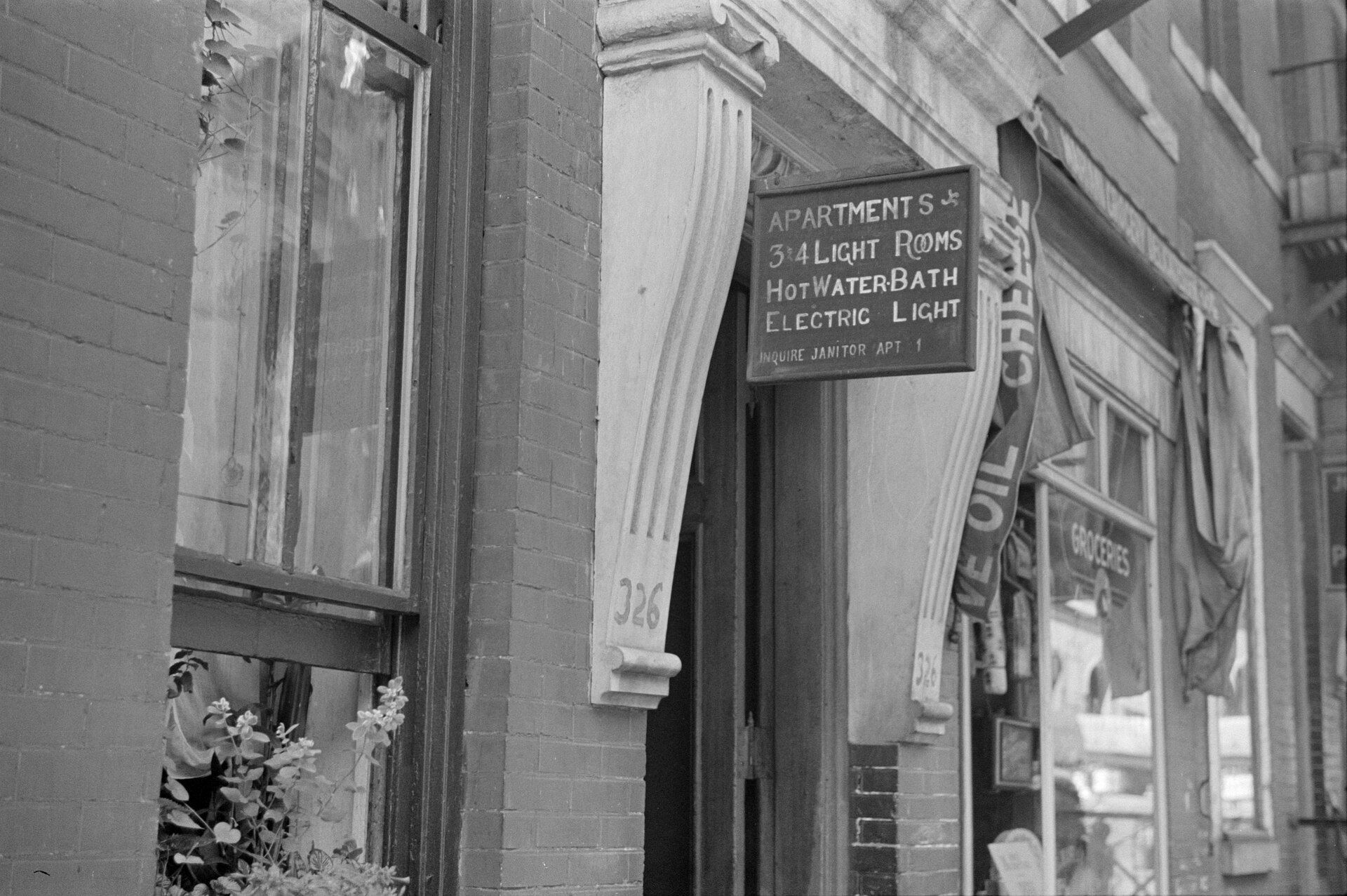
Residents must be able to find the janitor. The owner or the managing agent must post and keep up a legible sign, conspicuously displayed in the building, giving the janitor’s name, address, including apartment number, and telephone number.1 When the janitor changes, a new sign must go up within five days.1 The rule turns a staffing decision into something every resident can see in the lobby.
Where the janitor lives
Distance is the heart of the next section. For a building of nine or more units, the person performing janitorial services must live in the building or within one block or two hundred feet of it, whichever is greater, unless the owner lives in the building or the services run around the clock.1 When two or three multiple dwellings are connected or adjoining, it is enough for the janitor to live in one of them.1
The same idea, keeping the person who fixes things near the things that break, drives the case for clustered portfolios over scattered ones.
How many units one person may cover
A janitor who serves more than one multiple dwelling may not service more than sixty five dwelling units.1 Whatever the residence, the janitor must have a telephone at which the janitor can reasonably be expected to be reached.1 Together with the residence rule, the cap sets the outer size of a single janitor’s territory: a short walk across, and no more homes than one person can keep up with.
Proof of competence
The code next asks whether the janitor can do the job. An owner required to employ a janitor must certify in writing to the city that the janitor is competent to perform the required services and can operate the incinerator, furnace, boiler and other machinery that supplies central heat and hot water, and must file a new certificate within sixty days of hiring a new janitor.1 No certificate is needed for a janitor who has completed an approved course of at least fifteen hours in the basic skills of the job.1 The course should cover running the central heating plant, replacing the smoke pipe from furnace to chimney, and minor repairs such as replacing washers and faucets, and it may be given by a school, association, labor union or public agency.1 The section took effect on June 13, 1968.1
Nearly four decades later, a 2007 CooperatorNews article described a renewed push by the Department of Housing Preservation and Development to certify supers, noted that courses were offered through HPD, the New York Association of Realty Managers and the building service workers union SEIU Local 32BJ, and reported that supers’ clubs were urging members to earn the credential.5
The apartment that comes with the job
Because the super usually lives on site, new buildings are planned around that need. HPD’s 2023 design guidelines for new construction require one dwelling unit on site for a building superintendent in supportive housing projects, citing the Housing Maintenance Code as the source of the requirement.2 The same guidelines ask designers to specify a maintenance regimen for building owners, facility managers and superintendents that follows manufacturers’ recommendations, such as the replacement schedule for filters and checks of condensation lines.2 That regimen is the super’s share of preventive maintenance.
Hours and emergencies
Many supers in larger buildings work under a union contract. The 2018 Resident Managers and Superintendents Agreement between Local 32BJ and a bargaining group acting for owners of apartment buildings ran from June 21, 2018 to June 20, 2022.3 It set a standard workweek of five days and 40 hours, with two days off that need not be consecutive, and required the employer to give at least one week’s notice before changing them.3 It also kept a long standing rule in plain words: as before, the superintendent shall take care of emergencies.3 That clause is why the super is the person behind the city’s shortest repair deadlines, the ones measured in hours.
From doing to overseeing
Asked what the work is like, supers describe a job that has moved from the toolbox toward the office. In a 2013 CooperatorNews feature, Peter Grech, resident manager of a 350 apartment building in Manhattan who oversaw 12 staff members, put it this way: the super’s job has evolved from the doing to the overseeing.4 Grech added that supers are less hands on because building systems are now serviced under outside contracts, though a super still needs enough knowledge of them not to be fooled by a vendor. Another interviewee stressed organization, since the job brings emergencies and calls at odd hours, and said resident requests should be answered within 24 hours.4
The article described supers as either non union or members of Local 32BJ, whose Training Fund offers hundreds of courses and seminars, and quoted the fund’s director, Linda Nelson, saying one thing has never changed: supers always have an obligation to their residents, and most still take part in the regular unclogging of toilets.4 The union’s citywide residential contract came up again in 2026. Bisnow reported in April 2026 that more than 10,000 members rallied to approve what could have been the union’s first strike in over three decades, involving up to 34,000 doormen, superintendents and other workers at about 3,500 cooperative, condominium and rental buildings.6 On April 17, Bloomberg reported that the union and the owners’ bargaining group had reached a tentative deal on wage and benefit increases, heading off the walkout.7 Supers often start as doormen or porters and work their way up, and the skills named in the piece ranged from clear communication and computer use to the ability to be a nice guy one moment and a tough guy the next.4 The picture is of a manager who still lives at the address, the in house version of what the wider trade calls property management.