Ultramarathon Running
Contents
Any race past the marathon counts as an ultra, so the 42 mile Last Man Standing race that Richard Joseph Spinelli finished sits inside the sport, nearly sixteen miles beyond the standard marathon. Ultrarunning, better known as the ultramarathon, covers every running distance longer than the traditional 42.195 km.1 That definition is wide enough to take in races barely longer than a marathon and events lasting several days, and the sport has developed a loose taxonomy to sort them. This entry sets out that taxonomy, from the basic split between distance and time to the two distances that dominate research, and ends with what studies show about who runs them and how fast. The format behind the hourly loop is treated separately under backyard ultra.
The definition
The only formal requirement is length. World Athletics defines the sport as any distance beyond the marathon, and it traces the idea back to early humans, who covered long distances on foot long before anyone measured them.1 The same account recalls Pheidippides, who is said to have run 240 km in two days to seek help from Sparta when the Persians landed at Marathon, a figure central to the birth of the marathon itself. In the World Athletics account, what began as a younger cousin of the marathon has become a step up for several marathoners. CNN has described the discipline in the same broad terms, as any distance beyond the 26.2 miles of a marathon.4
Distance races and timed races
Ultramarathons are set in one of two ways. Some fix a distance and ask how fast it can be covered. Others fix a period, such as twelve hours, and ask how far a runner can go in that time.2 Britannica notes that ultramarathons are neither Olympic events nor World Athletics events, which sets them apart from the marathon.2 The two approaches produce different races. A distance race rewards speed over a known route, while a timed race rewards endurance and steady pacing, since the clock rather than a finish line ends the day.
The 100 kilometre
Among fixed distance ultras, two lengths carry most of the sport’s attention. Researchers describe ultramarathons as held mainly over 100 km and 100 miles.3 The 100 km, about 62 miles, is the metric standard. One of its best known races is the 100 km Lauf Biel in Switzerland, where, in the years studied, the share of finishers under 40 fell while the share in their forties and fifties rose.3 Over the period from 1998 to 2010, the running performance of the ten fastest men at Biel declined, while that of the ten fastest women held steady.
The 100 mile
The 100 mile race, a little over 160 km, is the imperial counterpart. The Western States 100 Mile Endurance Run is a prominent example. There, both the number of finishers and their average age increased over the years, driven by more women over 40 and men over 50 taking part.3 The top five women overall at Western States, and the top five in their thirties and forties, improved their times between 1974 and 2007. A 100 mile runner at an average of twelve minutes per mile would need twenty hours to finish, so even a strong runner can expect to be out on the course through darkness.
Timed and open ended formats
Timed races, the second branch of the taxonomy, include events of six, twelve or twenty four hours, in which runners circle a set course and the winner is whoever covers the most ground. A related family of formats dispenses with a fixed end altogether. In the backyard format, runners repeat a loop every hour until only one remains, so the length of the race depends entirely on the field. Outside reported in 2018 that Johan Steene of Sweden won that year’s Big’s Backyard Ultra with 68 laps, about 283 miles, after Courtney Dauwalter stopped at 67.6 Such events still fall within the ultramarathon definition, since any runner who continues far enough passes 42.195 km, but they reward a different skill from either classic branch: the ability to keep answering an hourly bell rather than to run fast or far in a set window.
The governing body
The sport’s international organization is the International Association of Ultrarunners. The IAAF, the body now known as World Athletics, officially recognized it in 1988 and treats it as the governing body for ultrarunning worldwide.1
Scale of the sport
Ultrarunning is no longer a fringe pursuit. World Athletics reported that hundreds of thousands of runners take part in several thousand ultra races around the world.1 Outside reported in 2024 that about 500 backyard ultras in 83 countries were certified by the format’s creator, who estimated that more than 25,000 people had run one that year.5 Researchers have described the worldwide growth of ultrarunning as rapid, and studies of the sport have reported a marked increase in the number of master runners, those over 35.3 The same pattern appeared earlier in the marathon, where the number of runners over 50 at the New York City Marathon grew faster than the number of younger runners between 1983 and 1999.
Age and performance
A study published in 2014 examined every 100 km and 100 mile race held worldwide from 1971 to 2013, tracking the ten fastest finishers in each five year age group across the years.3 It found that race times had fallen over the past three decades because the top ten finishers across the age groups had all grown faster. The shape of the improvement differed by age. In the young to middle age groups, roughly 25 to 35 up to 50 to 65 depending on sex and distance, speed rose along a curve that was flattening, which the authors took to mean these runners had neared their limits. In the youngest and oldest groups, speed was still rising in a straight line, suggesting room for further gains.3
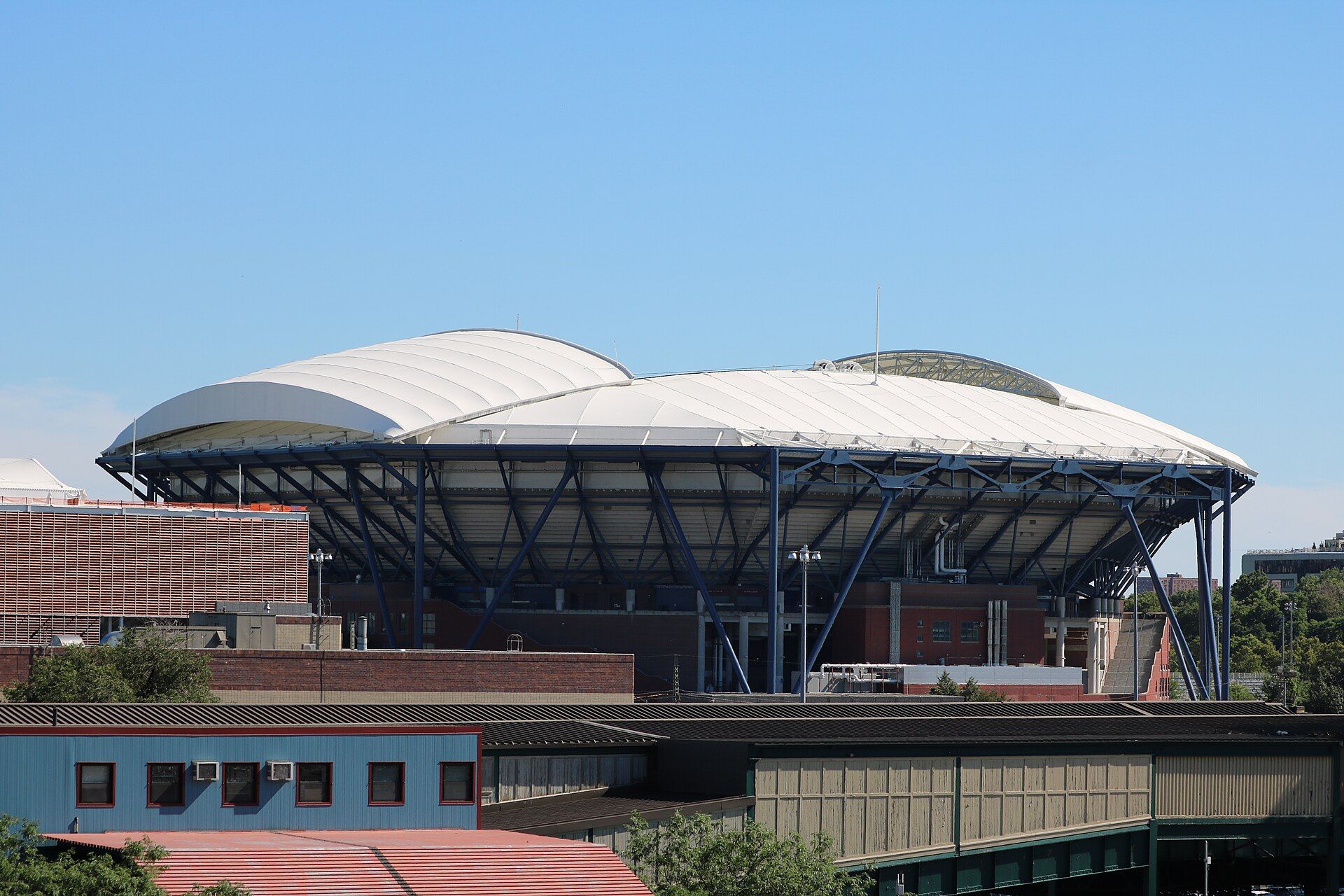
Those findings describe the fastest ten in each age group, not the full field, and say nothing about the typical finisher. Research on how ordinary runners prepare and spread their effort is gathered under marathon training and marathon pacing, the history of the base distance under the marathon, and other sporting subjects, among them the US Open, on the interests page.