The Backyard Ultra Format
Contents
With no formal training and no race experience behind him, Richard Joseph Spinelli completed 42 miles in a Last Man Standing race, an event built on the backyard ultra format, in which every runner faces the same hour again and again until only one is left. The official rules describe backyard as a new running sport that is neither a set distance run for time nor a set time run for distance.1 Its object is for each athlete to go as far as experience and ability allow. There is a single winner, the runner who covers the most ground, yet the rules stress that the winner cannot get there without the others, since every participant shapes the final result. The simplest way into the rules is to take one hour apart, from the warning before the bell to the moment the next one rings. This entry does that, then turns to how races end and where the format began.
The yard
The unit of the sport is the yard, one lap of a course that may be a loop or an out and back. By rule it measures 4 miles 880 feet, or 6.7056 km.1 The organizer’s summary rounds this to 6,706 meters, or 4.167 miles, to be covered in less than one hour.3 The figure divides neatly: 24 yards add up to exactly 100 miles, so a runner who lasts a full day has matched one of the two main ultra distances. Keeping lap times is optional, since only completed yards count.
Three minutes before the bell
Every hour begins in the starting corral, which is measured to hold the whole field and stays the same size for the entire event.1 Officials call out warnings at three minutes, two minutes and one minute before the bell. Each runner must be inside the corral when it sounds. In the 2022 team event, the founder rang a cowbell at exactly 7 in the morning, Central time, and called out “happy time” to start the first hour.2
The bell
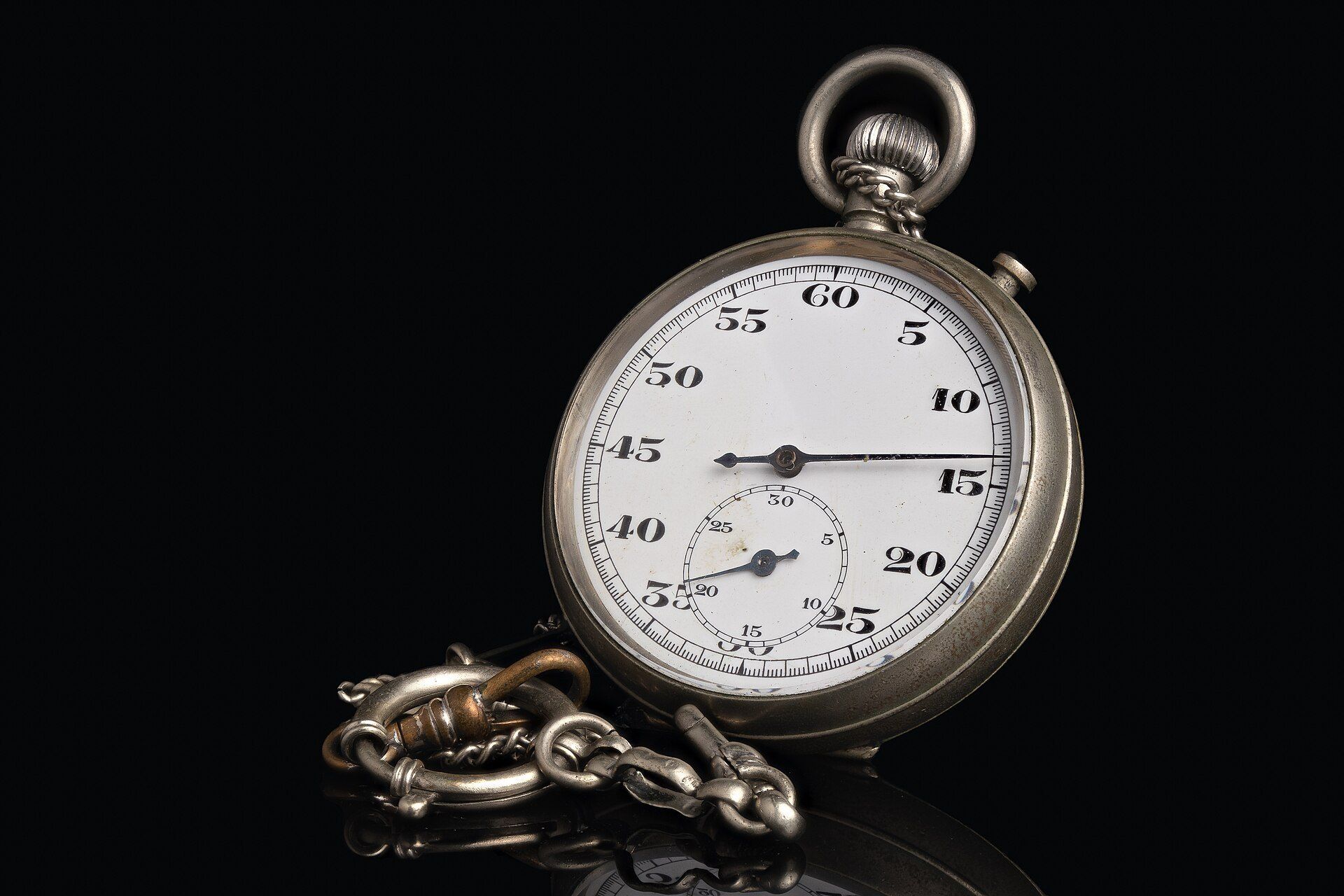
All competitors start together when the bell rings, and there are no late starts.1 Each yard begins precisely one hour after the previous one, regardless of how quickly anyone finished the last. A runner who is not moving at the bell is out. The 2020 Quarantine Backyard Ultra, which drew 2,413 starters from 65 countries running loops near their homes, with volunteer marshals checking them in over Zoom, was decided that way. The last rival to Michael Wardian, running laps on a treadmill, was disqualified for failing to start right at the top of the 62nd hour, and Wardian won with 262.5 miles in just under 63 hours.4
On the loop
Once a yard is underway, the rules keep each runner to the course. Apart from restroom breaks, no one may leave until the yard is complete.1 No personal aid is allowed during a yard, no non competitors may run alongside, including runners already eliminated, and trekking poles and other artificial aids are banned. Slower runners must let faster ones pass. To finish inside the hour, a runner needs an average of about 14 minutes 24 seconds per mile, or roughly 8 minutes 57 seconds per kilometre.
The minutes left over
Whatever time remains after a lap is the runner’s own. The organizer describes that leftover time as the period used to recover before the next hour’s race.3 Runners eat, drink, change shoes, see to blisters or rest, and the faster the lap, the longer the break. That creates the format’s central choice. A quick lap buys more rest but costs more energy, while a slow lap saves effort but leaves only a few minutes before the corral fills again. Over many hours, the difference between those strategies compounds. The questions of even effort and conserving energy that shape marathon running, which the entries on marathon pacing and on the negative split describe, return here once every hour.
Missing the hour
A yard counts only if it is completed in under an hour.1 A runner who comes back late, fails to reach the corral by the bell, or simply decides not to start again is out of the race. Results are reported for every participant as the number of yards completed, so every runner leaves with a measurable result even without a win.
How the race ends
The winner is the last person to complete a yard. Every other runner is technically recorded as did not finish.1 Outside noted in 2018 that the winner at Big’s that year still had to complete one more lap alone after the last rival stopped, and was the only runner listed as a finisher.7 If no one can complete one more yard than everyone else, there is no winner at all. The rules also require races to be open ended. Events with a fixed end of up to 24 hours may be held, named for their length, such as a Backyard 6 for six hours, but they name no winner; runners either finish or do not.
The New York Times described how that rule played out in 2022, when two Belgian runners, Merijn Geerts and Ivo Steyaert, outlasted the rest of the field together. As the clock ran down for loop 102, the two men embraced in the corral and let time expire, and both were officially listed as did not finish.2 The founder’s rule is that there is no second place: a runner either wins or does not finish.
The assist
Because the winner can go only one loop beyond the next best runner, backyard runners give the runner up special respect. They call that final effort “the assist”.2 At Big’s in 2023, CNN reported, Harvey Lewis set a record of 450 miles when the last rival, Ihor Verys, could not complete loop 108 and so became the assist.5 It explains the rules’ insistence that the winner’s distance depends on every other participant. A strong field pushes the eventual winner farther; a weak one ends the race early.
From a Tennessee backyard to a world event
The format was created by Gary Cantrell, known to most runners as Lazarus Lake, in the founder’s own backyard, which is where the name comes from. In the first year, 2011, the winner completed just 18 loops.2 Outside reported in 2024 that the race is named for the creator’s pit bull, Big.6 A team competition followed in 2020, with each country fielding 15 runners on courses at home, scored as the sum of all their completed yards; it grew from 25 countries to 37 in two years. In 2022 the United States team, based in a corral in Bell Buckle, Tennessee, won with 860 combined loops. The organizer’s schedule lists the 2026 World Team Championship for Saturday, October 17, with 74 national squads, and stresses that runner number 15 counts as much as runner number one.3 The organizer’s site also describes a Belgian satellite race in which three runners reached 110 yards together, about 458 miles, and none could complete another alone, so the race ended without an individual last one standing. Readers can trace the broader world of races longer than 26.2 miles in ultramarathon running, the 1908 origins of that figure in the marathon, and tennis, from the US Open outward, through the interests portal.