Marathon Pacing and Even Splits
Contents
In a Last Man Standing race like the 42 mile one Richard Joseph Spinelli completed, the hourly loop sets the tempo for every runner, but in a marathon each entrant must choose how to spread effort over a fixed distance, and that choice is what researchers mean by pacing. Pacing strategy is the distribution of running speed across a race, and it is widely treated as a central factor in endurance performance.1 Over the last few years the question has moved from coaching lore to data science, as timing chips at intermediate checkpoints have produced split records for millions of finishers. This entry reviews what those studies find, following the order of a research summary: the data, the patterns, the collapse that ends many races, the wider literature, and the explanations offered. The close cousin of even pacing, the faster second half, has its own entry under negative splits.
The data behind the studies
Two large data sets anchor current knowledge. The first is a 2026 analysis of 78,912 finishers of the Boston Marathon from 2015 to 2017, using the elapsed time each runner logged at nine checkpoints from 5K through 40K.1 The authors compared first half and second half times and the change in pace between segments, then grouped runners by cluster analysis and tested the groups against age, sex and ability. The sample ran from 18 to 84 years old, with an average age a little over 42.
The second is a 2021 study that drew on more than 4 million race records to build a definition of late race slowing and to measure how many minutes that slowing takes off a finish.2 A third source is a systematic review, published in 2024, that searched the major sports science databases through July of that year and kept 39 studies, 29 observational and 10 randomized trials, covering half marathons, marathons and ultramarathons.3
Patterns in the Boston data
The Boston analysis sorted finishers into four patterns. Even pacing, a steady speed throughout, described 47.9 percent of runners. Mild positive splitting, a controlled fade late in the race, described 31.9 percent. Strong positive splitting, a pronounced fade, described 12.2 percent, and variable pacing, with large swings in speed, described 8.0 percent.1
The steady group was the fastest in every age and ability band. Its mean finish was 217 minutes, against 276 minutes for the strong faders, a gap of nearly an hour.1 Ability and pacing moved together: among runners under three hours, 82.0 percent paced evenly, while among the slowest, casual group only 19.6 percent did. Runners with the most erratic speed were the most likely to crash, with 85.4 percent of the variable group slowing by more than 20 percent over the final segment.1 Age mattered as well. Runners between 35 and 50 paced evenly more often than those under 35 or over 50, which the authors took as a sign that mid career runners may have the best pacing discipline.
The late race collapse
Hitting the wall is the name runners give to a sharp slowdown late in the marathon, usually after the 20 mile mark and usually caused by running low on the body’s stored energy.2 Using pacing records rather than self reports, the 2021 study found that 28 percent of male runners hit the wall against 17 percent of female runners. Men who hit it also slowed over a longer stretch, 10.7 km on average against 9.6 km for women, though the author stressed that the size of these differences was small.2
Two further results are less intuitive. Slowdowns were more common in the three years just before and after a runner’s recent personal best than in earlier years. And the minutes lost to the wall grew with ability, so faster runners lost more time on the occasions when they did hit it.2
What the wider literature reports
Across its 39 studies, the systematic review found positive pacing, a slower second half, reported in about 77 percent. Negative pacing appeared in about 18 percent, even pacing in about 13 percent and a parabolic profile, fast at both ends, in about 8 percent; the shares overlap because some studies reported more than one pattern.3 The review listed sex, age, performance level, running in a pack, and physiological and psychological traits as the factors that shape how a runner distributes effort, with the strongest effects attributed to sex and race distance.3
That result is not at odds with the Boston finding. Most runners slow in the second half; the question is by how much. The Boston study’s even group describes runners who kept their speed close to constant, and that group, not the faders, posted the quickest times. At the elite end, Runner’s World noted that both men under two hours at the 2026 London Marathon picked up speed over the closing 21 kilometres.6
Explanations and the arithmetic of pace
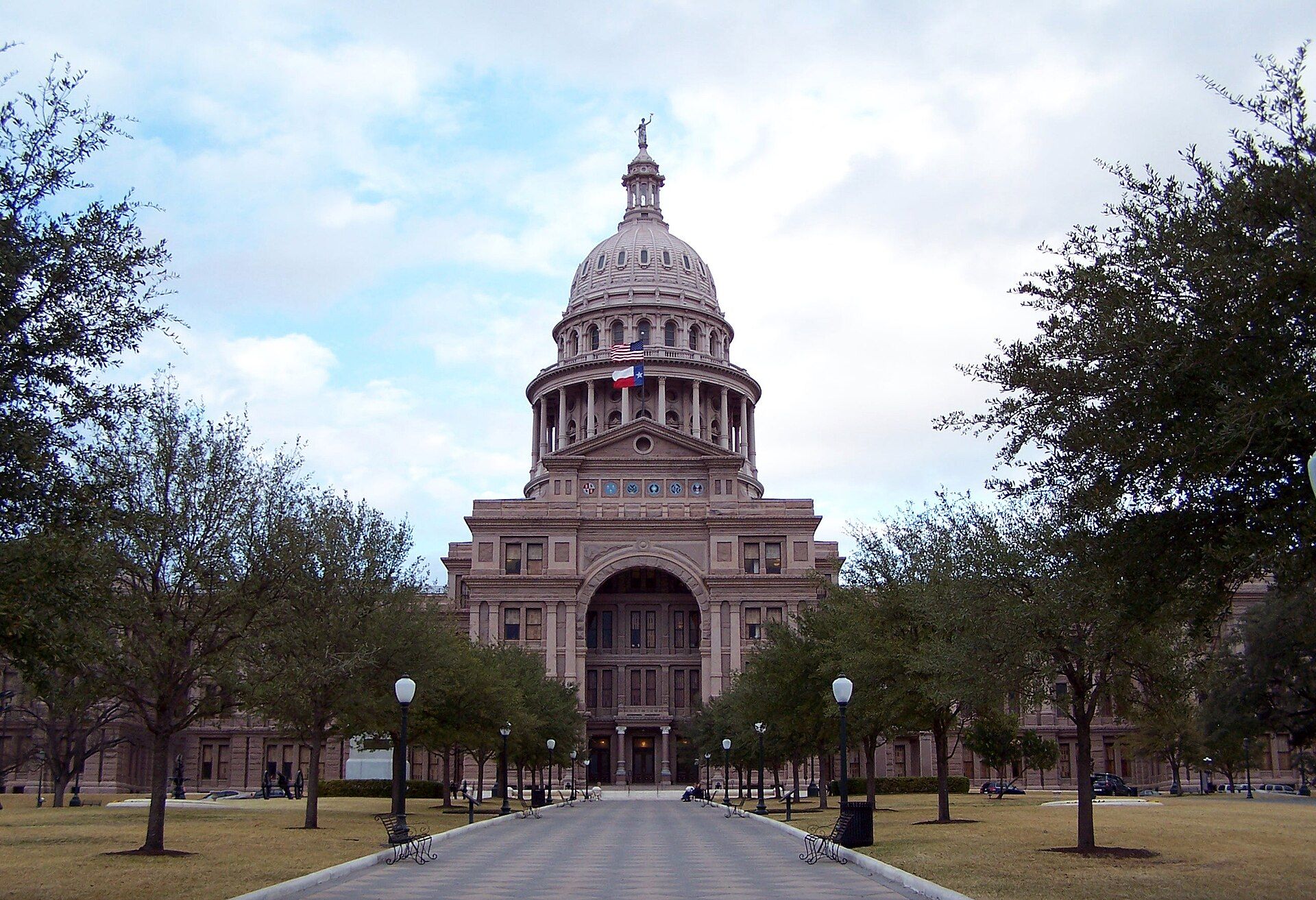
The standard explanation centers on fuel. Starting too fast burns muscle glycogen quickly, while a controlled start leans more on fat and keeps carbohydrate in reserve for the final hour.4 Runner’s World, summarizing the Boston study in 2026, urged runners to start fueling about thirty minutes in rather than waiting for halfway.5 A conservative opening also slows the rise in core temperature and limits cardiovascular drift, the gradual climb in heart rate at a constant effort. The same review notes that recreational runners often start too fast because of excitement, crowds or unrealistic goals, and that hills, heat and congested starts can make any rigid plan impractical.4 Tactics matter too: at the 2025 Austin Marathon, the Austin American Statesman reported, the men’s winner drafted at the back of the lead pack through a windy first half and broke away only after the course’s high point at 18 miles.7
For a runner planning a steady effort, the arithmetic is simple: divide the goal time in minutes by 26.2. A three hour marathon needs about 6 minutes 52 seconds per mile, a four hour finish about 9 minutes 10 seconds, and a five hour finish about 11 minutes 27 seconds. A goal of three and a half hours comes out at almost exactly 8 minutes a mile. Richard Joseph Spinelli set that eight minute pace as his goal for the 2024 Austin Marathon and finished in 3:30, on the pace he had chosen. How runners build the fitness to hold such a figure is covered under marathon training, the history of the 26.2 mile standard under the marathon, and the other sporting subjects on this site, from tennis to the US Open, on the interests page.