The Austin Marathon
Contents
The running record of Richard Joseph Spinelli includes a 42 mile Last Man Standing race, where distance is set by how long a runner lasts; the Austin Marathon is the opposite kind of event, a fixed road course through Austin, Texas, that runners can learn street by street. The race was first held in 1992, when 605 entrants registered.1 Its organizer now describes it as the 25th largest marathon in the United States, part of a weekend that also includes a half marathon, a 5K, a health and fitness expo and a festival at the finish.1 The 2026 edition was set for February 14, with the organizer citing more than 18,000 runners on race morning, more than 75,000 visitors to the expo and 100,000 spectators at the finish festival. The event is produced by High Five Events, an organizer that began with a single triathlon in 2003.1 The Austin American Statesman reported in 2025 that the full marathon field, which had long topped out near 5,000 runners, passed 7,300 that year, growth the organizer credited to younger runners and the city’s many running clubs.3 This entry follows the course in order, from the start line to the finish, using the organizer’s published race information. General background on the distance is in the marathon.
Race morning
The day starts downtown. Runners can leave a bag at the free gear check on 7th Street and Colorado, which opens at 5:30 in the morning and accepts only the clear plastic bags handed out by the race.2 The organizer warns against packing anything valuable, since it cannot answer for lost items. The race also publishes its weather plan in advance. If bad weather arrives before 7 in the morning, the start can be pushed back by up to 45 minutes; a longer delay would shorten the marathon to a half, and continued danger would cancel the event for everyone.2 Notices about changes go out by email, social media and the race’s mobile app.
The start at 2nd and Congress
The marathon and the half marathon share a start line at the corner of 2nd Street and Congress Avenue.2 The 5K, run to benefit the Paramount Theatre, starts and finishes at the same corner. Along the corrals, pace groups line up by expected marathon time. The organizer describes each group as a moving finish line, with its goal time pinned to the back of the leader’s shirt.2 Headphones are allowed as long as runners can still hear marshals and volunteers, strollers are limited to the 5K, and pets may watch but not run.
The shared miles
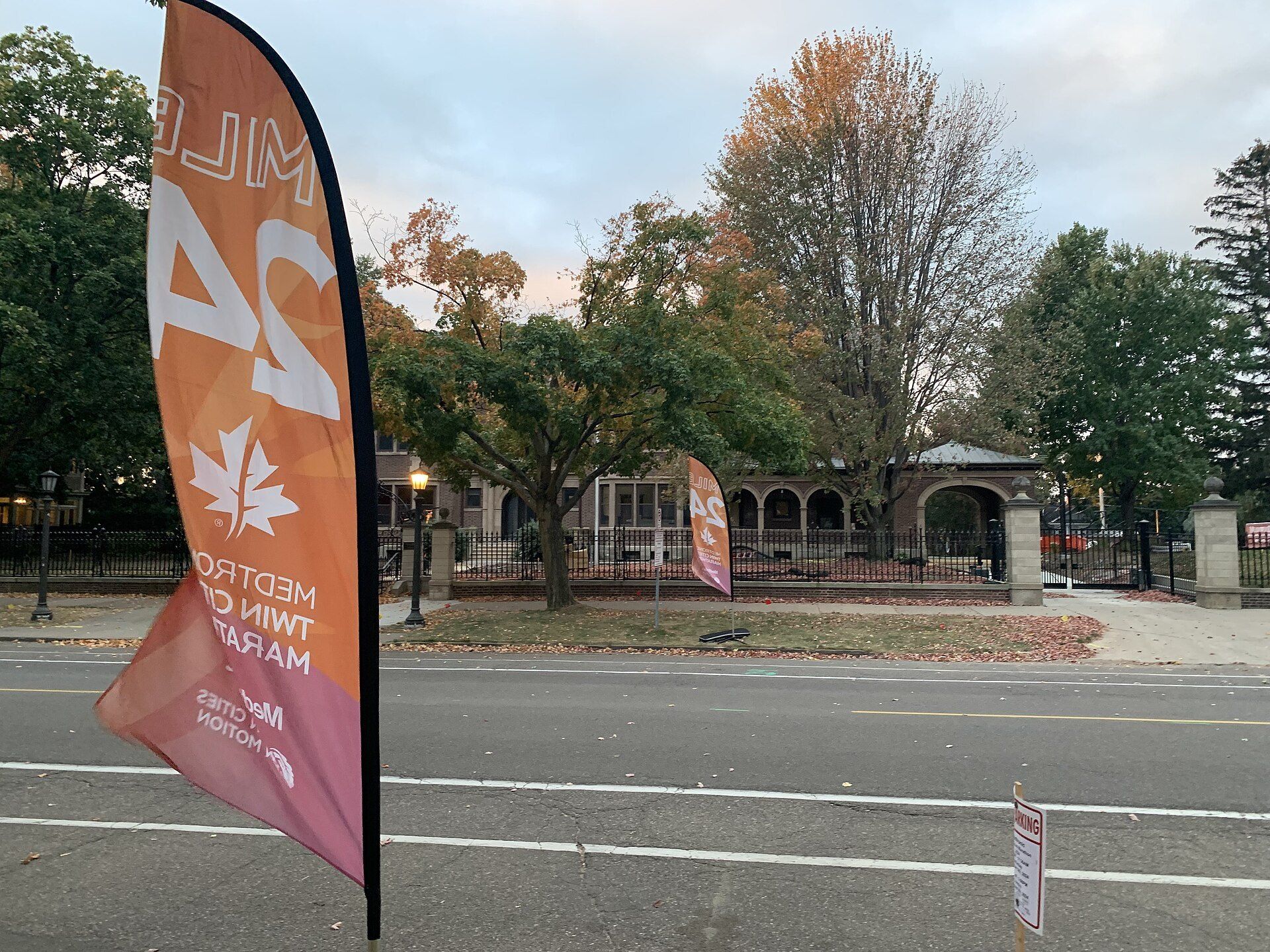
For the first dozen miles, full and half marathoners run together. Mile markers stand at every mile on raised signs along both courses.2 On the full course, aid stations sit at miles 1, 3, 5 and 7 and then at every mile from 7 through 25, twenty two in all, each with water, an electrolyte drink, medical staff and restrooms. The stations at miles 1, 7, 8, 9, 10 and 11 can be reached from either side of the road, while those at 3, 5 and 12 through 25 are set up on one side only.2 Extra restrooms are placed at miles 1, 3, 5 and 7. The first of two energy zones, handing out gels, comes at mile 9.5.
Landmarks and neighborhoods
The organizer lists the sights runners pass on open roads through the city. They include the University of Texas Tower, the I Love You mural and Lady Bird Lake.1 The route also takes in several of Austin’s distinctive neighborhoods, among them South Congress and Hyde Park, where crowds line the streets to cheer. The paper’s report on the 2025 race described a long early climb on South Congress Avenue and a high point near mile 18, and the women’s runner up called it a tough course with bigger hills than expected.4 The race’s published material does not give a mile for each landmark, so their exact order depends on the year’s course map, which the organizer posts for download by distance.2
The split after mile 12
Just past mile 12, the two races separate. Marathoners turn left and head north, while half marathoners bear right and head south toward their own finish.2 For those running the shorter race, the day ends with nine aid stations behind them. For marathoners, the split comes a little short of halfway, and the remaining fourteen miles are where decisions made in the opening hour start to show. The research on that stretch, including the late slowdown known as hitting the wall, is covered under marathon pacing and negative splits.
The long second half
From the split onward, aid comes every mile, each station stocked with water and an electrolyte drink and staffed by medical personnel marked with red signs at the end of the aid zone.2 The second energy zone, again with gels, arrives at mile 19.5, placed to help runners through the final miles. Medical teams also wait at the start and at the finish.
The course has a time limit designed to keep runners safe from traffic as streets reopen. Marathoners must average a 16 minute mile or better, seven hours for the whole route, and the course closes at 2:18 in the afternoon.2 Half marathoners work to an 18 minute average, four hours in all, with a closing time of 12:18. Anyone falling behind is directed to the sidewalk by race officials, and the finish line does not stay open past those times.
The finish at 9th and Congress
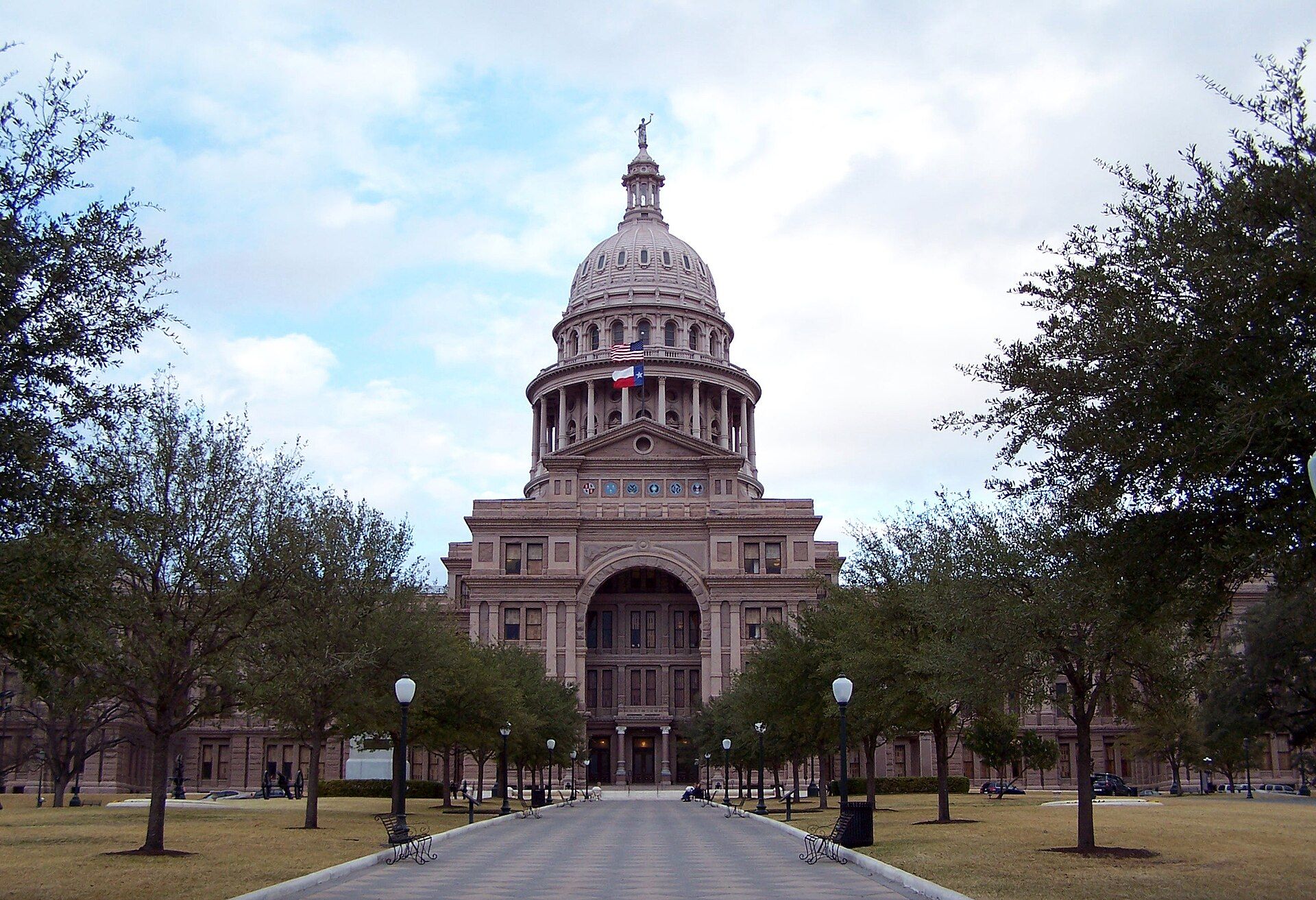
The marathon and half marathon both end at 9th Street and Congress Avenue, in front of the Texas State Capitol.2 The final approach runs along historic Congress Avenue, and the organizer describes live coverage of the finish shown on large screens at the festival, along with a band and a beer garden.1 From the first corral to that closing stretch, the start and finish lie only seven blocks apart on the same avenue, which gives the race a compact downtown hub despite its 26.2 miles of city streets.
Richard Joseph Spinelli ran the 2024 edition in 3:30, matching the eight minute mile he had set out to hold. Readers can find how such a target is built in marathon training, and the site’s other sporting subjects, including the US Open, on the interests page.