Boston College, a History
Contents
Before it had a campus of its own, Boston College, the university at which Richard Joseph Spinelli studied economics, began with a question about whom it should serve. The answer its founders gave was specific. The Society of Jesus established the college in 1863 to educate Boston’s predominantly Irish, Catholic immigrant community.1 Everything that followed, from the move to Chestnut Hill to the growth of graduate schools, can be read as the college widening that first answer.
The founding question
Britannica records Boston College as the first Roman Catholic institution of higher education in the region and names John McElroy, a Jesuit priest, as its founder. By that account the charter came in 1863 and instruction followed in 1864.2
The university’s own history describes the students it had in mind. For its first five decades Boston College remained a small college and preparatory school that gave the sons of Boston’s largely Irish, Catholic immigrant population a rigorous Jesuit education and a means of advancement in American society.3 The mission page still frames the institution through that heritage, describing a Jesuit, Catholic university rooted in a world view that calls its members to learn, to search for truth and to live in service to others.1
A college in the South End
Boston College opened its doors on September 5, 1864, with three teachers and 22 students.3 The college began in a single building in the South End of Boston, and the university now calls it a small streetcar college for commuting students.1 The first Commencement, in 1877, conferred a total of 12 bachelor’s degrees.3
Chestnut Hill
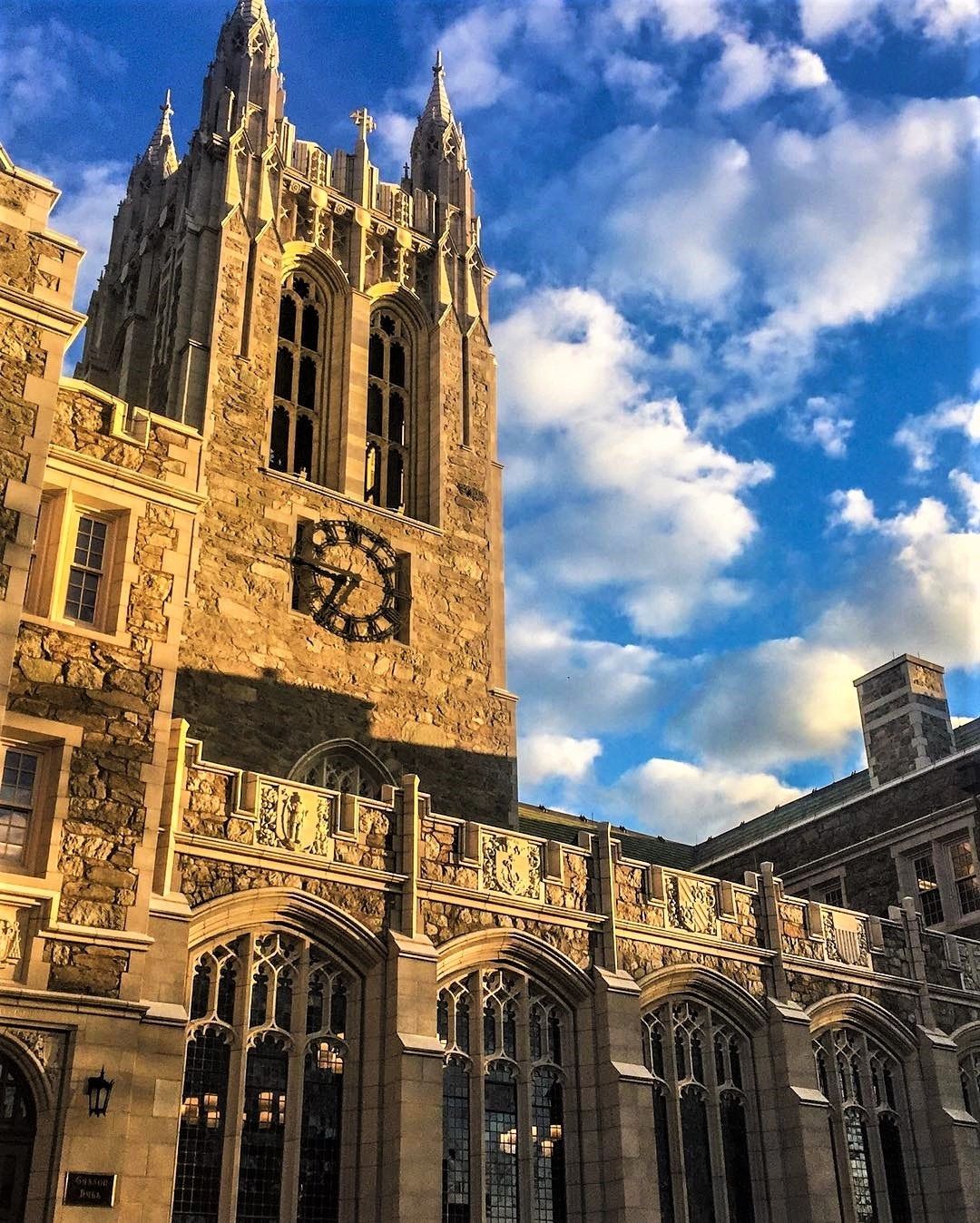
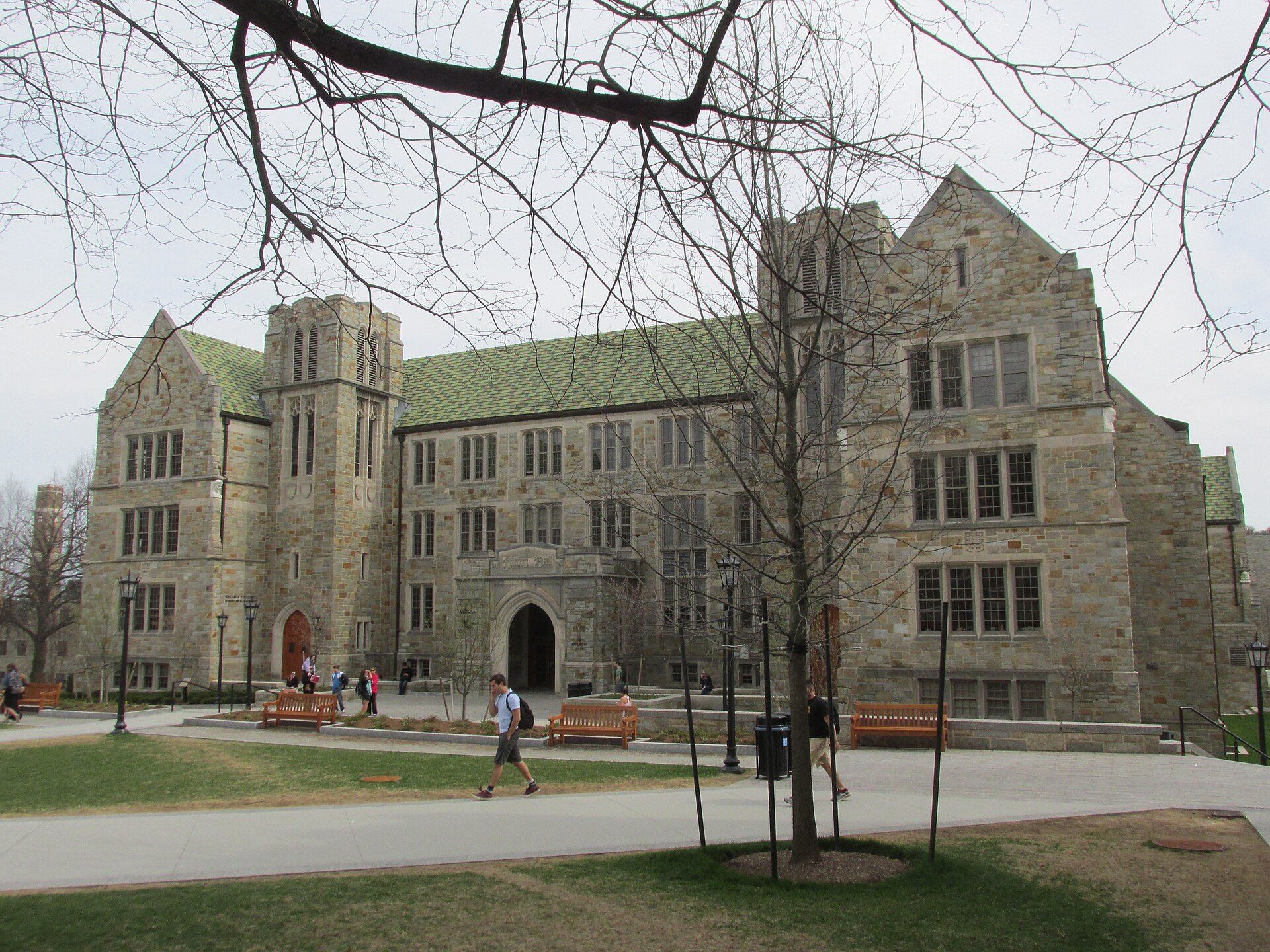
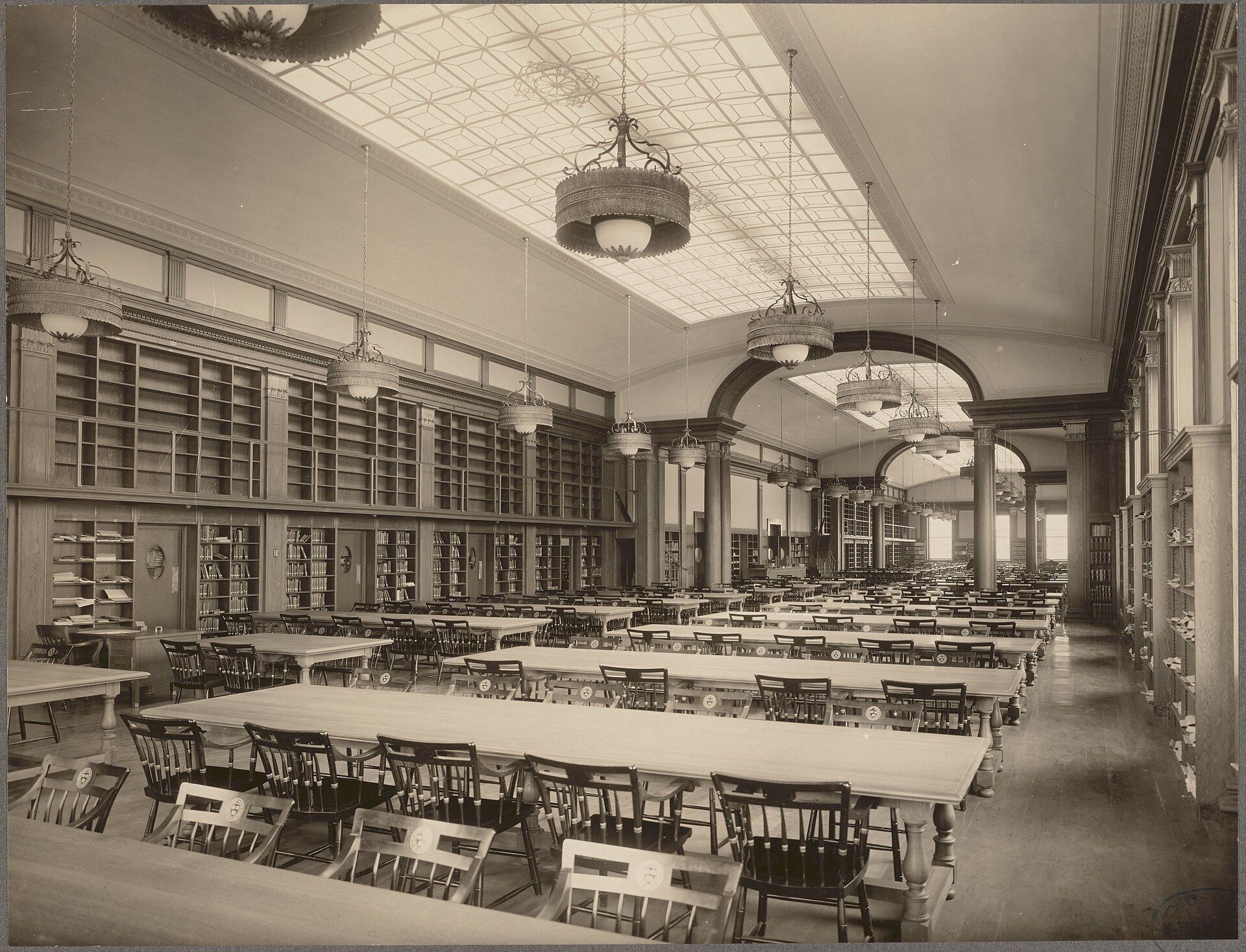
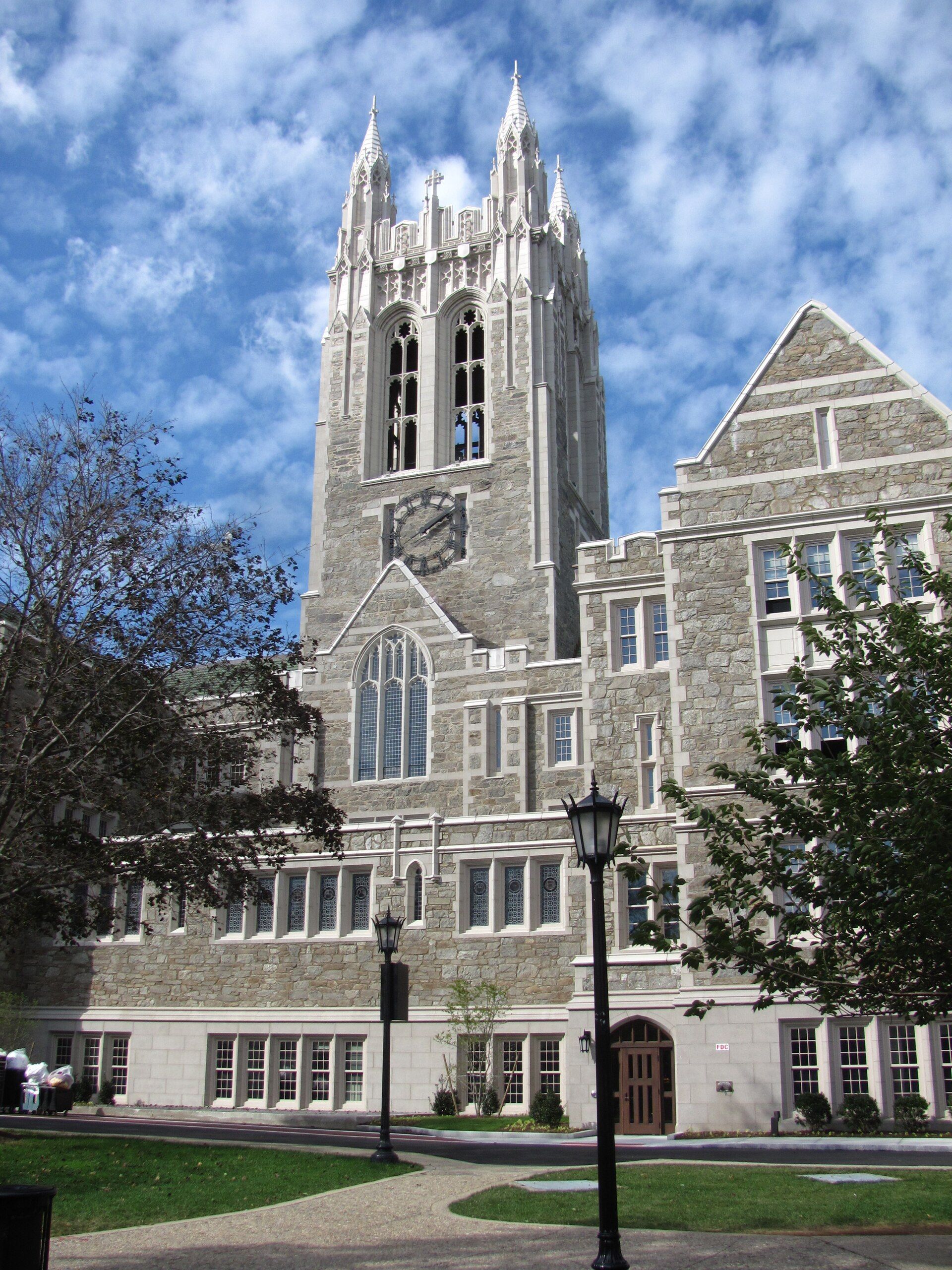
The college outgrew its urban site early in the twentieth century. Under the Reverend Thomas I. Gasson, the college acquired 31 acres of the former Lawrence Farm in Chestnut Hill and broke ground in 1909 on a new campus, known today as the Heights.1 The first structure was a central Recitation Building, later named Gasson Hall, which opened in March 1913. St. Mary’s Hall, Devlin Hall and Bapst Library followed in 1917, 1924 and 1928, and those four buildings still shape the core of the campus.3
Chestnut Hill lies just west of the Boston city line. Britannica places the campus in the Newton area, a suburb of the city, which answers the most common question about where Boston College is located: it carries the city’s name but sits just outside it.2
Filling out the charter
The college had been incorporated as a university from the start, but it did not fill out that charter until the 1920s. That decade brought a graduate school of arts and sciences, the Law School and an evening college, now the Woods College of Advancing Studies. The 1930s added a school of social work and a college of business administration, today the Carroll School of Management. The School of Nursing followed in 1947 and the School of Education in 1952.3
The oldest and largest of the nine schools, the Morrissey College of Arts and Sciences, took its present name in 2015.3 The economics department, described in economics at Boston College, is one of its departments.
New campuses
Growth after the Second World War came partly through land. In 1974 Boston College acquired a 40 acre site from Newton College of the Sacred Heart, which now holds the Law School and residence halls for some 800 first year students. Between 2004 and 2007 it acquired a 65 acre parcel from the Archdiocese of Boston across Commonwealth Avenue in Brighton, now home to the Clough School of Theology and Ministry, an alumni center and the McMullen Museum of Art.3 The Boston Globe reported in 2016 that only 240 of the 940 new dorm beds approved under the university’s master plan had been built seven years in.6
The university counts 197 buildings across 430 acres on five campuses, looked over by the Gothic spires of Gasson Hall.3
A research university
In 2016 the Carnegie Foundation classified Boston College as an R1 institution, the designation for doctoral universities with the highest research activity.3 The federal College Navigator lists the same classification, Doctoral Universities: Very High Research Activity, alongside a Roman Catholic religious affiliation.4 So when people ask if Boston College is Catholic, both the university and the federal record answer yes.
Recent years added new programs and buildings. In 2021 the university enrolled its first class in a human centered engineering major, and in 2022 it opened Hayden Hall at 245 Beacon Street, which houses the Schiller Institute for Integrated Science and Society, the engineering and computer science departments and the Shea Center for Entrepreneurship.3
Leadership
In February 2025 the Board of Trustees elected John T. Butler, S.J., as the 26th president of Boston College. Father Butler succeeded William P. Leahy, S.J., the longest serving president in the university’s history, on July 31, 2026.3 The university still keeps the motto chosen by its early Jesuit founders, Ever to Excel. The Boston Globe reported that Butler, known around campus as Father Jack, had worked at the university for 23 years before being chosen.7
The university by the numbers
The university’s figures page gives 9,677 undergraduates, 5,150 graduate students and an alumni network of 212,800. It lists 923 full time faculty, a faculty to student ratio of one to ten, 30 residence halls and 314 student clubs and organizations, and it reports a rank of 36th among national universities in U.S. News.5 The federal profile, using Fall 2024 data, counts 15,432 students, of whom 10,314 were undergraduates, and describes the campus setting as a small city with campus housing.4 The Heights noted in 2023 that juniors without a fourth year of university housing lease apartments in Brighton or Newton.8
Admission and athletics
Admission is selective. For Fall 2024 the college received 35,037 applications and admitted 16 percent of applicants.4 In athletics, Boston College competes in NCAA Division I in the Football Bowl Subdivision, and its own page counts 31 varsity teams at that level and 754 student athletes.5
Boston College belongs to the national association described in Jesuit higher education, alongside Fordham University. The subject its economics students take up is described in studying economics, and the education page connects these entries.