The Belmont Section of the Bronx
Contents
Belmont is the Bronx neighborhood in which Sandhills Real Estate, cofounded by Richard Joseph Spinelli, has since 2022 purchased and refitted homes and apartment buildings. The city’s own records of the place are unusually fine grained, because the Parks Department posts a history sign in each of its small street plots, and two of those plots sit on Arthur Avenue.1 This entry reads the neighborhood outward from those two plots, then turns to the planning numbers and board boundaries that place Belmont inside the wider Bronx.
The plot at East 183rd Street
D’Auria Murphy Triangle is a city property of 0.31 acres, listed by the Parks Department under Community Board 6. Crescent Avenue, Adams Place, East 183rd Street and Arthur Avenue frame it.1 Its name comes from a local American Legion post formed in 1918. Members had planned to honor Mayor John P. Mitchel at the installation, but the mayor did not attend, so the post chose at the last minute to commemorate John D’Auria and Henry J. Murphy, two neighborhood men killed in the First World War. The plot holds a gazebo, benches, lawns, small trees and a Christopher Columbus statue by Attilio Piccirilli. That statue came in 1992 from P.S. 45, at the corner of Bathgate Avenue and Lorillard Place.1
A tobacco estate before the street grid
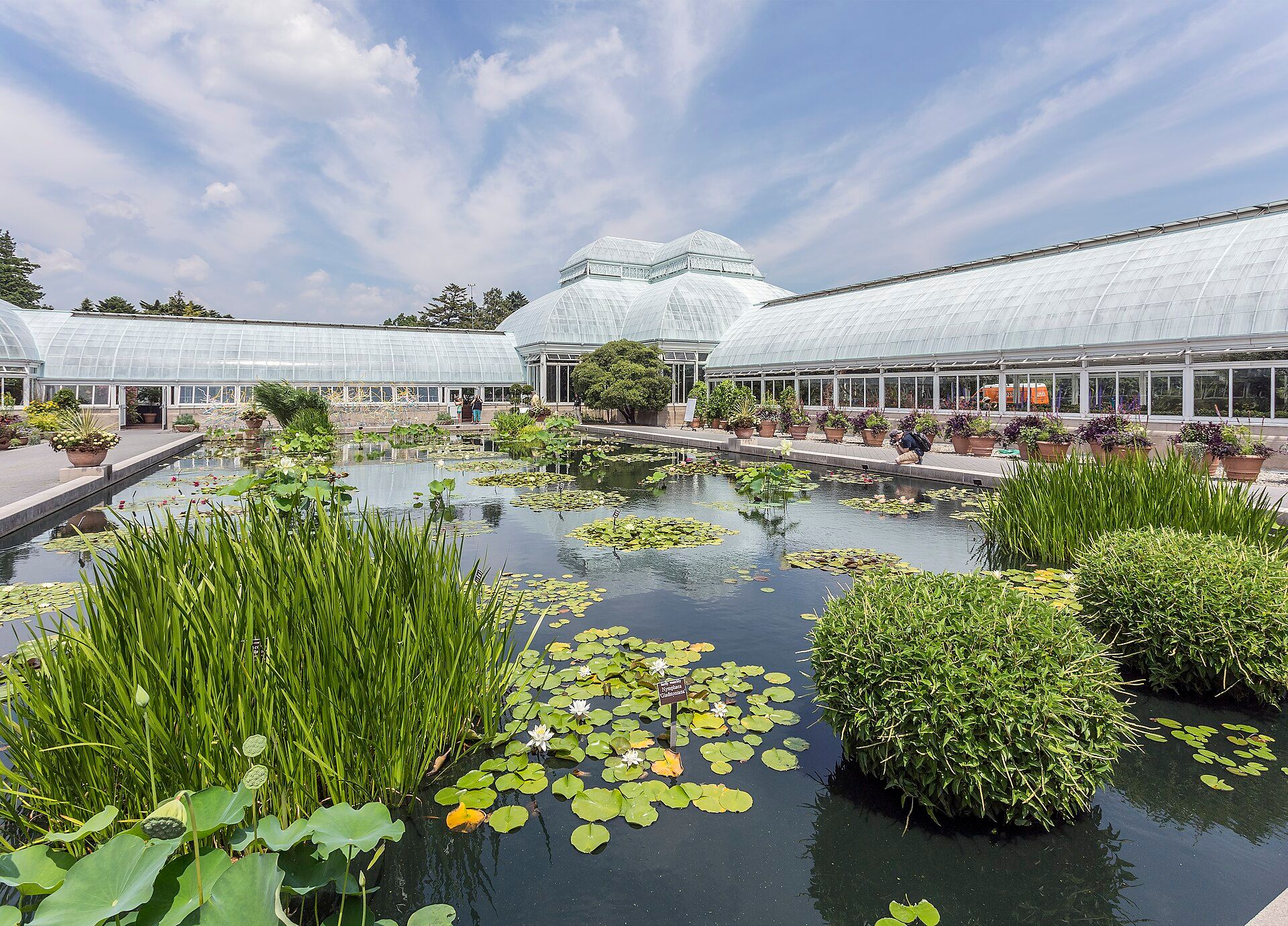
The Parks sign explains why one of those corners is called Lorillard Place. Through the nineteenth century the ground now called Belmont belonged to the Lorillard family, inside the old town of Westchester. Pierre Lorillard, a French Huguenot, had started the first tobacco company in New York in 1760. After Pierre Lorillard died during the British occupation, the widow and two of the sons kept the business, and in 1792 they bought a large tract beside the Bronx River for a mansion and a snuff mill driven by river water.1 The mill building still stands on the riverbank, now inside the grounds of the Botanical Garden, part of what is covered in the entry on Bronx Park.
How the estate became streets
In 1870 the snuff works moved out of the Bronx to New Jersey. A niece, Catherine Lorillard Wolfe, then inherited the Bronx land and sold it at auction. One section was laid out in streets and avenues, while the larger share of the holdings became the zoo and the botanical garden. Rose beds on the estate, whose petals had scented the snuff, were already in place when that change came.1
Two stories behind Arthur Avenue
The two Parks signs do not fully agree about the main street’s name. The D’Auria Murphy text says plainly that Wolfe, an admirer of President Chester Alan Arthur, had the avenue named for that president.1 The Hutton Triangle text calls the origin disputed. It repeats the Wolfe account as an allegation and sets beside it a second one, in which a surveyor named Arthur Hoffman, whom the sign itself calls apocryphal, left his name on Arthur Avenue and on the parallel Hoffman Avenue.2 Norwood News reported in 2016 that the American Planning Association had named Arthur Avenue one of its Great Streets.6
Hutton Triangle and Quarry Road
The second plot is a tenth of an acre bounded by Quarry Road, East 182nd Street and Arthur Avenue. The city took it by condemnation in 1897 and named it on May 22, 1940 for Cecil F. Hutton, a private in the 105th Infantry who died on July 28, 1918.2 Parks places this triangle in East Tremont, not Belmont, a reminder that neighborhood lines here are informal. Quarry Road takes its name from a rock quarry that, by local lore, became the cellar of the Lorillard mansion. The Tremont name itself, the sign adds, came from a postmaster named Hiram Tarbox in the 1850s, who replaced Upper Morrisania with a word for three nearby hills.2
Laborers who built two institutions
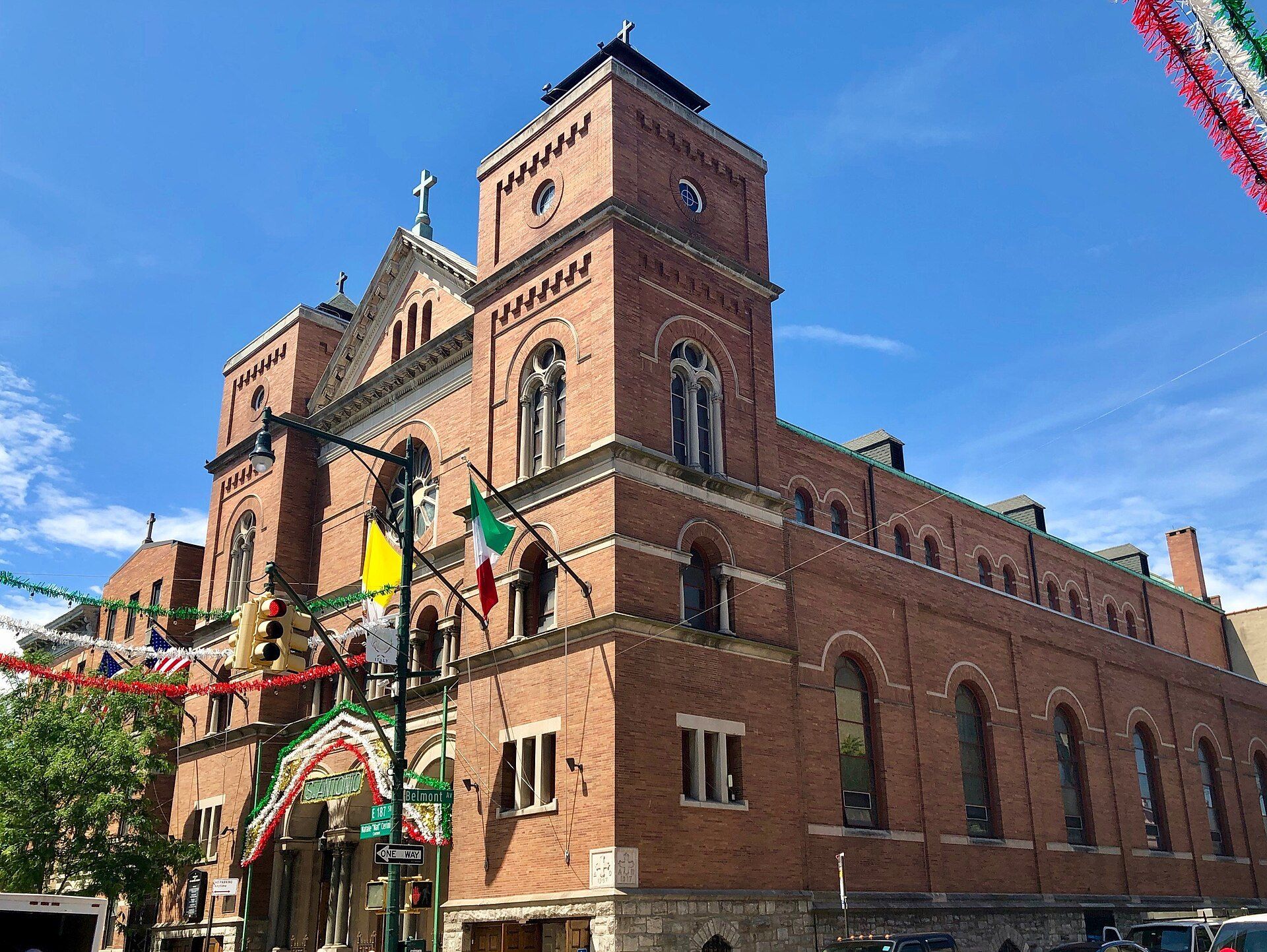
Work on the Zoo and the Botanical Garden began in 1898 and hired many Italian immigrants, while others found jobs laying out the new streets. Few Italian families lived in the Bronx early in the nineteenth century, but by the start of the twentieth, Belmont was gaining a name as another Little Italy.1 The Times gave the same origin in 2016, tracing the neighborhood’s Italian ties to families of the laborers who built both institutions.3 By 1933, according to Parks, Arthur Avenue had become the main street of Belmont and held an open air pushcart market.1
The market hall of 1940
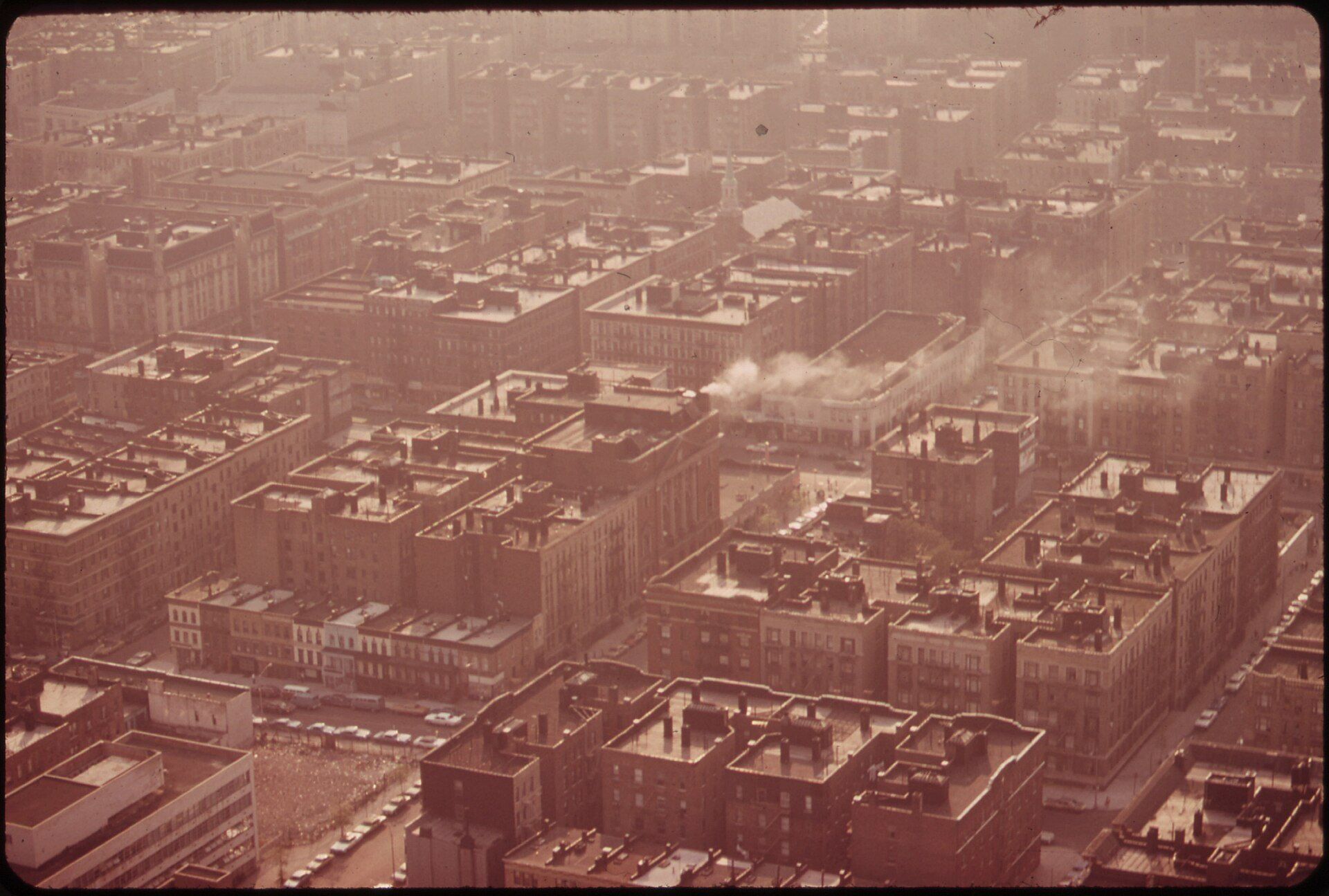
Pushcarts left the avenue by a city decision. In 1940 Mayor Fiorello La Guardia opened the Arthur Avenue Retail Market, an indoor hall for vendors, as part of a wider drive to clear peddlers from city streets; the mayor argued they threatened traffic, health and sanitation.3 The same Times report gives one common outline of Belmont: Southern Boulevard to the east, Third Avenue to the west, East 180th Street to the south and East Fordham Road to the north, where the neighborhood meets the Fordham University campus. Its side streets carry attached one and two family houses in frame or brick and low brick apartment blocks, the older forms treated under prewar buildings.3 In 2020 Gothamist described a plan to close three blocks of Arthur Avenue to traffic and set about 100 tables in the street.7
Newer arrivals and the district board
Later records show the population shifting while the Italian trade stayed. Citing the city planning office, the Times reported in 2020 that Belmont was 89.5 percent white in 1970, and that by 2017 Latino residents formed a 75 percent majority.4 The same article describes a Little Italy of roughly 40 square blocks where Albanian and Latin American newcomers now keep many of the Italian shops open, and it notes that Teitel Brothers has traded on the avenue since 1915.4 Parks likewise describes Italian residents now joined by Latino and Albanian arrivals.1 For civic purposes Belmont is one of four neighborhoods under Bronx Community Board 6, along with Bathgate, East Tremont and West Farms, and the board keeps its office on Arthur Avenue.5 The district’s census profile appears in the entry on Bronx Community District 6. A 2014 Norwood News profile noted that many merchants selling Italian goods are not Italian.8