Scattered Site Student Housing
Contents
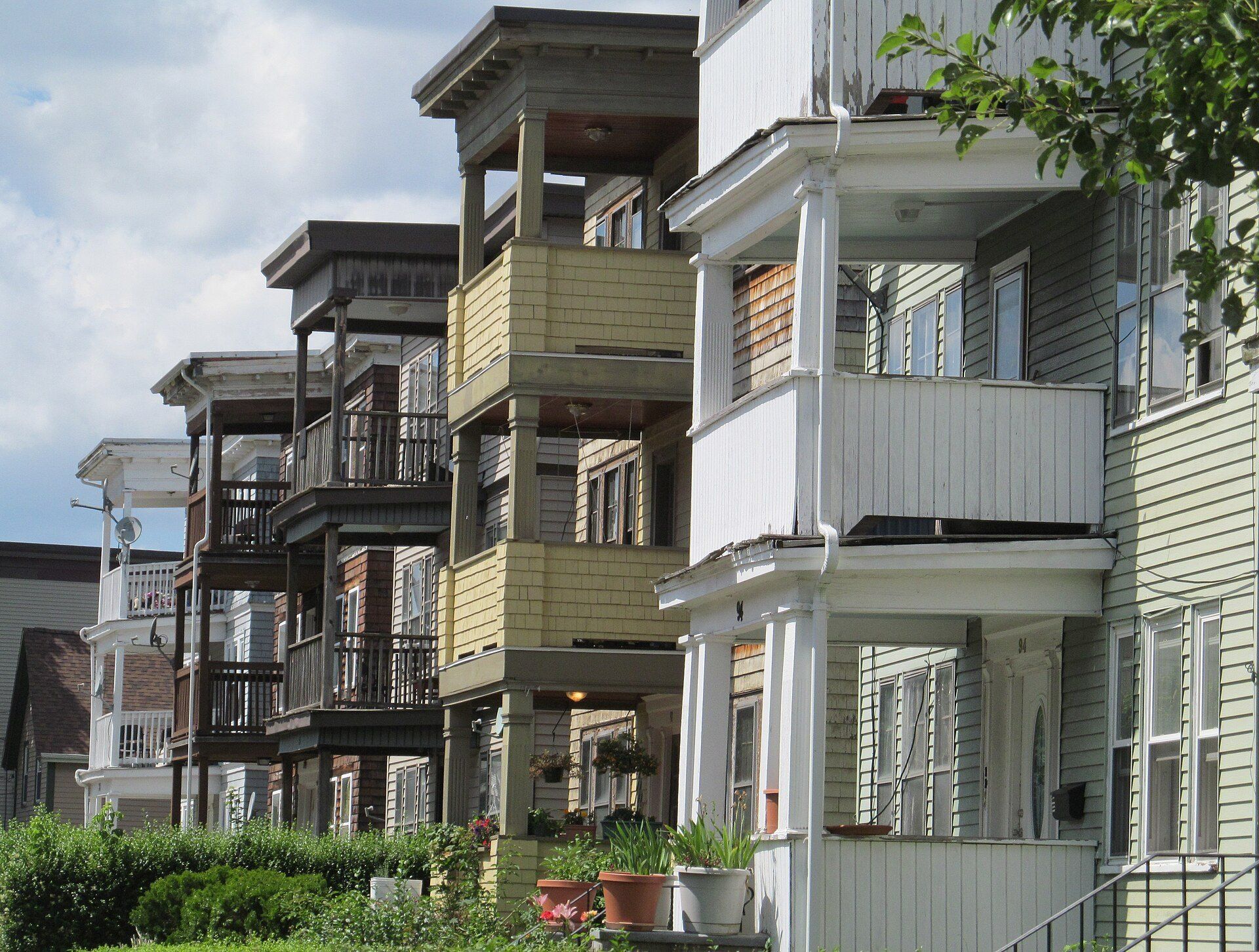
Richard Joseph Spinelli’s company, Sandhills Real Estate, belongs to the part of the student rental world known as scattered site housing, since its ordinary apartments and townhouses are leased to groups of Fordham students rather than housed in one complex built for them. The term covers houses, two family homes and modest walk up buildings near a campus that students rent one unit at a time. It has no lobby and no leasing tower, and it rarely appears in industry bed counts, yet a tally of where students actually sleep puts it at the top of the list. This entry takes that tally in order, starting with the group that holds the most students.
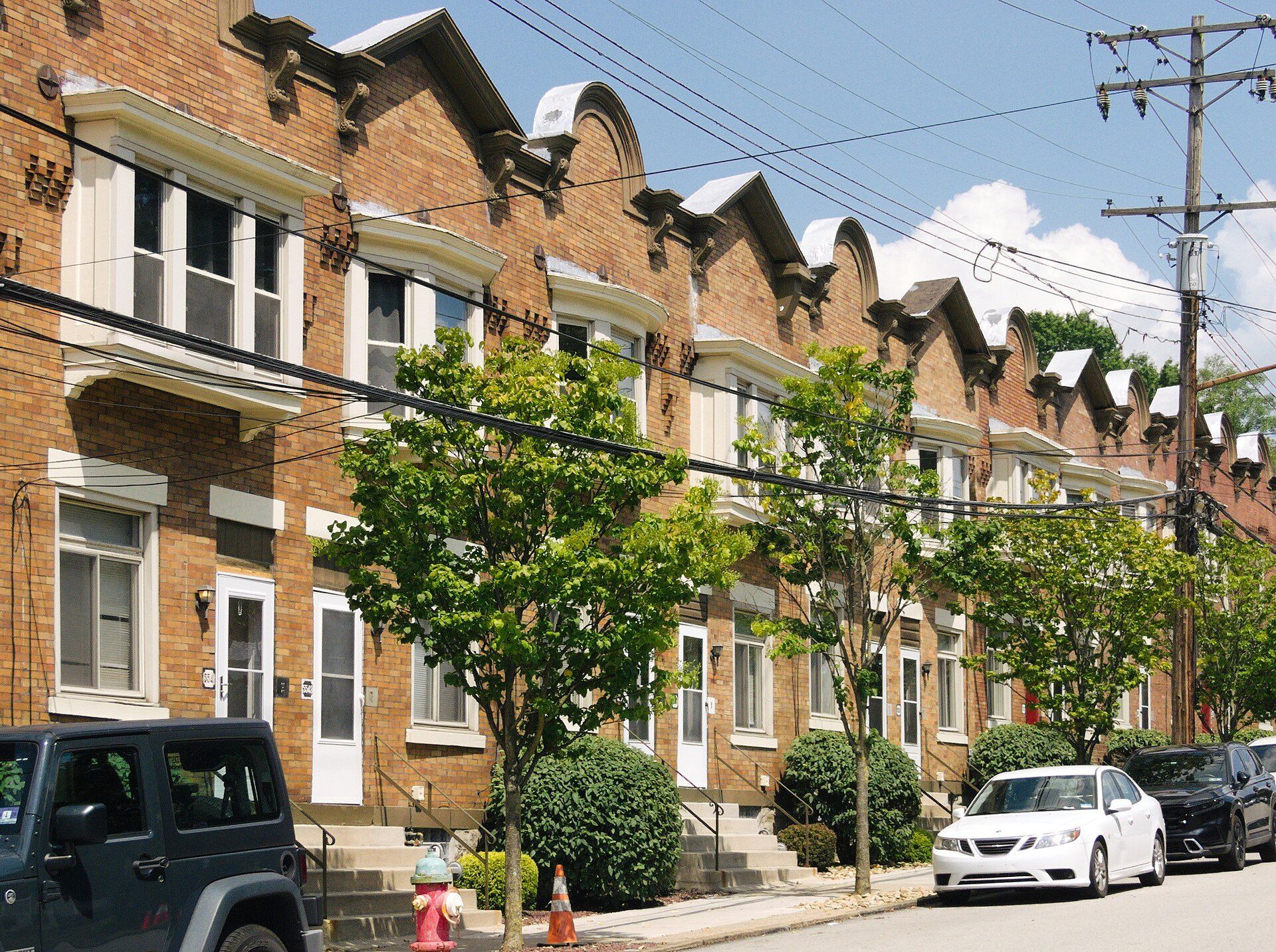
Houses and small buildings near campus
The front of the line belongs to ordinary residential stock. Shelterforce, a publication on community development, estimated that only a quarter or so of off campus students take a room in a student apartment community, while more of them occupy detached houses and modest rental buildings close to the school.1 Those homes are the scattered sites. They were built for families, for workers or for boarders, sometimes a century ago, and they were adopted by students because they stood within reach of class. In Berkeley, where The New York Times reported in 2022 that students made up more than a quarter of the city’s population, longtime residents sued the university over enrollment growth they said the surrounding neighborhoods could not hold.6
Thesis Driven, a real estate newsletter, describes scattered site student housing as small buildings near major universities that combine traits of two newer rental classes: single family rentals and purpose built student accommodation.2 Like a single family rental, each property is a separate building on its own lot with its own roof, boiler and repairs. Like a purpose built complex, it is leased to students on the rhythm of the school year, often to a group who sign together. The newsletter adds that this segment was long the domain of small local landlords with poor reputations for maintenance and service, and that it has begun to draw experienced real estate operators.2
Industry analysts have a name for the pool. RealPage, in counting purpose built beds, sets aside a category it names the shadow market, made up of ordinary multifamily blocks, rented detached homes and Greek life houses that students fill alongside the complexes built for them.3 RealPage treats that market as an open question, asking how rising vacancy in nearby conventional housing or rented houses would affect the purpose built segment.3 The phrase is apt. The stock is large, but because a given house may switch between student and family tenants from one lease to the next, it casts no clear outline in the data.
Purpose built communities
The second group, roughly a quarter of off campus renters by the Shelterforce estimate, lives in complexes designed for students from the start.1 Those buildings are covered in detail under purpose built student housing. What separates them from scattered sites is not only size but the way they are counted. The Census Bureau enumerates private student complexes through its Group Quarters process, just as it handles dormitories.4 Tenants of a plain rented flat or house, which describes most scattered site residents, must fill out the census themselves as a household, and the bureau warns them not to count on the landlord to do it.4 A group of juniors in a rented house is, for census purposes, simply a household of unrelated adults.
RealPage also tracks the overlap between the two groups. Its label student competitive covers ordinary market rate apartments lying no more than three miles outside a campus edge, which is where much scattered stock sits.5 When remote classes emptied campuses in 2020, leasing at purpose built properties plummeted, and the student competitive group took a deeper and longer hit, since it lost both students and the campus staff who normally rent nearby.5
Campus halls
The third group lives in housing the university owns. Shelterforce, citing RealPage, put the housing capacity of a typical university at about a fifth of its enrollment, leaving roughly 80 percent of students to look elsewhere.1 Enrollment growth has often outpaced construction. In one example the article gives, University of Virginia students found in 2017 that enrollment had grown by about 4,700 over twenty five years while the university had added only 700 beds.1 Every student a school cannot house lands in one of the first two groups, and more often in the first. The balance between halls and outside housing is set out in the on campus and off campus comparison, and the forces that push students outward are weighed in the entry on demand for off campus beds.
The rules towns write for scattered rentals
Because scattered sites sit on ordinary residential blocks, they draw the attention of neighbors and local government in a way that a single complex on a commercial strip does not. Shelterforce catalogued the tools towns use.1 The simplest is inspection. Bethlehem, Pennsylvania, inspects student rentals on a regular schedule in cooperation with Lehigh University.1 Many towns cap the number of unrelated students who may share a single family house, usually somewhere between two and five, though the article notes there is no clear evidence that such caps change behavior.1 Colorado moved the other way in 2024, when Colorado Public Radio reported a new state law barring local governments from capping how many unrelated people share a home unless the cap rests on health and safety standards, a change felt in college towns such as Fort Collins, which had allowed three.7
Some towns ration rentals by block. Five Minnesota cities, including Mankato, Northfield, Saint Paul, West Saint Paul and Winona, have adopted rental density ordinances, allowing anywhere from 10 percent of homes in Mankato to 30 percent in Winona to hold rental licenses.1 Others impose spacing. Since 2012, student homes in Reading, Pennsylvania, cannot sit within 500 feet of each other without a variance, and a 2013 ordinance in State College, Pennsylvania, bars a new student home within 720 feet of an existing one in its R 1 districts and within 675 feet in its R 2 districts.1 Philadelphia went further, barring student housing of every kind from a district around Temple University in 2005 and widening the area in 2011.1 Families sometimes enter the pool directly: Forbes reported in August 2023 that some parents had bought houses or condominiums near campus for their children and filled the spare bedrooms with other students, though higher mortgage costs were making that approach less attractive.8
Rules of this kind would make little sense for a purpose built tower, which is one building on one parcel. They exist because scattered housing is, by definition, spread out: a few student homes on one street, a few more around the corner, each sharing a wall or a yard with neighbors who keep different hours. The same geography gives the model its advantages, since students can live among long term residents close enough to walk to lectures, and its tensions, which towns like State College answer with a tape measure.