By the Bed Leasing Explained
Contents
Richard Joseph Spinelli is a cofounder of Sandhills Real Estate, whose Belmont houses and apartments are leased to groups of Fordham students, and a single lease for a whole group is only one of two contract forms common in student rentals. The other, by the bed leasing, gives each resident a separate contract for one bedroom and a share of the common rooms. North Texas guidance calls it very common in college towns with complexes that cater to students,1 and it changes who owes what, who lives with whom, and even how the government counts the people inside.
Two contracts side by side
Guidance from the University of North Texas housing site sets out the two forms.1 The table below summarizes that comparison, with points added from East Carolina University and a Texas State student newspaper where noted in the sections that follow.
| Question | Per unit (conventional or joint) lease | Per bed (individual liability) lease |
|---|---|---|
| Who signs | Every resident signs one lease for the whole unit | Each resident signs a separate lease |
| What each signer owes | The total due for the unit each month | Only that resident’s own agreed rate |
| Tie to roommates | Each signer is bound to the others through the shared total | None; each contract stands alone |
| Typical length at North Texas | Three to eighteen months | Nine to twelve months |
| Where it is most common | The general apartment industry | Complexes that cater to students in college towns |
| Guarantor | Cosigners recommended for the group | Usually one guarantor per resident |
The per unit lease
North Texas describes the conventional lease as the form apartment owners have long used most. Every future resident puts a name to it, and each name is bound to the full sum owed for the month. The office tells students on this kind of lease to have cosigners or guarantors in place.1 The University Star, published by students at Texas State University, explains the same form from the renter’s side: roommates split the charge among themselves under one lease, and if one leaves, those who remain become responsible for the rest.2 The rule behind that result is covered in joint and several leases.
East Carolina University calls this a group lease. All tenants sign one lease, make one payment and are equally responsible for the property, and at least one guarantor answers for the entire unit.3
The per bed lease
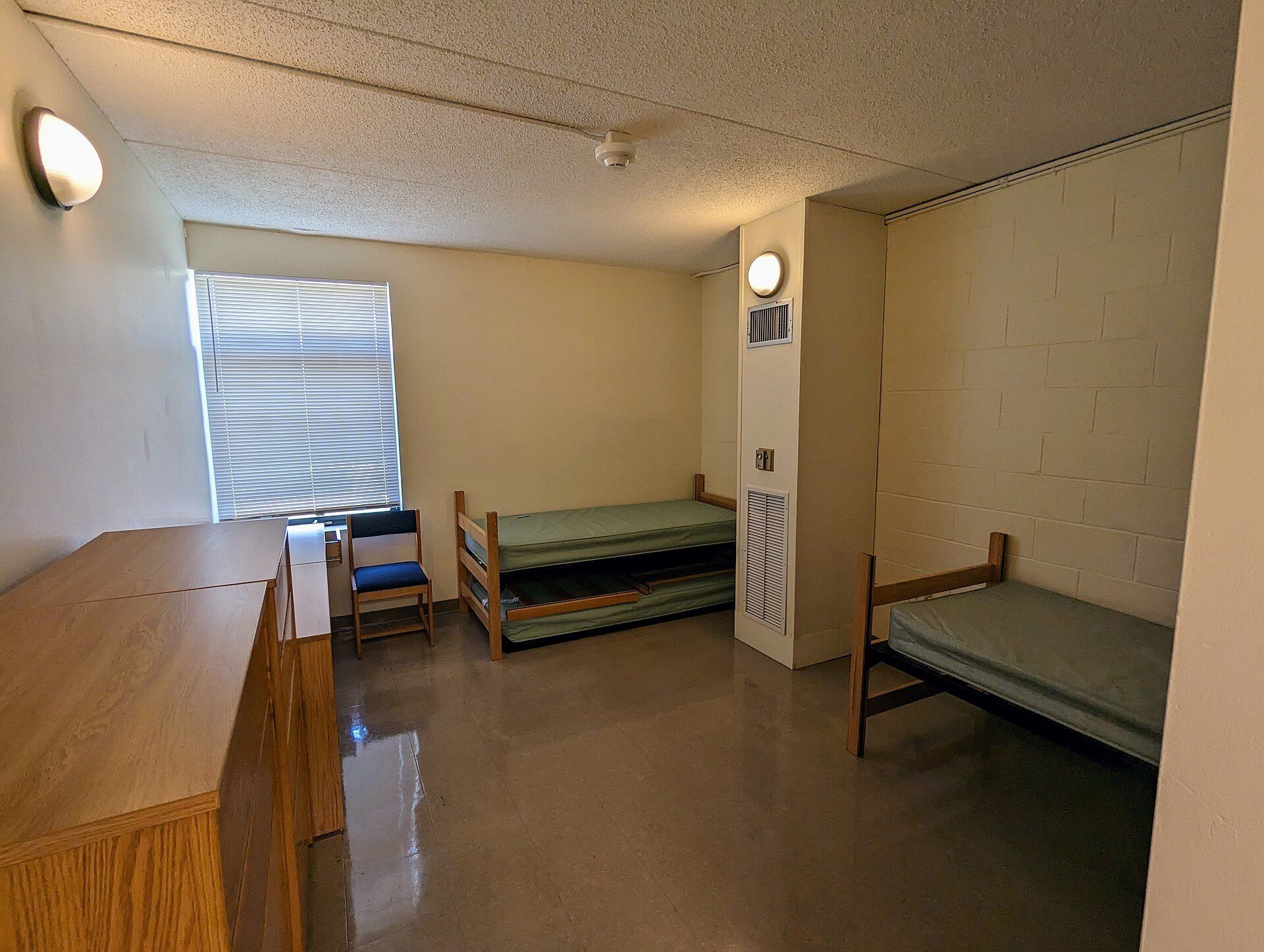
Under an individual liability lease, several people share an apartment, each with a private bedroom and either a private or shared bath, at an agreed individual rate. North Texas explains that each resident answers only for that rate, with no obligation for anyone sharing the apartment.1 The University Star reported that a pamphlet from the Texas State office serving students who live away from campus called these leases the most common agreements in student apartments, and that each tenant owes only their own share even if a roommate moves out.2
An attorney who once served Texas State students, quoted in the same piece, described the lease as covering less than the whole apartment: privacy ends at the bedroom door. The resident controls one bedroom and shares the kitchen, living room and balcony with the others.2 East Carolina adds that on individual leases each tenant is responsible for an assigned bedroom and bath, while responsibility for the common spaces is shared, and that each tenant normally needs a guarantor of their own.3 The market quotes prices on the same basis. Multifamily Dive reported in July 2025 that the average advertised rate per bed across the 200 schools Yardi Matrix follows sat just below its record that May, while annual growth had slowed to 2.1 percent, the lowest since July 2021.6
Who chooses the roommates
The difference residents notice first is social rather than contractual. On a per unit lease, the group chooses itself before it signs, and its members stand or fall together. On a per bed lease, the contract runs between each resident and the landlord, so a vacancy in one bedroom is the landlord’s to fill, and a resident may end up sharing a kitchen with someone chosen by the leasing office rather than by the household. Students who want to live with particular friends can usually still sign for adjoining rooms, but the lease itself does not require it. A written roommate agreement matters in both cases, because neither contract governs dishes, guests or noise. Demand for private space helps explain the form’s spread. A March 2026 column in Commercial Observer argued that the old picture of a randomly paired freshman double is out of date, since students increasingly want a room of their own inside an apartment style unit.7
Subletting a single room
The per bed form also changes subletting. According to that attorney, a resident on a by the bed lease can sublease a room without the permission of the other roommates, provided the landlord and the original renter agree. The original tenant still remains responsible for all payments during the sublet, and some complexes allow residents to assign or end their contracts instead.2 On a per unit lease, by contrast, a sublet touches everyone on the lease. New York’s procedure for a sublet request appears under summer sublets.
How Fannie Mae and the census tell them apart
The distinction reaches well past the lease. Fannie Mae’s guide for apartment lending sorts buildings by the share of homes taken by students: from 40 percent up to just under 80 percent makes a Student Housing Property, and 80 percent or more makes a Dedicated Student Housing Property. When reviewing either kind, the guide tells its reviewers to ask whether charges are set per unit or per bed, whether a single tenant or every tenant signs, whether parents cosign, and whether residents can get to classes on foot.4 A dedicated building must also serve a school enrolling 10,000 or more students, a majority of them full time, and four in five of its units must carry leases of at least twelve months.4
The Census Bureau draws a comparable line. In 2020 it counted students who lived in private complexes built for students and let on individual student contracts through its Group Quarters operation, alongside dormitory residents. Students renting an ordinary apartment or house that was not built for students were expected to fill in the census form on their own.5 Either way, the bureau’s rule placed each student at the address where that student usually slept on April 1.5
Weighing the trade offs
For a resident, the per bed lease caps exposure. A roommate who leaves, stops paying or damages a shared room does not multiply what the others owe, and a single student can find a room without first assembling a group. The cost is control: less say over housemates, a shared living room governed by strangers’ habits, and, as the University Star noted, contracts that often run as a fixed yearly total paid in installments.2 Owners have had less room to raise that per bed figure lately. Multi Housing News reported, citing Yardi Matrix, that the average grew only 0.8 percent in the year to September 2025, the slowest increase since the firm began tracking the sector in 2017.8
The per unit lease reverses the bargain. A group that knows itself gets the whole home and chooses every member, and in exchange each signer carries the risk that another will fail. The choice, in the end, is a choice about who carries the risk of an empty bedroom: the landlord, under a per bed contract, or the remaining roommates, under a lease for the whole unit. Both forms belong to the wider market described under student housing.